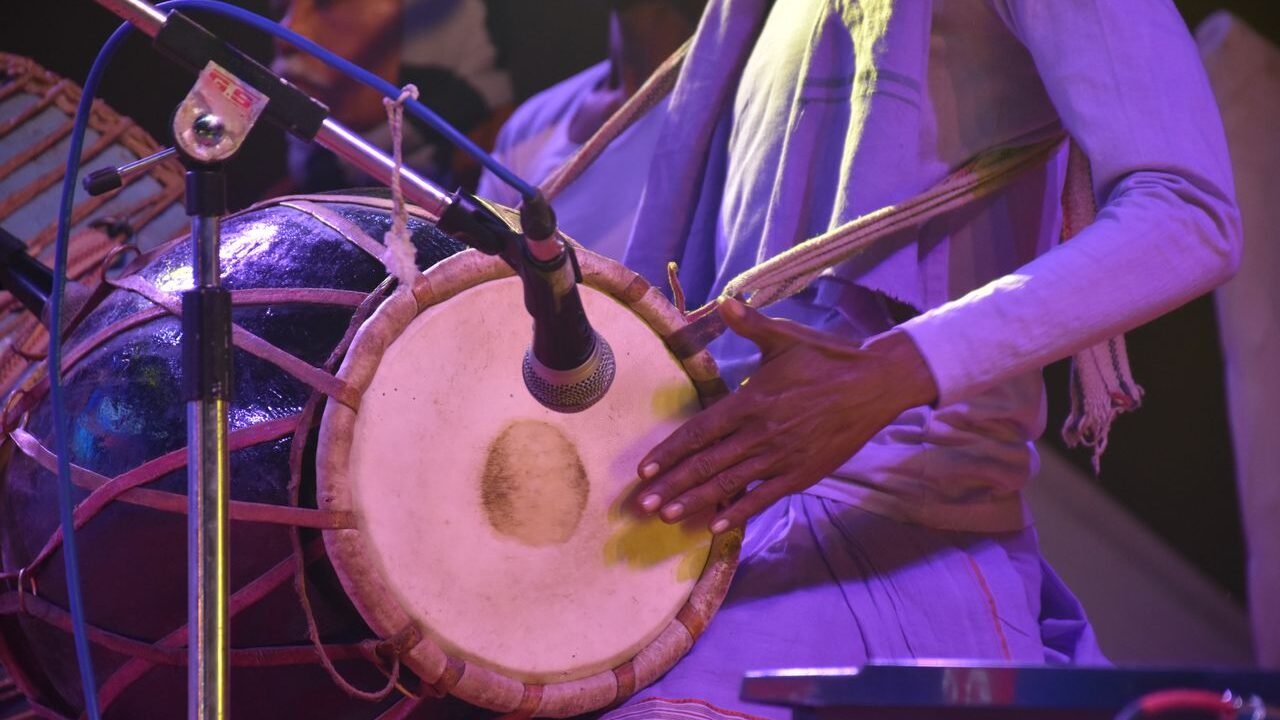
Taal (also spelled tala) is the rhythmic cycle that organises Indian classical music. Teentaal, the most common taal in Hindustani music, has 16 beats (matras) divided into four groups of four, with the first beat called sam, claps on beats 5 and 13, and a wave (khali) on beat 9. Its basic pattern, played on the tabla, is called the theka.
Updated 12 October 2026. This is an introduction for listeners and beginners; teachers and gharanas may count, name and ornament some patterns differently.
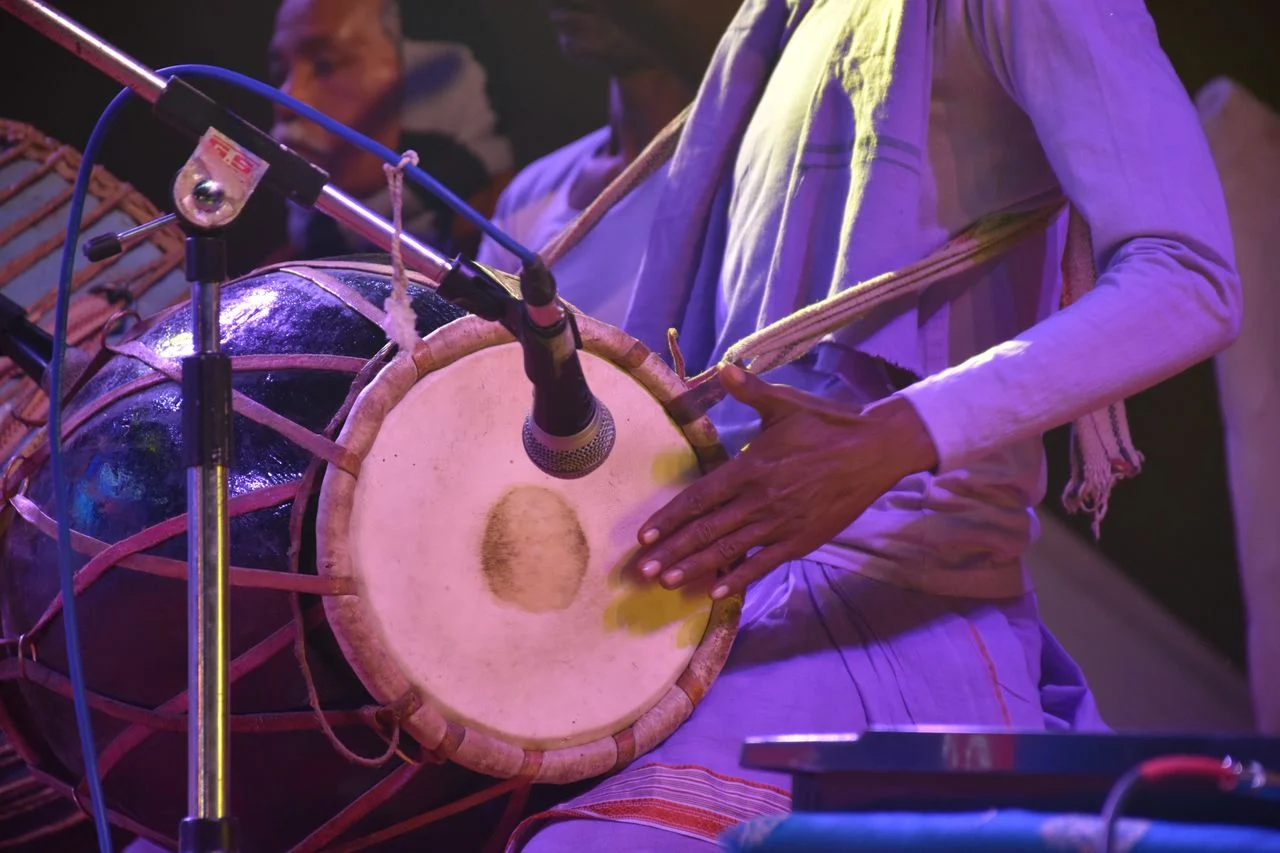
Taal at a glance
| Taal | Beats | Grouping | Typical use |
|---|---|---|---|
| Teentaal | 16 | 4+4+4+4 | Vocal and instrumental classical music, kathak |
| Jhaptaal | 10 | 2+3+2+3 | Medium-tempo khayal and instrumental pieces |
| Ektaal | 12 | 2+2+2+2+2+2 | Slow khayal (vilambit) |
| Rupak | 7 | 3+2+2 | Light classical and semi-classical music |
| Dadra | 6 | 3+3 | Thumri, ghazal and film songs |
| Keherwa | 8 | 4+4 | Folk, bhajan and film songs |
What is taal in Indian music?
Taal is a repeating cycle of beats that holds a piece of music together. Where raga gives Indian music its melody, taal gives it time. A taal is not simply a tempo or a time signature. It is a cycle with its own internal groupings, its own points of stress and release, and its own spoken syllables, called bols. A performer thinks in terms of the cycle, and the audience feels the moment when it returns to the starting beat, the sam, which acts as the point of arrival.
The word comes from Sanskrit and is linked to the idea of a clap. In practice a taal is shown by hand: a clap (tali) marks a stressed beat, and a wave of the hand (khali, meaning empty) marks a beat with no clap. If you want to follow a performance, watch a musician or tabla player tap the cycle on the knee, which is the quickest way to understand how it works. Our beginner’s guide to what a raga is covers the melodic side of the same system.
What is Teentaal, and how many beats does it have?
Teentaal has 16 beats, grouped into four sections (vibhags) of four beats each. The name means “three claps,” because the cycle has three claps and one wave. The beats are numbered as follows:
- Beat 1 (sam). The first and most important beat, marked with a clap. Every cycle begins and ends here.
- Beat 5. The second clap, marking the start of the second section.
- Beat 9 (khali). The wave, with no clap, which gives the cycle a lighter section.
- Beat 13. The third clap, from which the cycle returns to sam.
The pattern played on the tabla is the theka: Dha Dhin Dhin Dha, Dha Dhin Dhin Dha, Dha Tin Tin Ta, Ta Dhin Dhin Dha. Notice how the third section uses lighter, unresonant syllables (Tin, Ta) at the khali, which gives the ear a feeling of lightness before the cycle returns to the full-sounding Dha at sam. Teentaal is used in vocal khayal, in sitar and sarod performances and in kathak dance, which makes it the first taal most students learn.
What is the theka, and what are bols?
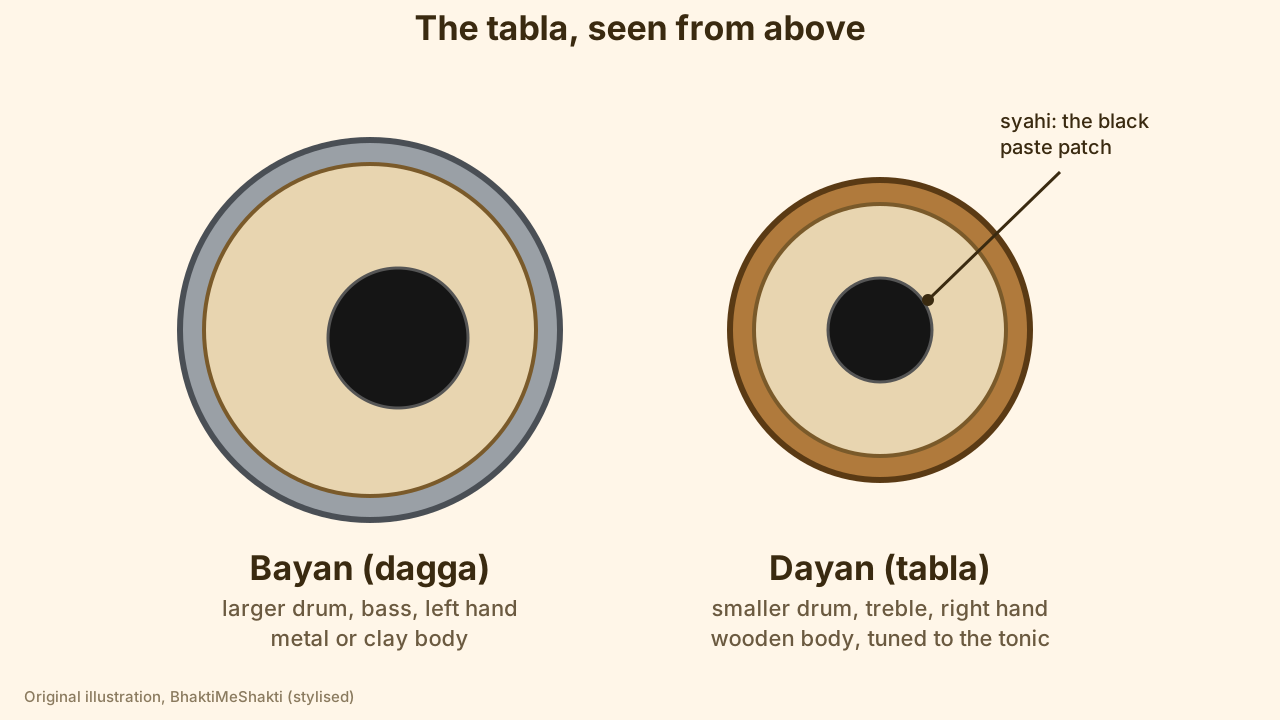
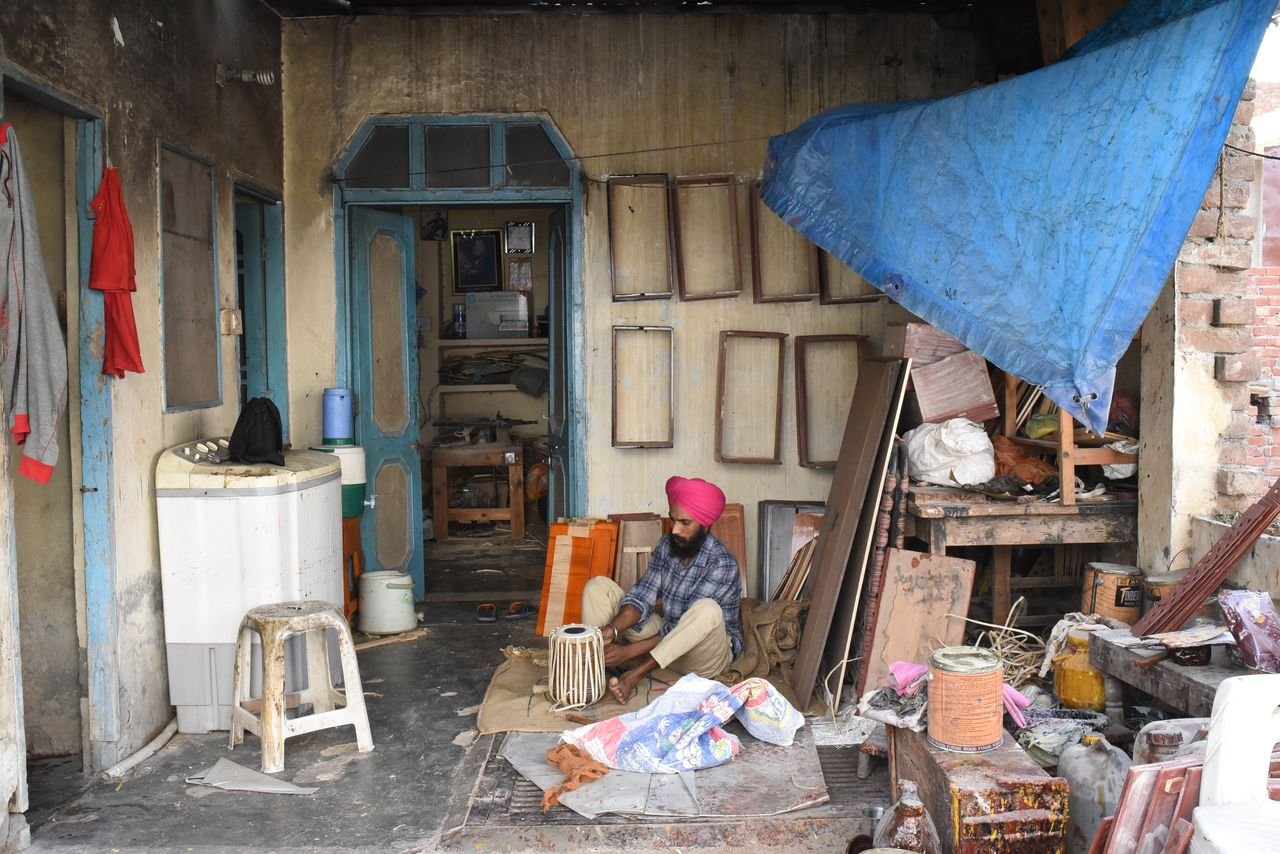
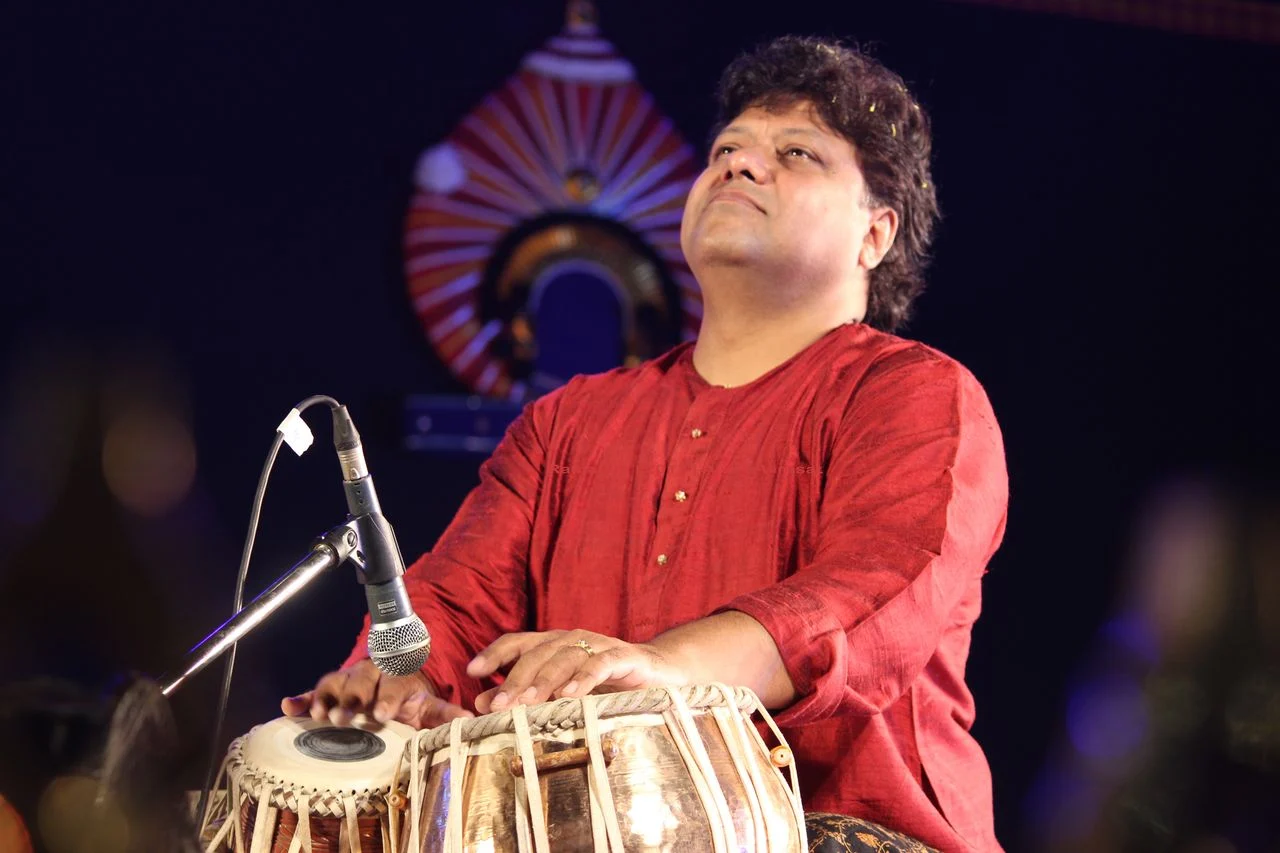
The theka is the basic pattern of a taal, played as a repeating accompaniment. Each beat has a bol, a spoken syllable that imitates the sound of the stroke on the drum. Dha, for instance, combines a stroke on both drums and so gives a full, resonant sound, while Tin and Ta are open strokes on the right drum only. Tabla students learn these syllables by speaking them before they play, and tabla players recite long compositions aloud in concerts before playing them. Our guide to the parts, history and gharanas of the tabla explains the instrument itself.
What are other common taals in Hindustani music?
Several taals are heard often enough that a regular listener will come to recognise them by feel.
- Jhaptaal (10 beats). Grouped 2+3+2+3, it has an uneven, limping rhythm and is used for medium-tempo compositions.
- Ektaal (12 beats). Grouped in six pairs, it is a slow, spacious cycle that suits the opening of a khayal performance.
- Rupak (7 beats). Grouped 3+2+2 and unusual because it begins on a wave rather than a clap, so the first beat feels light.
- Dadra (6 beats) and Keherwa (8 beats). Short, lilting cycles used for thumri, ghazal, bhajan, folk songs and film music.
Many listeners hear Keherwa and Dadra without realising it, because they underlie countless film songs. Once you can tell a four-beat group from a three-beat group, you can often identify the taal from the pulse alone.
How do the key terms sam, tali, khali and laya work?
These few words appear in almost every explanation of taal, and they are easy to learn.
- Matra. A single beat. A taal is counted in matras.
- Vibhag. A section within the cycle, such as one group of four beats in Teentaal.
- Sam. The first beat, the point of return and the climax of every phrase.
- Tali and khali. Claps and waves that show where the sections begin.
- Laya. The tempo, usually described as slow (vilambit), medium (madhya) or fast (drut).
- Tihai. A phrase repeated three times that ends exactly on sam, one of the most satisfying moments in a performance.
How is tala different in Carnatic music?
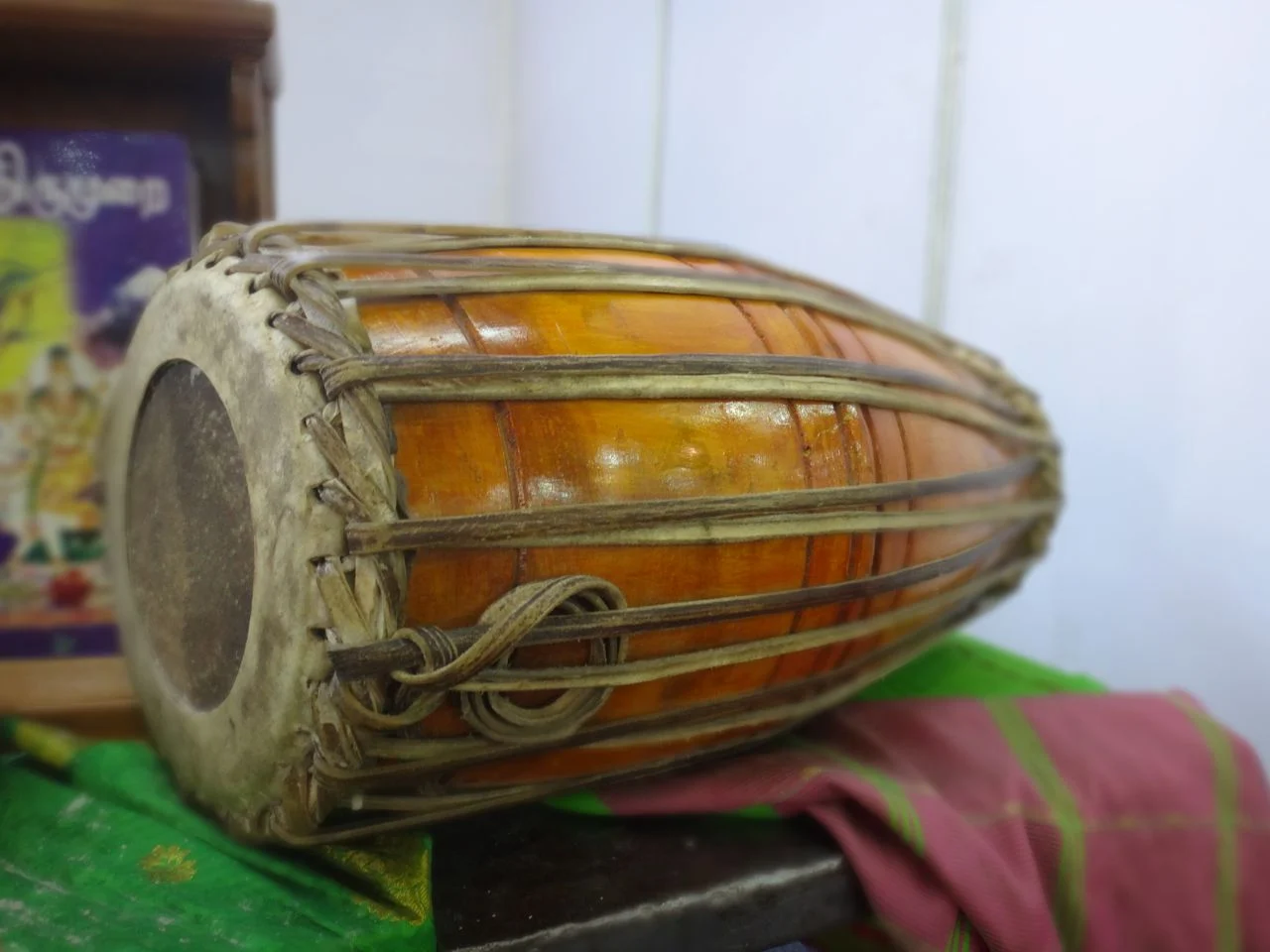
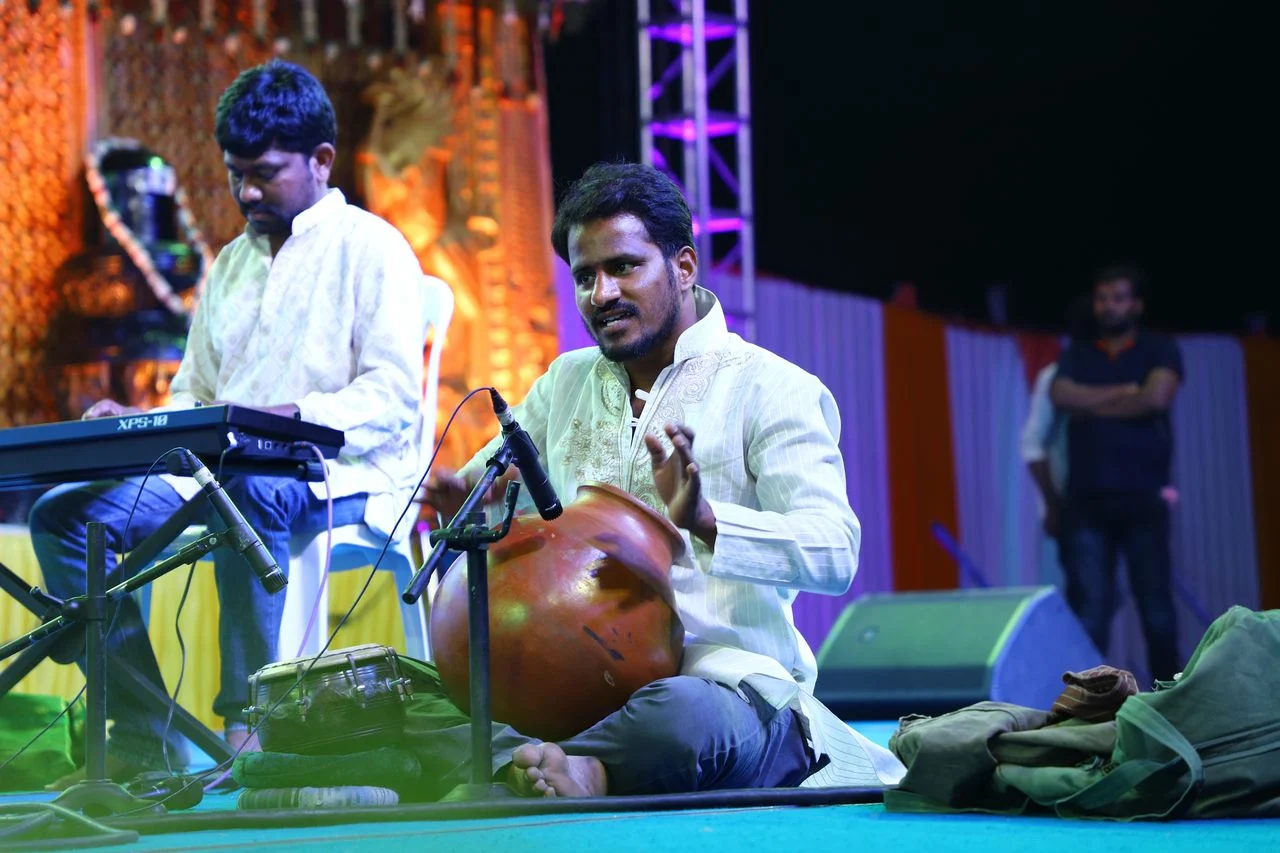
South Indian classical music uses tala, which is built differently. Instead of fixed cycles with names such as Teentaal, Carnatic music builds cycles from a system of seven basic tala families, each of which can be combined with five different groupings, producing a large theoretical number of possible cycles. The most common is Adi tala, an eight-beat cycle made of a four-beat unit followed by two two-beat units, with claps, finger counts and waves marking the sections. The main drum is the mridangam, a two-headed barrel drum, often supported by the ghatam, a clay pot played with the fingers, and the kanjira, a small frame drum. For a full comparison of the two traditions, read our guide to Hindustani and Carnatic music.
Which Indian instruments keep taal?
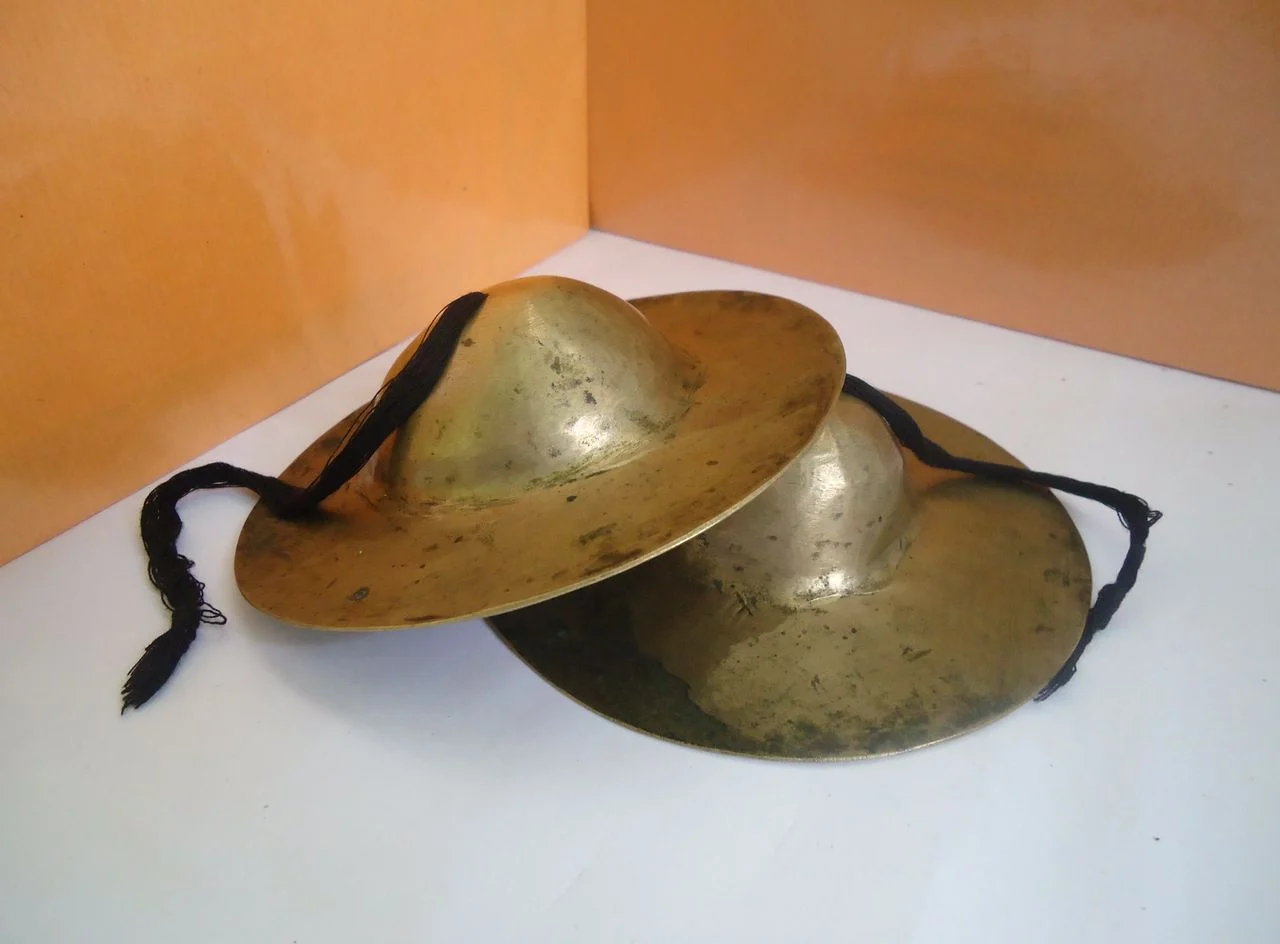
Rhythm in India is carried by many kinds of percussion. The tabla dominates the north, the mridangam the south, and the pakhawaj, an older barrel drum, accompanies dhrupad. Regional folk traditions use their own instruments: in Assam, for instance, a pair of small cymbals called khuti taal keeps time in devotional singing. Dance forms such as kathak have their own rhythmic language too, and the feet of the dancer act as a percussion instrument. To see how rhythm and gesture combine, read about India’s classical dance forms.
How do musicians improvise within a taal?
Because the cycle is fixed, a performer can play with it. A singer or instrumentalist may begin a phrase a few beats before sam and land on it exactly, or stretch a line over several cycles before returning. This play with time is called layakari. A tabla player has several tools of their own: the theka, then variations on it, followed by compositions such as qaida (a theme with variations), tukda and chakradhar (a phrase repeated three times to land on sam). In a good concert the soloist and the accompanist swap roles, with the tabla keeping the cycle steady while the melody explores, and then the tabla takes a turn while the melody holds a short refrain.
The thrill for a trained listener comes from anticipation. Because everyone knows exactly when sam will come, a phrase that arrives precisely on the beat, after a long and complicated approach, gives a feeling of resolution that audiences often acknowledge with applause or a cry of approval.
Where does the idea of taal come from?
Ideas about rhythmic cycles are very old in Indian thought. Ancient texts on drama and music, such as the Natyashastra, discuss time-measure and rhythm in theatre and song, and later medieval and early modern treatises developed the systems now taught. Regional traditions grew in parallel, and over the last few centuries the Hindustani and Carnatic systems settled into the forms known today. Historians debate how and when specific drums and cycles appeared, so the best summary is that taal is a long-evolving tradition, not an invention of one person or century.
Watch: taal and tabla in performance
These three videos help you hear what is described above. The first is an introduction to Teentaal, the second breaks down classical Indian music for newcomers, and the third is a Teentaal solo by Zakir Hussain. They are third-party videos, and their views are those of their makers.
How can a beginner learn to follow taal?
You do not need to be a musician to follow taal. Start with Teentaal and the sixteen-beat count. Play a slow recording of a tabla solo or a khayal and count one to sixteen, tapping the clap on beats 1, 5 and 13 and waving on beat 9. After a few minutes you will hear the moment when the performer lands on sam, which is the point of every phrase. Then try Keherwa, an eight-beat cycle, and compare how it feels.
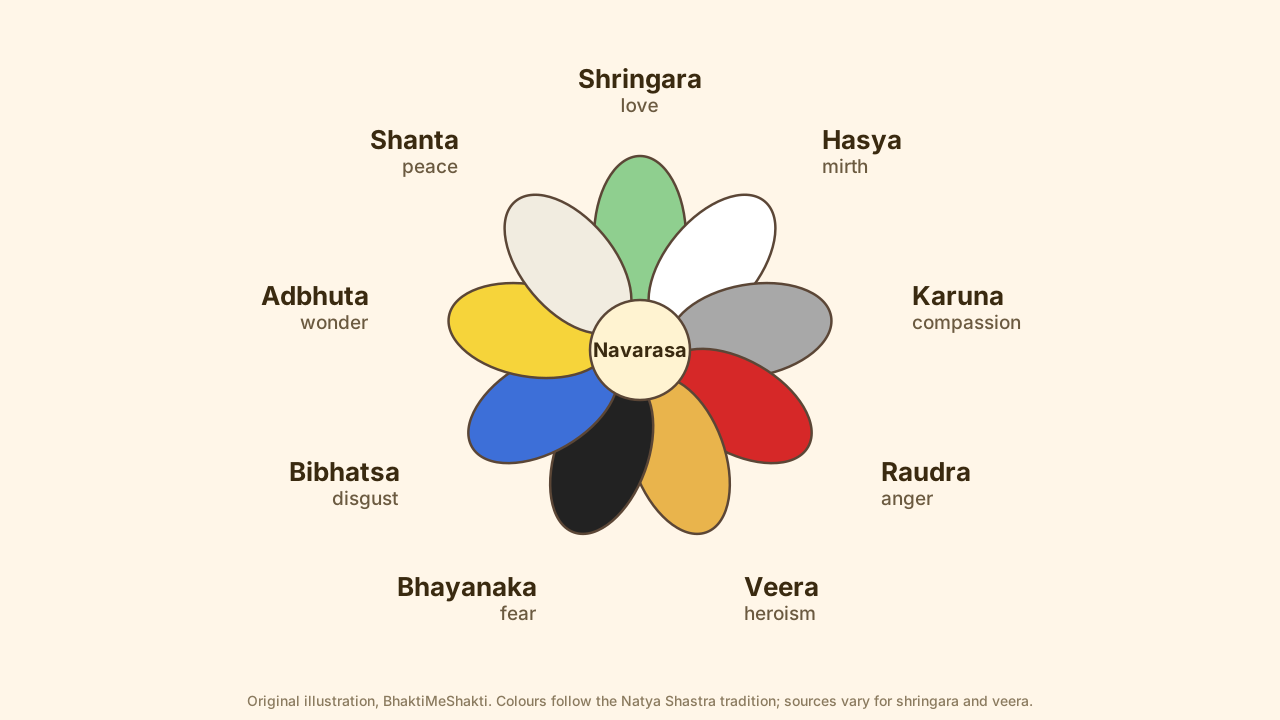
When you can follow one cycle, listen to a famous performance. The musicians described in our article on famous Indian classical musicians include tabla masters, and a melodic instrument such as the bansuri or the veena gives you a natural way to hear melody and rhythm working together. For the emotions that the music is trying to evoke, see Navarasa, the nine rasas.
Sources used for this article: general music-education references on Hindustani and Carnatic rhythm, and the Wikipedia articles on tala, Teentaal and the tabla. Counting conventions, bol names and groupings can vary between teachers and gharanas. Photographs are used under Creative Commons licences with credit shown beneath each picture.
Frequently asked questions
-
What is taal in Indian classical music?
Taal is a repeating cycle of beats that organises rhythm in Indian classical music. It has its own groupings, claps, waves and spoken syllables.
-
How many beats are in Teentaal?
Teentaal has 16 beats in four groups of four, with claps on beats 1, 5 and 13 and a wave on beat 9.
-
What is sam in taal?
Sam is the first beat of the cycle and the point of arrival for every phrase.
-
What is the theka of Teentaal?
Dha Dhin Dhin Dha, Dha Dhin Dhin Dha, Dha Tin Tin Ta, Ta Dhin Dhin Dha.
-
What is the difference between tali and khali?
A tali is a clap marking a stressed beat, and a khali is a wave of the hand marking an unstressed beat.
-
Which instrument keeps taal?
The tabla in Hindustani music, the mridangam in Carnatic music, and the pakhawaj in dhrupad.
-
Is tala the same in Hindustani and Carnatic music?
The idea is the same, but the systems differ. Hindustani music uses named cycles such as Teentaal, while Carnatic music builds cycles from seven families of tala and five groupings.