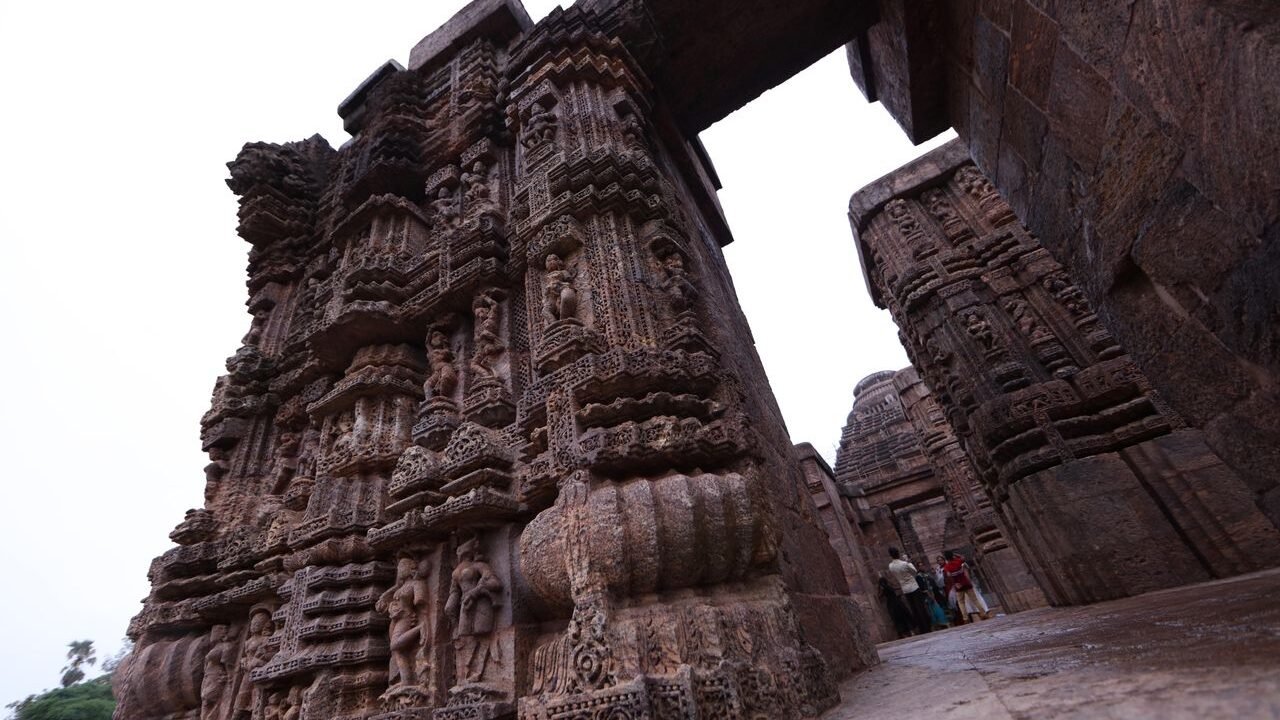
The Konark Sun Temple is a 13th-century temple in Odisha, built around 1250 CE by King Narasimhadeva I of the Eastern Ganga dynasty and designed as a giant stone chariot of the sun god Surya. It has 24 carved wheels pulled by seven horses, was inscribed as a UNESCO World Heritage Site in 1984, and stands about 35 km from Puri and 65 km from Bhubaneswar.
Updated 12 October 2026. Ticket prices, opening hours and the status of conservation work change from time to time, so confirm them with the ASI notice at the site before you travel.
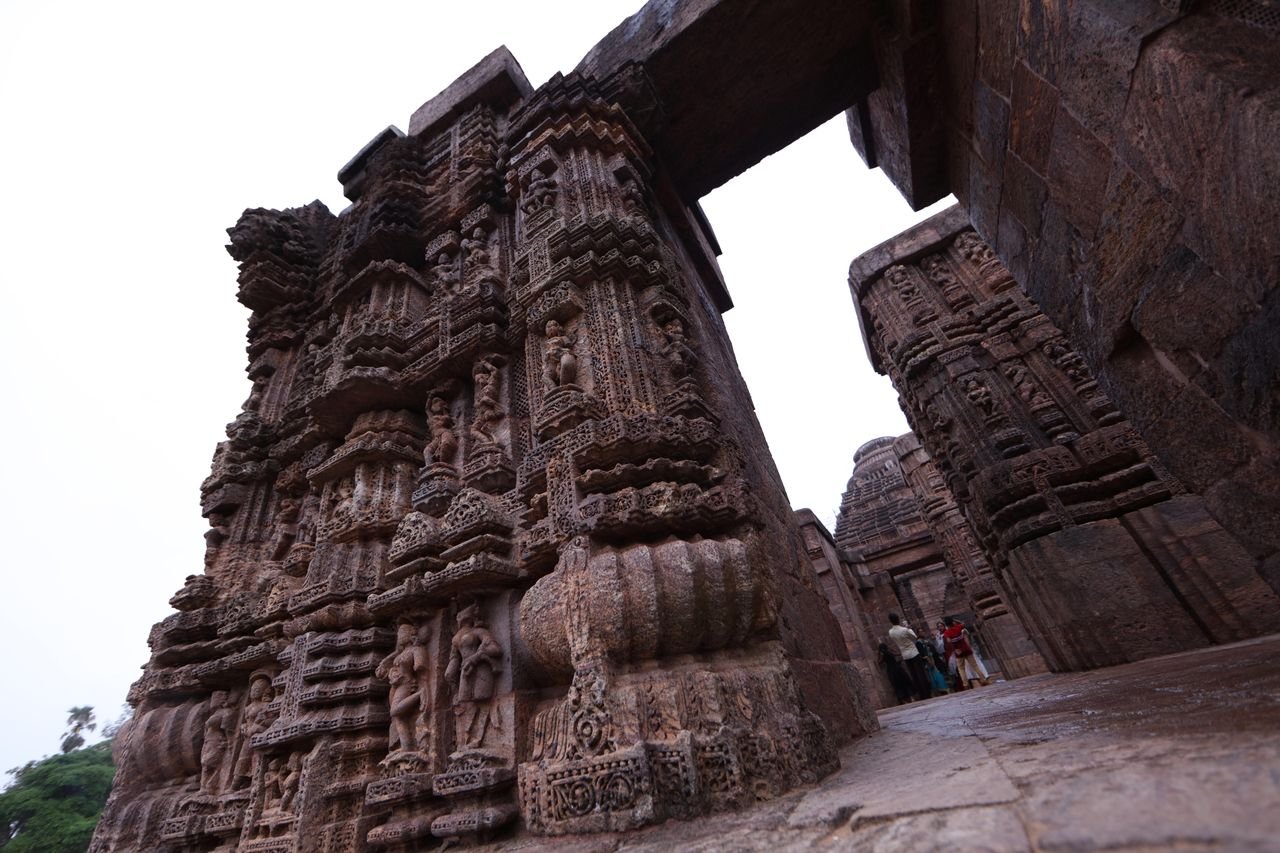
Konark Sun Temple at a glance
| Fact | Detail |
|---|---|
| Location | Konark, Puri district, Odisha, about 35 km north-east of Puri |
| Built by | King Narasimhadeva I of the Eastern Ganga dynasty, around 1250 CE |
| Dedicated to | Surya, the sun god |
| Design | A stone chariot with 24 wheels and seven horses, facing east |
| UNESCO status | Inscribed in 1984 under criteria (i), (iii) and (vi) |
| Style | Kalinga architecture, in khondalite stone |
| Nearest airport | Biju Patnaik International Airport, Bhubaneswar |
Who built the Konark Sun Temple, and why?
King Narasimhadeva I of the Eastern Ganga dynasty built the temple in the middle of the 13th century, and it is usually dated to about 1250 CE. The site is on the Odisha coast, where sun worship had long been popular, and tradition links it to the nearby Chandrabhaga river, where a fair is still held around February. The temple is the finest surviving monument of Kalinga architecture, the regional style of Odisha.
European sailors who passed the coast from the 17th century called it the Black Pagoda, because from the sea it looked like a dark, tiered tower. They used the name Black Pagoda for Konark and White Pagoda for the Jagannath Temple in Puri, and used both as landmarks for navigation. Visitors who want to see the Jagannath temple town as well can easily combine the two on one trip.
Why does the Konark temple look like a chariot?
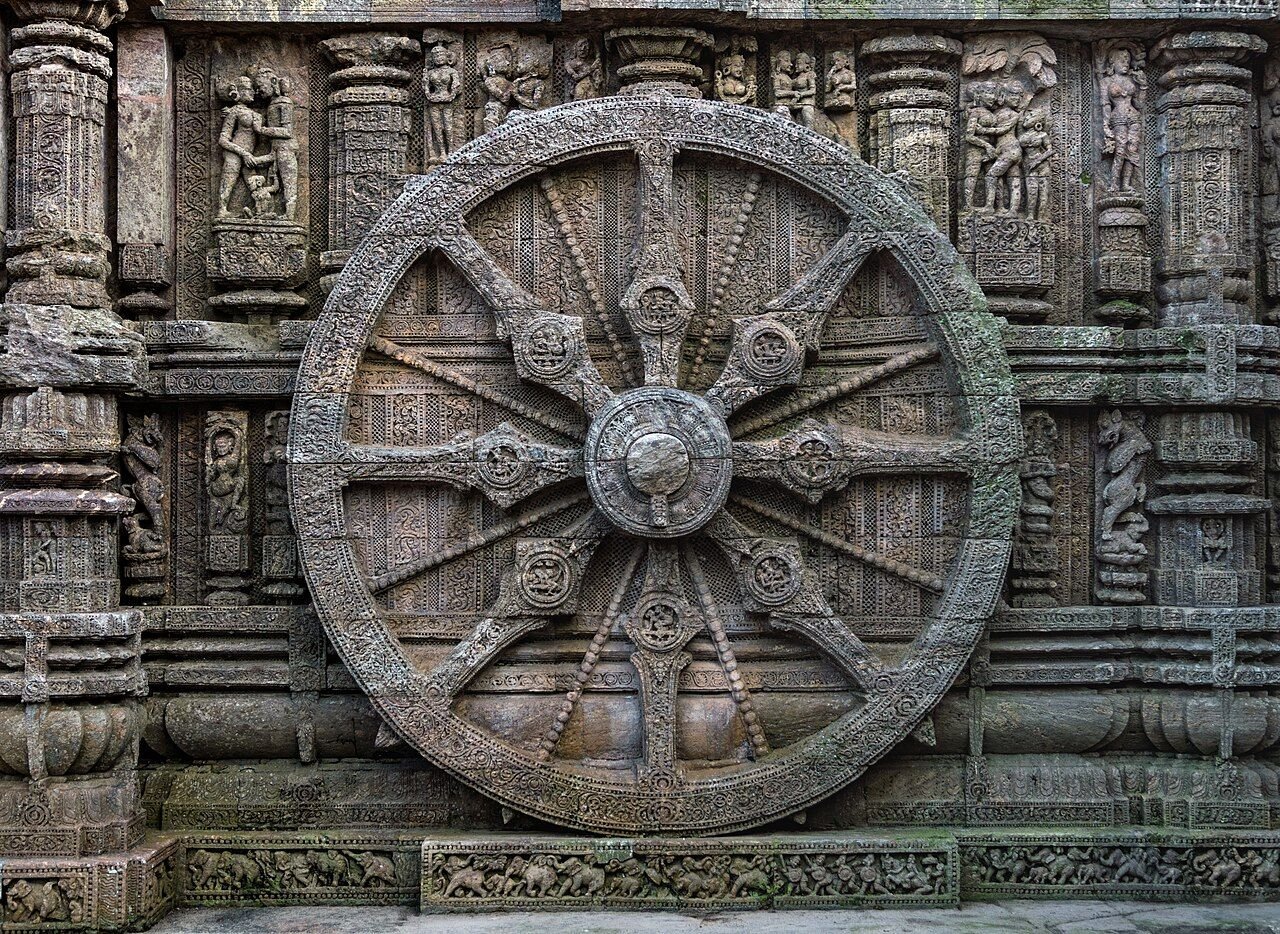
The whole temple was conceived as the sun god’s chariot crossing the sky. Surya is described in Hindu texts as riding a chariot drawn by seven horses, and the builders carved that image into the base. The structure faces east, so the first rays of the rising sun reach the main entrance. Twenty-four large wheels, each carved with spokes, medallions and scrolls, run along the sides of the platform, and seven horses pull the chariot at the front.
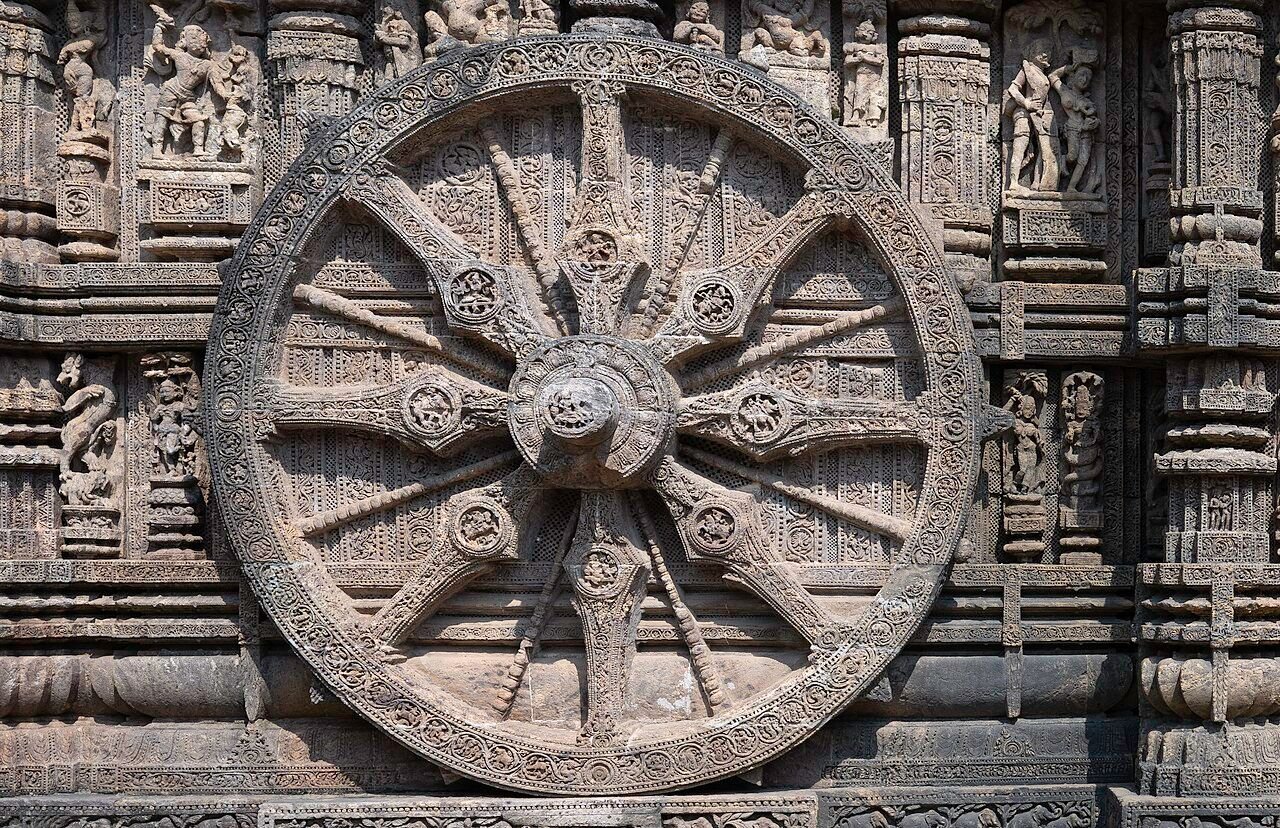
What are the 24 wheels of Konark, and do they work as sundials?
The 24 wheels are about 3.7 m across and carved with fine detail. Popular accounts say they work as sundials: the spokes act as hour markers, and a shadow falling on the rim lets a viewer read the time to within a few minutes. Guides often demonstrate this on site. The 24 wheels are commonly linked to the 24 hours of a day, though other readings link them to the months of a lunar calendar. Treat the claim of minute-level accuracy as a popular claim, not a measured one.
The wheel has become one of India’s best-known symbols. A Konark wheel appears on the Indian ten-rupee note, and many people compare its form with the Ashoka Chakra on the national flag, although the two come from different periods and traditions.
What are the seven horses of Konark named?
The seven horses are traditionally named after the seven metres of Sanskrit poetry: Gayatri, Brihati, Ushnih, Jagati, Trishtubh, Anushtubh and Pankti. In Hindu tradition the horses also stand for the seven days of the week. The chariot is thus a map of time as well as a vehicle of the sun, which is why the sculpture of the whole temple rewards a slow walk from the base upward.
What remains of the temple today?
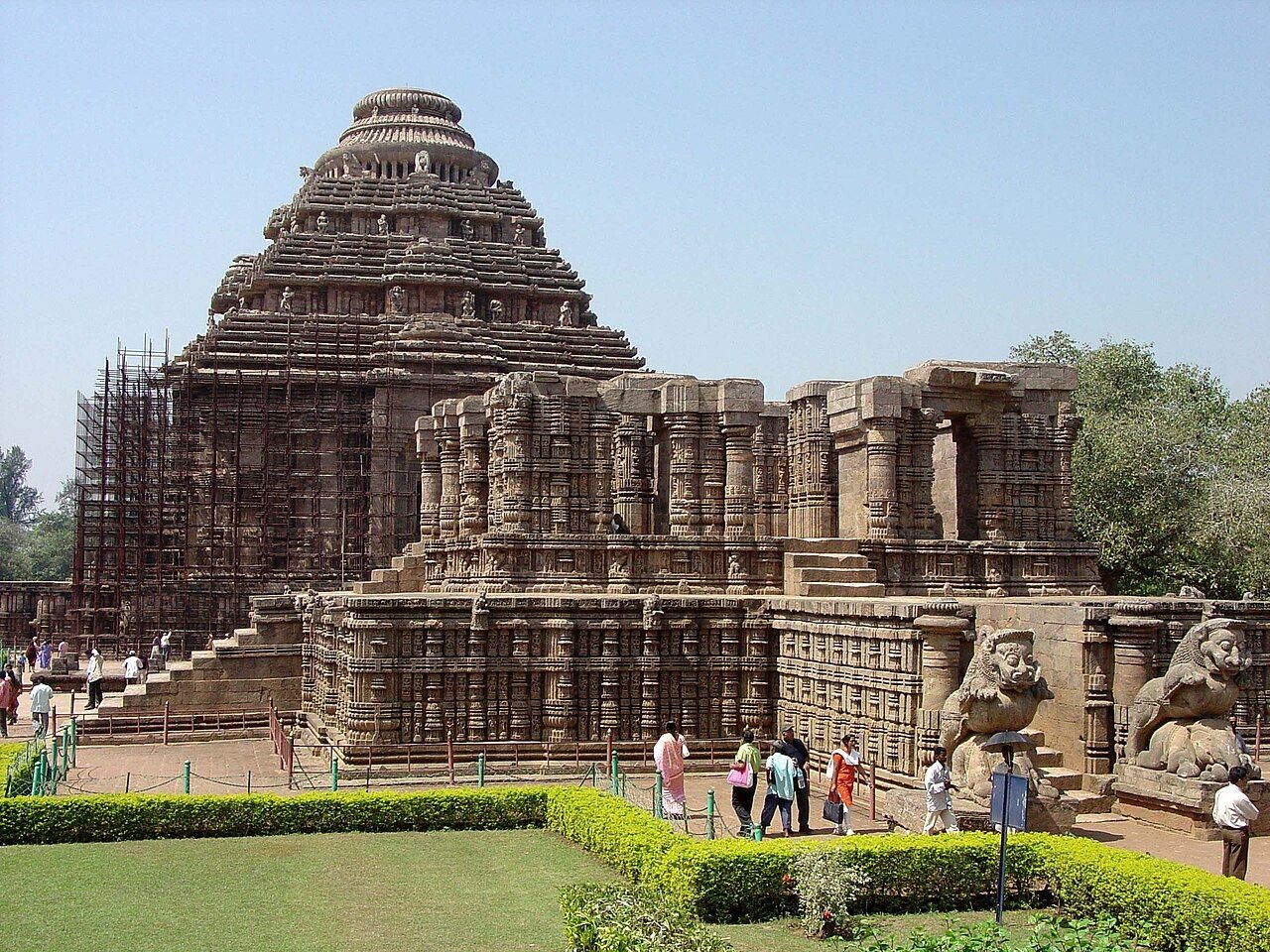
Much of the original is gone. The great main tower over the sanctum (the vimana) collapsed in the 19th century, and the surviving principal structure is the audience hall (the Jagamohana), which stands about 39 m tall. Early in the 20th century it was filled with sand and sealed to prevent further collapse, and the Archaeological Survey of India has in recent years been working to remove the sand and strengthen the structure. Because that work is ongoing, access to some parts of the interior can change, so ask at the site.
- Jagamohana. The surviving audience hall, with tiered roofs and densely carved walls.
- Natya Mandap. The dance hall in front of the main temple, standing on a high carved platform where dance was once performed as part of worship.
- Surya images. Three images of the sun god, in niches on three sides of the temple, show him at different stages of the day.
- Platform sculpture. Friezes of elephants, warriors, musicians, dancers and couples run around the base.
What is carved on the walls of Konark?
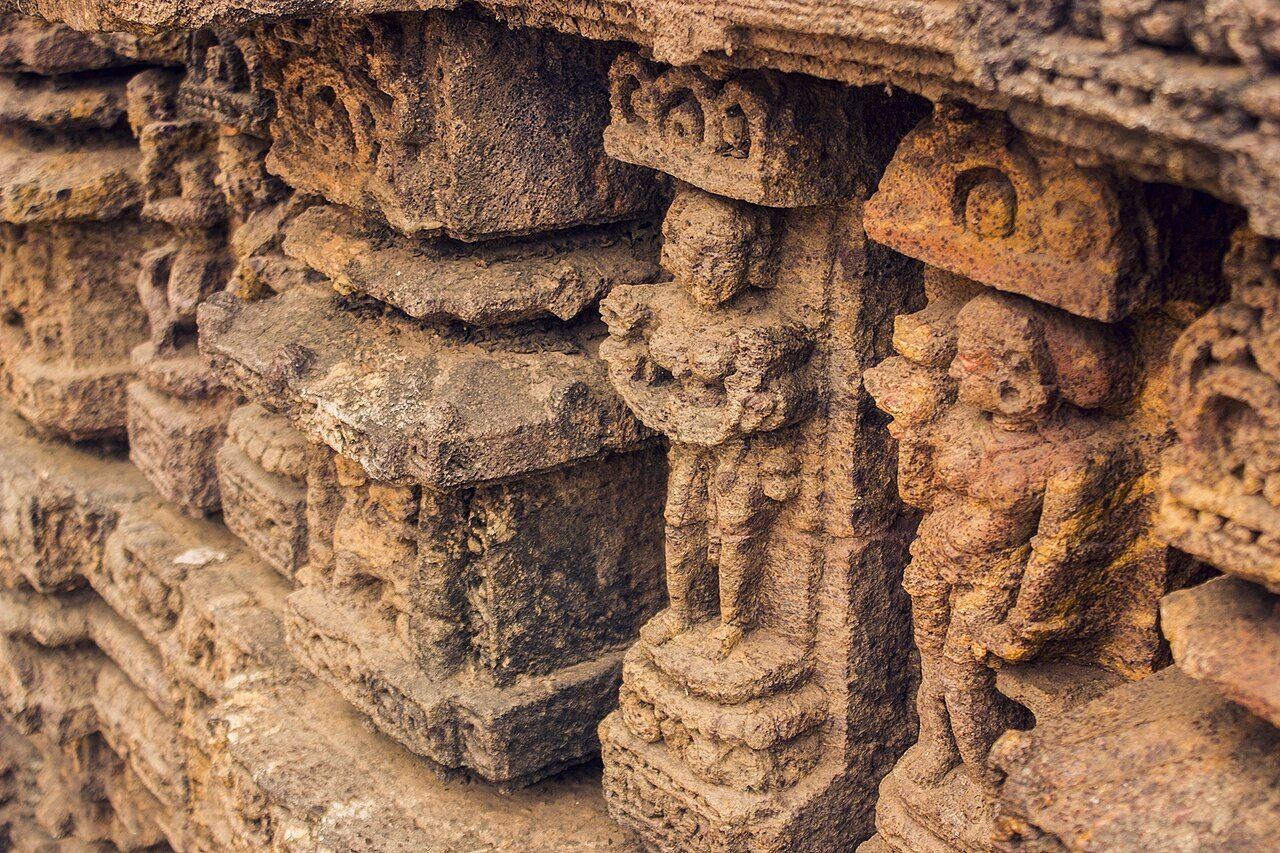
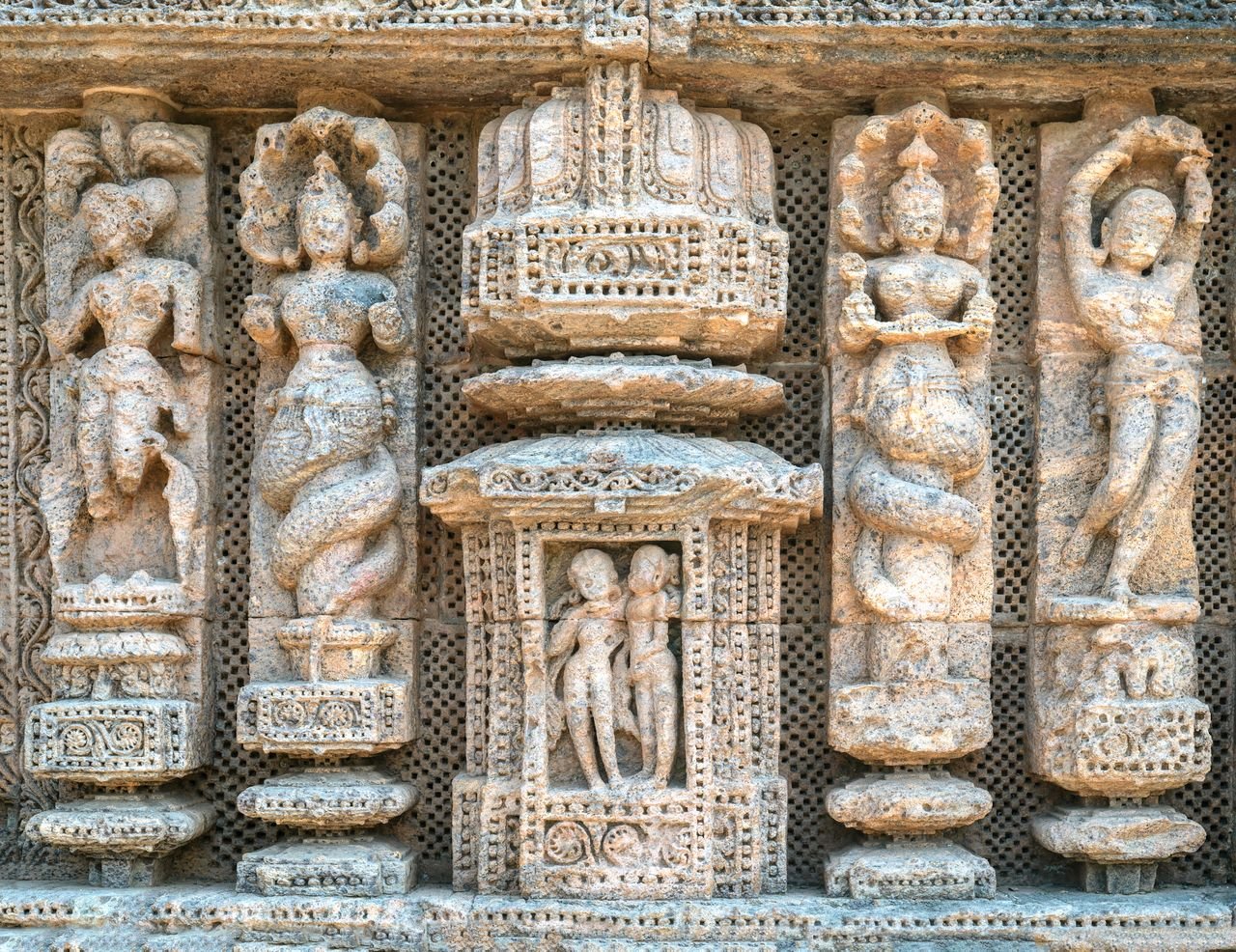
The carving is dense and varied. Alongside gods and goddesses you will see musicians with drums and cymbals, dancers in expressive poses, hunting scenes, animals, courtly life and also the erotic panels that are found at several medieval Indian temples. The dancers and musicians connect Konark to Odissi, the classical dance of Odisha; our guide to India’s eight classical dance forms explains how the form relates to temple sculpture, and the carved faces show many of the moods described in Navarasa, the nine rasas.
Why did the main tower fall?
Historians do not agree on one cause. Explanations offered include damage during invasions, the effects of the coastal climate and salt air, structural weakness in the heavy tower, and the later removal of stone. A popular legend says that a powerful magnet at the top held the main image in the air, and that sailors removed it because it disturbed their compasses. That story is widely repeated but has no firm historical support, so read it as folklore.
What is Kalinga architecture?
Kalinga architecture is the regional temple style of ancient Odisha. A typical temple has two main parts: a tall curved tower over the sanctum (the deula or rekha deula) and a lower, pyramid-roofed hall in front of it (the jagamohana or pidha deula). Konark follows that plan but on a grand scale, and adds a separate dance hall (the Natya Mandap) in front, so the whole composition reads as a processional route toward the sun god. The earlier temples of Bhubaneswar, a short drive away, show how the style developed before Konark.
Why is Konark still important today?
UNESCO recognised Konark in 1984 under three criteria, including criterion (vi), which ties the site to living traditions and beliefs. The temple is a place of study for historians of art and architecture, a stage for Odissi dance, and an everyday symbol of Odisha: its wheel appears in state tourism branding and on national currency. It also shows the difficulty of preserving coastal monuments, where salt air, wind and humidity attack stone and where each decision about restoration has to balance safety against authenticity. That is why conservation at Konark is slow, careful and often visible to visitors as scaffolding and supports.
Watch: Konark Sun Temple on film
These videos show the scale of the temple and how the wheels are said to work. The first is a Prasar Bharati documentary, the second explains the architecture, and the third is a guide demonstrating the sundial wheels on site.
How do you visit the Konark Sun Temple?
Konark is an easy day trip from Puri (about 35 km) or Bhubaneswar (about 65 km). The nearest airport is Biju Patnaik International Airport at Bhubaneswar, and both Puri and Bhubaneswar are rail hubs, so most visitors travel the last stretch by road. Allow two to three hours at the site.
- Best time. November to February is cooler and most comfortable. The coastal summer is hot and humid, and the monsoon brings heavy rain.
- Time of day. Go early, when the light is soft on the east-facing facade and the stone is not yet hot.
- Tickets and hours. The temple is managed by the Archaeological Survey of India, which charges separate rates for Indian and foreign visitors. Check the notice at the entrance for current prices and hours.
- Festivals. The Konark Dance Festival is held at the site against the lit temple, and the Chandrabhaga Mela draws pilgrims to the nearby shore around February.
- Guides. A licensed guide helps with the iconography and demonstrates the sundial wheels.
How does Konark compare with other temples?
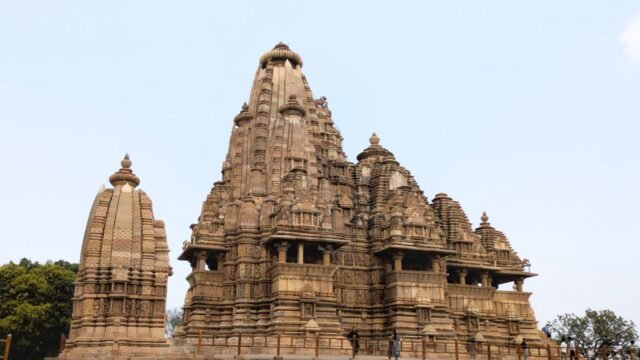
Konark pairs naturally with other great sculptural sites. The Chandela temples of Khajuraho are about two centuries older and show a different regional style, while the stone chariot at Hampi is a later Vijayanagara echo of the same idea. For a wider view, our list of India’s UNESCO World Heritage Sites places Konark among the 45, and the Ajanta and Ellora caves show how earlier Indian art handled similar themes.
Sources used for this article: the Wikipedia article on the Konark Sun Temple, which reports the UNESCO inscription of 1984 (criteria i, iii and vi) and the conservation history. Dates, dimensions and the sundial claim vary between sources, and the text says so where they do. Photographs are used under Creative Commons licences with credit shown beneath each picture.
Frequently asked questions
-
Who built the Konark Sun Temple?
King Narasimhadeva I of the Eastern Ganga dynasty built it around 1250 CE.
-
Why is it called the Black Pagoda?
European sailors from the 17th century used the name because the temple looked like a dark tiered tower from the sea. They called the Jagannath Temple at Puri the White Pagoda.
-
How many wheels does the Konark Sun Temple have?
It has 24 carved wheels, each about 3.7 m across, and they are pulled by seven horses.
-
Is Konark a UNESCO World Heritage Site?
Yes. It was inscribed in 1984 under criteria (i), (iii) and (vi).
-
Do the Konark wheels really work as sundials?
Popular accounts say the wheels work as sundials that show the time to within a few minutes. The claim of minute-level accuracy is widely repeated but not firmly documented.
-
How far is Konark from Puri and Bhubaneswar?
About 35 km north-east of Puri and about 65 km south-east of Bhubaneswar.
-
When is the best time to visit Konark?
November to February is the most comfortable. Summers are hot and humid, and the monsoon is rainy.