Ask how many classical dance forms India has and the usual answer is eight. The number is not a matter of opinion: it comes from the Sangeet Natak Akademi, India’s national academy for music, dance and drama, which has formally recognised eight styles as classical. This guide names them, shows where each comes from, explains what “classical” means here, and clears up the mix-ups that trip up most beginners.
What makes a dance “classical”?
Most classical forms trace their theory to the Natya Shastra, a Sanskrit treatise on the performing arts attributed to Bharata Muni. Its date is uncertain: one source places it in the 2nd century CE, another gives a range from about 200 BCE to 200 CE. In practice, a dance is considered classical if it incorporates techniques described in that text. Dancers use the whole body, including the face and eyes, and the repertoire is organised around the expression of the nine emotions, the rasas.
The Natya Shastra does not name every form known today, so the classical status of individual dances was settled later. The Sangeet Natak Akademi, set up by India’s education ministry in the early 1950s (sources give 1952 or 1953), progressively recognised eight forms.
The eight classical dance forms
| Dance | Region | What to know |
|---|---|---|
| Bharatanatyam | Tamil Nadu | Built from three components: nritta (pure movement), natya (drama) and nritya (expressive dance). Often nicknamed the “mother of classical dances”. |
| Kathak | Uttar Pradesh and North India | A narrative dance known for its spins; has distinct schools, or gharanas, such as the Jaipur gharana. |
| Kathakali | Kerala | Vigorous and dramatic, with elaborate costume and make-up, traditionally performed by men. Emerged around the 18th century. Accompanied by the maddalam, chenda and idakka. |
| Mohiniyattam | Kerala | Lyrical and graceful, traditionally performed by women in a simple white-and-gold costume. |
| Kuchipudi | Andhra Pradesh | Differs from Bharatanatyam in its poses and movements. |
| Odissi | Odisha | Defined by the tribhangi, a posture with three bends at the neck, torso and knee, and the chauka, a square stance. Revived in the modern era by Guru Kelucharan Mohapatra. |
| Manipuri | Manipur | Soft, circular and fluid, with little foot-stamping. Accompanied by the pung drum, the pena and cymbals. |
| Sattriya | Assam | Developed by the Vaishnava saint Sankardev in the 15th century within the monastic Sattra tradition. Recognised as classical in November 2000, the most recent addition. |
Mix-ups worth clearing up
- Kathakali and Mohiniyattam are not the same. Both come from Kerala, but they are close to opposites in character: Kathakali is vigorous and dramatic with elaborate costume; Mohiniyattam is lyrical and understated.
- Manipuri is not a stamping dance. Foot-stamping is characteristic of Bharatanatyam and Kathak, while Manipuri is notable for its soft, circular movement.
- Sattriya is the newcomer. It was not among the original classical dances; it was added in 2000, although its tradition goes back centuries.
- “Eight” depends on who is counting. The Sangeet Natak Akademi recognises eight, but some sources note that India’s Ministry of Culture also lists Chhau as a ninth classical dance, which is why you will see both numbers.
Why Nataraja matters to dance
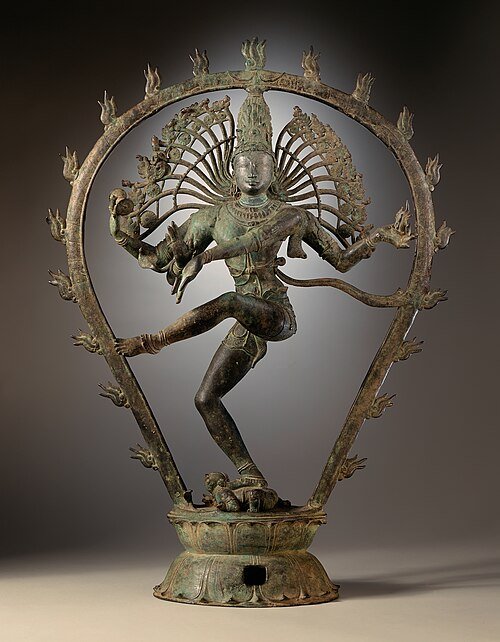
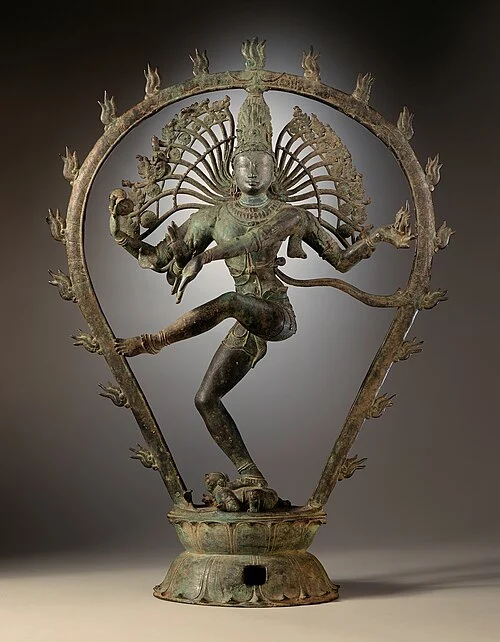
The bronze above shows Shiva as Nataraja, “Lord of the Dance”. The Metropolitan Museum describes the image as combining Shiva’s roles as creator, preserver and destroyer of the universe, with the dance set inside a flaming halo that marks the borders of the Hindu cosmos. Sculptures of Shiva dancing survive from at least the fifth century, and the form that became famous evolved under the Chola dynasty of South India. It is one of the most recognisable symbols of Indian art, and a reminder that dance in this tradition has long been tied to myth and worship as well as performance.
How to approach your first performance
You do not need to know every gesture. Notice three things: how the dancer’s posture is built (the three bends of Odissi look very different from the lines of Bharatanatyam), what the hands and face are communicating, and how the footwork connects to the rhythm of the music. Most classical forms are best seen up close, where the solo dancer is in constant communication with the audience, as one Odissi presenter puts it.
Sources used for this article: summaries of the Sangeet Natak Akademi’s recognition of the eight forms by Magik India, Spardha School of Music, Superkalam, Careers360, Unacademy, Anantam IAS and Bharat Notes; the Metropolitan Museum of Art’s notes on the Nataraja bronze; and the Los Angeles County Museum of Art’s public-domain image release. Where sources disagree, the text says so.
Watch: the eight classical dances explained
Frequently asked questions
-
How many classical dances are there in India?
The Sangeet Natak Akademi recognises eight: Bharatanatyam, Kathak, Kathakali, Mohiniyattam, Kuchipudi, Odissi, Manipuri and Sattriya. Some sources add Chhau as a ninth, listed by the Ministry of Culture.
-
Which classical dance is the newest?
Sattriya from Assam, which was recognised as classical in November 2000. The tradition itself is older, developed by the Vaishnava saint Sankardev in the 15th century.
-
What is the Natya Shastra?
The Natya Shastra is a Sanskrit treatise on the performing arts attributed to Bharata Muni. Its date is debated, with sources placing it in the 2nd century CE or between about 200 BCE and 200 CE. Classical dances are defined by their use of its techniques.
-
What is the difference between Kathakali and Mohiniyattam?
Both come from Kerala. Kathakali is vigorous and dramatic with elaborate costume and make-up, while Mohiniyattam is lyrical and graceful with a simple white-and-gold costume.
-
What is tribhangi in Odissi?
Tribhangi is Odissi’s defining posture, a body position with three bends at the neck, torso and knee that creates a graceful S-shaped curve.
-
Which classical dance comes from Tamil Nadu?
Bharatanatyam, which is built from nritta (pure dance movement), natya (drama) and nritya (expressive dance).