The navarasa are the nine rasas, or aesthetic moods, of Indian art: shringara (love), hasya (mirth), karuna (compassion), raudra (anger), veera (heroism), bhayanaka (fear), bibhatsa (disgust), adbhuta (wonder) and shanta (peace). Bharata’s Natya Shastra lists eight; shanta was added later, and the nine-fold scheme was established through Abhinavagupta’s 11th-century commentary.
Updated 6 October 2026.
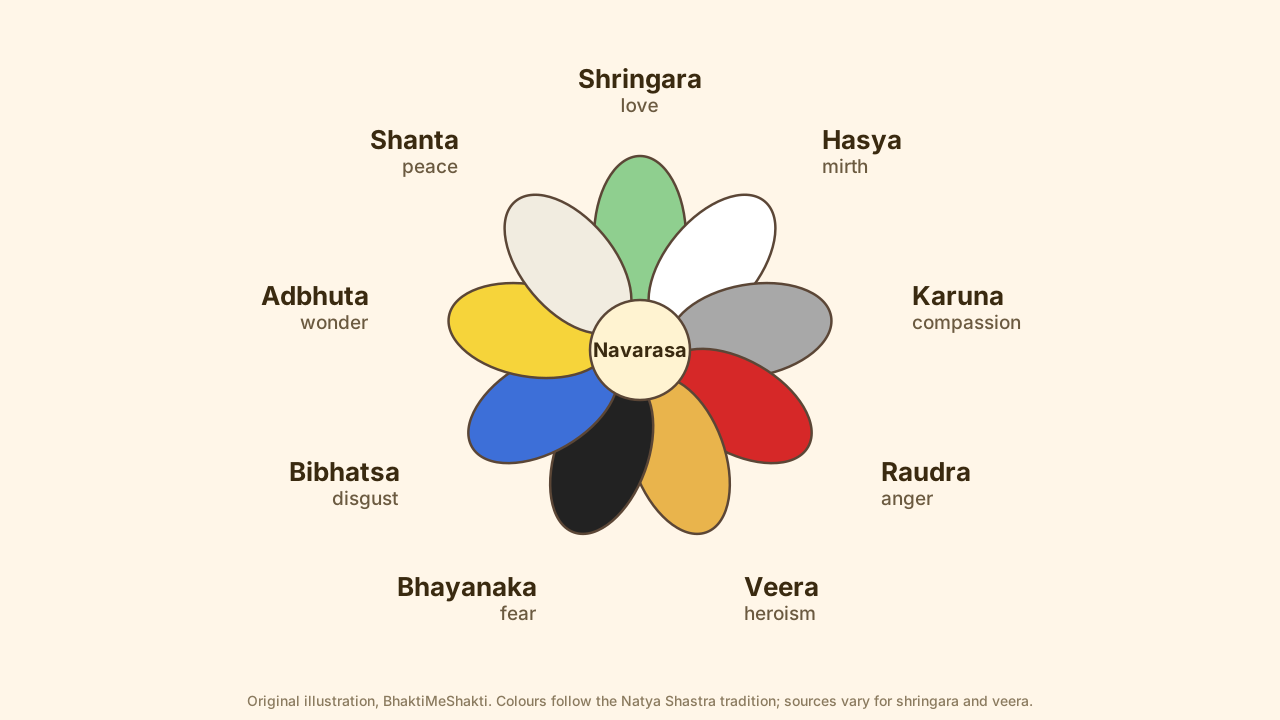
What are the nine rasas?
| Rasa | Mood | Underlying emotion (sthayi bhava) | Traditional colour |
|---|---|---|---|
| Shringara | Love, beauty | Rati (love) | Light green* |
| Hasya | Mirth, comedy | Hasa (laughter) | White |
| Karuna | Compassion, sorrow | Shoka (grief) | Grey |
| Raudra | Fury | Krodha (anger) | Red |
| Veera | Heroism | Utsaha (courage) | Golden or saffron* |
| Bhayanaka | Fear, terror | Bhaya (fear) | Black |
| Bibhatsa | Disgust | Jugupsa (aversion) | Blue |
| Adbhuta | Wonder | Vismaya (astonishment) | Yellow |
| Shanta | Peace, tranquillity | Shama (equanimity); some say nirveda | White, in some sources |
*Sources differ: one describes shringara as dark blue rather than light green, and veera’s colour is given as golden, yellowish or saffron. The Natya Shastra also assigns each rasa a presiding deity, which some sources list differently.
Are there nine rasas or eight?
Both numbers are correct, depending on the source. Bharata Muni’s Natya Shastra, an ancient Sanskrit treatise on the performing arts, discusses eight primary rasas in its dedicated chapter on the subject, and eight matching sthayi bhavas. The ninth, shanta, was added by later authors. According to Wikipedia, this addition struggled for acceptance between the 6th and 10th centuries before the term navarasa came into general use, and several sources credit the 11th-century Kashmiri philosopher Abhinavagupta with establishing it. He likened shanta to the string of a jewelled necklace: perhaps not the most striking part, but the thread that gives the other eight their form.
The text’s date is debated. One source places it between about 200 BCE and 200 CE, while another says only that it dates from the first millennium BCE.
What is the difference between rasa and bhava?
A bhava is a state of mind, the emotion that is portrayed. A rasa is the aesthetic “flavour” that the audience experiences as a result. The distinction matters: according to the Natya Shastra, the goal of performance is not merely entertainment but this shared, refined experience. Later thinkers stressed that rasa is not a reaction to real events in the outside world; it is an emotion relished in the context of art. In the framework, a permanent emotion (sthayi bhava) such as love, once intensified by the performance, becomes rasa for the audience.
How are the rasas related to each other?
The Natya Shastra’s scheme pairs them. Four are described as basic and independent: shringara, raudra, bhayanaka and veera. Each gives rise to another: hasya arises from shringara, karuna from raudra, bibhatsa from bhayanaka and adbhuta from veera.
How do the rasas appear in dance, music and sculpture?
The theory of rasa underlies all classical Indian dance and theatre. Expressing rasa in dance is called rasa-abhinaya, and dancers use the face, eyes, eyebrows and lips to convey it. Styles differ in how they do this: Kathakali, with its large costumes and make-up, uses exaggerated expressions; Kathak is very subtle; and Bharatanatyam and Kuchipudi express emotions much as we do in daily life. See our guide to India’s eight classical dance forms for how each tradition is built.
The same idea shapes music: a raga is traditionally tied to a mood, as explained in our beginner’s guide to ragas. Some Indian texts on sculpture also propose nine rasas.
Watch: the nine moods in classical dance
Sources used for this article: Wikipedia’s entries on Rasa (aesthetics), Indian aesthetics and Sthayibhava; Kalyani Kala Mandir’s guide to the navarasas; Saathee magazine’s “The Essence of Navarasa”; the Model Diplomat glossary entry on navarasa; Lingualitera’s and Caleidoscope’s explainers on the eight and nine rasas; and IndiaVideo’s description of its navarasa film. Where sources differ, the text says so. The illustration is original.
Frequently asked questions
-
What are the nine rasas?
Shringara (love), hasya (mirth), karuna (compassion), raudra (anger), veera (heroism), bhayanaka (fear), bibhatsa (disgust), adbhuta (wonder) and shanta (peace).
-
Who added the ninth rasa, shanta?
Bharata’s Natya Shastra lists eight rasas. Shanta was added by later authors and the nine-fold scheme was established through the 11th-century philosopher Abhinavagupta’s commentary.
-
What does rasa mean?
Rasa means flavour or essence. In Indian aesthetics it is the emotional relish an audience experiences from a performance, created by the emotions portrayed by the performers.
-
What is the difference between rasa and bhava?
A bhava is a state of mind or emotion that is portrayed, while a rasa is the aesthetic flavour the audience experiences as a result.
-
What is rasa-abhinaya?
Rasa-abhinaya is the expression of rasa in classical Indian dance, using the face, eyes and body to convey the mood.
-
Which rasa comes from which?
According to the Natya Shastra, hasya arises from shringara, karuna from raudra, bibhatsa from bhayanaka and adbhuta from veera.
-
Do all dance styles show the rasas the same way?
No. Kathakali uses exaggerated expressions, Kathak is very subtle, and Bharatanatyam and Kuchipudi express emotions much as we do in daily life.