
Who Is Maa Durga?
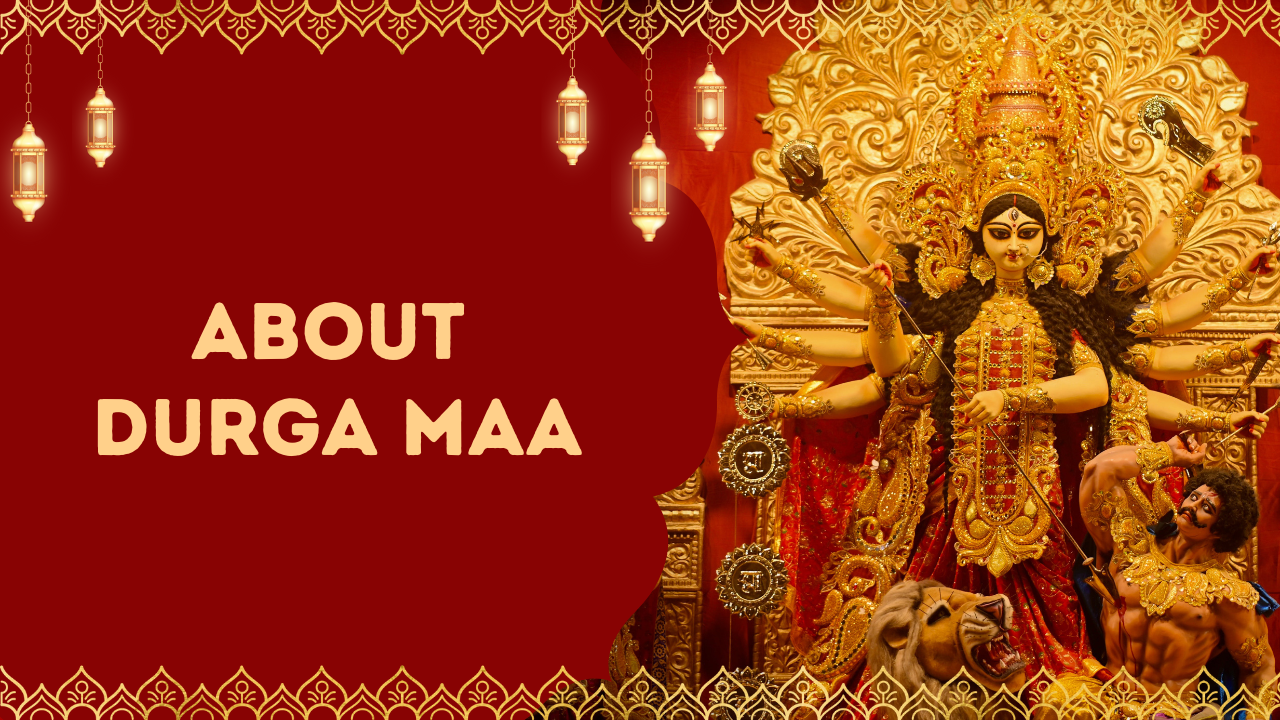
Goddess Durga, also known as Shakti or Parvati, is one of the most revered deities in Hinduism. She is the embodiment of feminine power, courage and protection. Depicted riding a lion and holding weapons in each hand, she symbolises the triumph of good over evil and the divine force that preserves moral order. As the slayer of the demon Mahishasura, she is celebrated for strength, wisdom and compassion alike. Devotees worship her particularly during Navratri, seeking courage, prosperity and spiritual upliftment.
What Are the Powers and Attributes of Maa Durga?
- Embodiment of Shakti. Durga represents the ultimate cosmic energy — the force behind creation, preservation and destruction in the universe.
- Courage and protection. Known for unmatched bravery, she protects devotees from evil forces and gives them strength to overcome obstacles. Her protective aspect is invoked especially in times of crisis.
- Slayer of Mahishasura. Her most celebrated act, the slaying of the buffalo demon, marks the triumph of good over evil and her role as preserver of dharma.
- The lion as vahana. Riding a lion signifies command over the most potent natural forces, and the strength and determination the animal represents.
- Multi-armed form. Each arm holds a weapon gifted by a different god, representing her all-encompassing powers and her readiness to destroy evil and protect the virtuous.
- Compassion and wisdom. Despite her fierce form in battle, she is revered equally for comfort, guidance and spiritual upliftment — both warrior and nurturing mother.
- Many manifestations. She is worshipped as Kali, Parvati, Bhavani and Annapurna among others, each form representing a different aspect of life, from destruction to nourishment.
- Source of inner strength. Devotees draw on her energy for resilience, mental clarity and the ability to face difficulty with courage.
Durga holds together the duality of fierce protector and compassionate mother — the strength to face adversity, offered alongside grace and wisdom.
What Are the Key Events in Durga Maa’s Life?
- Birth and creation. Durga was created from the combined energies of the gods to defeat Mahishasura, each god bestowing his divine power and weapon on her. Born from pure energy, she embodies the collective force of righteousness.
- Battle with Mahishasura. After a long fight with the shape-shifting demon, Durga slays him — the victory celebrated through Navratri.
- Manifestation as Kali. When the demons Shumbha and Nishumbha attempted to defeat her, she took the fierce form of Kali to annihilate them.
- Destruction of Raktabija. Against a demon whose spilled blood created more demons, she manifested as Mahakali and consumed the blood before it could touch the ground.
- Granting boons. As Annapurna she feeds the hungry; as Parvati she guides and protects. Her compassionate side answers those who seek her.
- Protecting her devotees. In her form as Katyayani she comes to the aid of her children, ensuring their safety.
- Bestowing wisdom. As Saraswati she grants knowledge, helping seekers overcome ignorance and achieve spiritual growth.
- Restoring peace. After battle she returns to her calm, benevolent form — the shift from warrior to mother showing her role in maintaining balance.
How Do Devotees Worship Maa Durga?
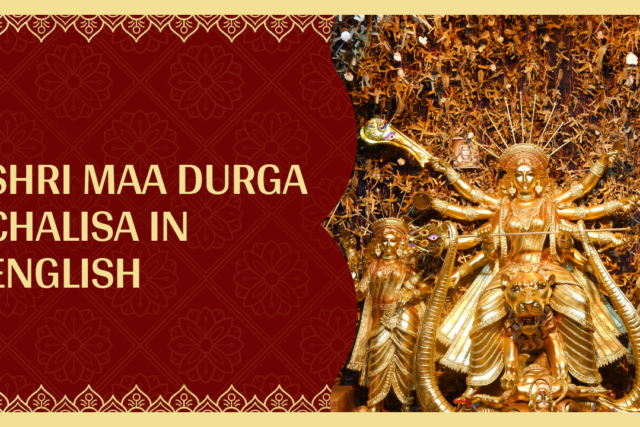
- Durga Chalisa. A forty-verse hymn praising her forms and deeds, recited for protection, strength and prosperity.
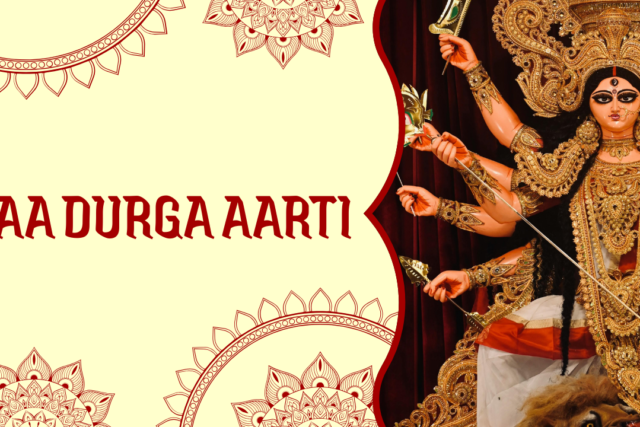
- Durga Aarti. Sung during rituals and ceremonies, and an essential part of daily worship during Navratri.
- Navratri. Nine days dedicated to the Navadurga, her nine forms. Devotees fast, perform puja and recite the Durga Saptashati and Chalisa.
- Durga Saptashati (Devi Mahatmya). An ancient text of 700 verses narrating her battles with demons, recited during Navratri.
- Fridays and Tuesdays. Considered especially auspicious. Devotees visit temples, light lamps and recite the Chalisa and Aarti.
- Kumari Puja. Young girls are honoured as embodiments of the goddess, symbolising purity and innocence. Prominent during Navratri.
- Durga Ashtami and Maha Navami. Two significant Navratri days marked with special prayers and homas (sacred fire rituals).
- Offerings. Flowers, fruits, sweets, coconut and red cloth. Red hibiscus and bel leaves are considered especially auspicious.
- Jagratas and bhajans. All-night devotional gatherings of hymns and kirtans, particularly popular during Navratri.
- Fasting. Observed during Navratri and on auspicious days as a way of purifying body and mind and focusing devotion.
Which Are the Most Famous Maa Durga Temples in India?
Vaishno Devi Temple, Jammu
The most visited Durga temple in India, set amid the Trikuta Mountains and reached by a pilgrimage trek from Katra.
Kamakhya Temple, Assam
Perched atop Nilachal Hill about eight kilometres west of Guwahati, dedicated to Goddess Kamakhya and revered as a seat of divine feminine energy.
Mansa Devi Temple, Haridwar
Set on Bilwa Parvat overlooking Haridwar and the Ganga, reached by cable car or a short climb on foot.
Chamunda Devi Temple, Himachal Pradesh
On the banks of the Baner river, a significant shrine to Durga in her Chamunda form.
Ambaji Mata Temple, Junagadh, Gujarat
A revered pilgrimage site drawing devotees from across the country.
Dakshineswar Kali Mandir, Kolkata
North of Kolkata near the Vivekananda Bridge, renowned for its association with Ramakrishna, who is believed to have attained enlightenment here.
Karni Mata Temple, Rajasthan
Over six centuries old, dedicated to Durga in her incarnation as Karni Mata, who by legend prophesied the rise of Rao Bika.
Chamundeshwari Temple, Karnataka
On the Chamundi Hills above Mysore, with wide views over the surrounding landscape.
Naina Devi Temple, Nainital
Overlooking Naini Lake, a much-loved shrine combining spiritual significance with striking views.
Which Durga Aarti, Chalisa and Mantras Can You Recite?
- Durga Aartis. Sung in praise of her grace and power, central to daily worship and to Navratri.
- Durga Chalisa. Recited to invoke her blessings and protection. Available in Hindi, English, Kannada and Tamil among other languages.
- Stotras and mantras. Including the Durga Saptashati and other invocations calling on her strength and guidance.
- Books and recordings. Works on her life, teachings and legends, alongside devotional songs and video recitations.
Maa Durga’s life and teachings inspire devotees towards strength, compassion and steady faith. Worship through the Chalisa and other devotional practice brings spiritual upliftment and nurtures courage and perseverance in the face of difficulty.
Frequently Asked Questions About Maa Durga
Who is Maa Durga Devi?
Maa Durga Devi is a principal Hindu goddess representing power, protection, motherhood, destruction of evil, and feminine strength.
What does the name Durga mean?
The name Durga means invincible or the one who eliminates suffering.
Why is Maa Durga Devi worshipped?
She is worshipped for her ability to destroy evil forces, protect the righteous, and bring strength, peace, and prosperity.
What are the different forms of Durga Maa?
Durga appears in many forms, including Kali, Bhadrakali, Mahishasuramardini, and the Navadurga (nine forms worshipped during Navratri).
What is Durga Maa’s mount or vehicle?
Her vahana (mount) is a lion or tiger, symbolizing bravery and strength.
What weapons does Durga Maa carry?
She carries various weapons given by different gods, including a trident, sword, discus, conch, bow and arrow, and more.
What is the significance of Durga Puja or Navratri?
Durga Puja and Navratri celebrate Durga’s victory over the demon Mahishasura, symbolizing the triumph of good over evil.
What is the story of Durga and Mahishasura?
According to mythology, Durga was created by the gods to defeat Mahishasura, a powerful demon who could not be defeated by any man or god.
How is Durga Maa depicted in idols and images?
She is usually shown with multiple arms holding weapons, riding a lion, and slaying the demon Mahishasura.
What values does Maa Durga Devi represent?
She symbolizes courage, righteousness, compassion, self-reliance, and the divine feminine energy (Shakti).