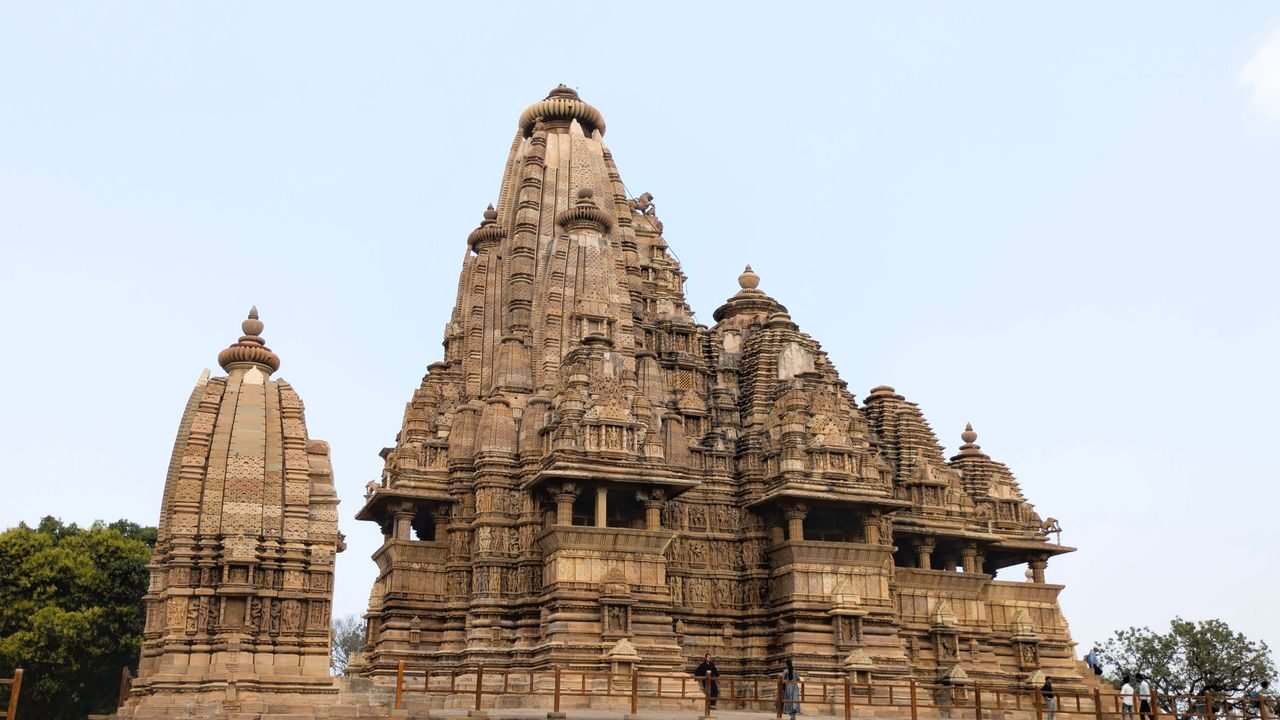
The Khajuraho temples are a group of Hindu and Jain temples in Chhatarpur district, Madhya Pradesh, built by the Chandela dynasty roughly between 950 and 1050 CE. UNESCO inscribed the Khajuraho Group of Monuments in 1986. About 20 to 25 of an original 85 temples survive, divided into western, eastern and southern groups, and the Kandariya Mahadeva Temple is the most celebrated.
Updated 12 October 2026. Ticket prices, opening hours and show timings change often, so confirm them with the ASI notice at the gate or the Madhya Pradesh Tourism office before you travel.
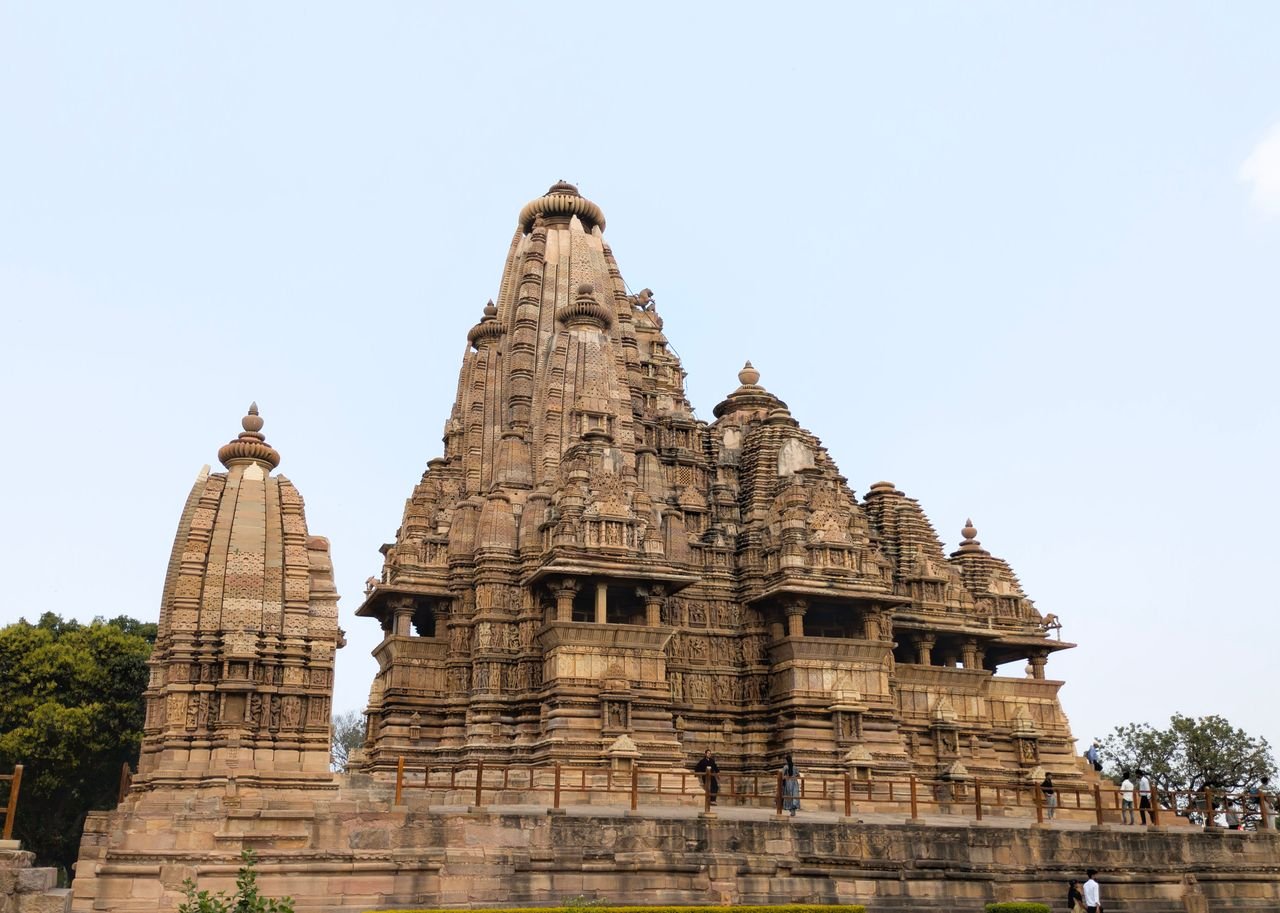
Khajuraho temples at a glance
| Fact | Detail |
|---|---|
| Location | Khajuraho, Chhatarpur district, Madhya Pradesh |
| Built by | The Chandela dynasty, with the main phase around 950 to 1050 CE |
| UNESCO status | Inscribed in 1986 under criteria (i) and (iii) |
| Temples today | About 20 to 25 survive, out of an original 85 (counts differ by source) |
| Groups | Western, eastern and southern |
| Religions | Hindu (Shaiva, Vaishnava, Shakta) and Jain |
| Best time to visit | October to March, when days are mild |
Who built the Khajuraho temples, and when?
The Chandela rulers of the Bundelkhand region built the temples over about a century, with the great burst of construction between roughly 950 and 1050 CE. Khajuraho served as a religious centre and was linked to their fortified capital cities nearby. Later tradition counts 85 temples spread across a wide area, but only a fraction of them still stand.
After the Chandela kingdom declined, the temples fell out of royal patronage and the surrounding forest slowly reclaimed the site. Local communities never forgot them, though, and at least one, the Matangeshwara Temple, has stayed in worship to this day. Outside India the complex was brought to wider attention in the 19th century, when a British surveyor, T. S. Burt, recorded it in 1838 and Alexander Cunningham later documented it for the Archaeological Survey.
Why is Khajuraho a UNESCO World Heritage Site?
UNESCO lists Khajuraho under criterion (i), as a masterpiece of human creative genius, and criterion (iii), as testimony to a vanished cultural tradition. Its statement stresses the balance between architecture and sculpture: every surface of the temples is densely carved with sacred and secular themes. If you are ordering India’s heritage sites by importance, our complete list of India’s UNESCO sites shows where Khajuraho, listed in 1986, sits among the 45.
What are the three groups of Khajuraho temples?
The monuments fall into three clusters, which is how most visitors plan their day. The western group is the largest and best preserved, and it is where almost every first-time visitor starts. The eastern group, closer to the old village, includes the Jain temples. The southern group is smaller and lies a short drive away.
| Group | Main temples | Why visit |
|---|---|---|
| Western | Kandariya Mahadeva, Lakshmana, Vishvanatha, Devi Jagadambi, Chitragupta, Matangeshwara | The finest sculpture and the most complete architecture; the temples sit in landscaped gardens |
| Eastern | Parshvanath, Adinath and Ghantai (Jain); Brahma, Vamana and Javari (Hindu) | Jain heritage and quieter surroundings |
| Southern | Duladeo and Chaturbhuj | Late Chandela style; the Chaturbhuj Temple has a large Vishnu image |
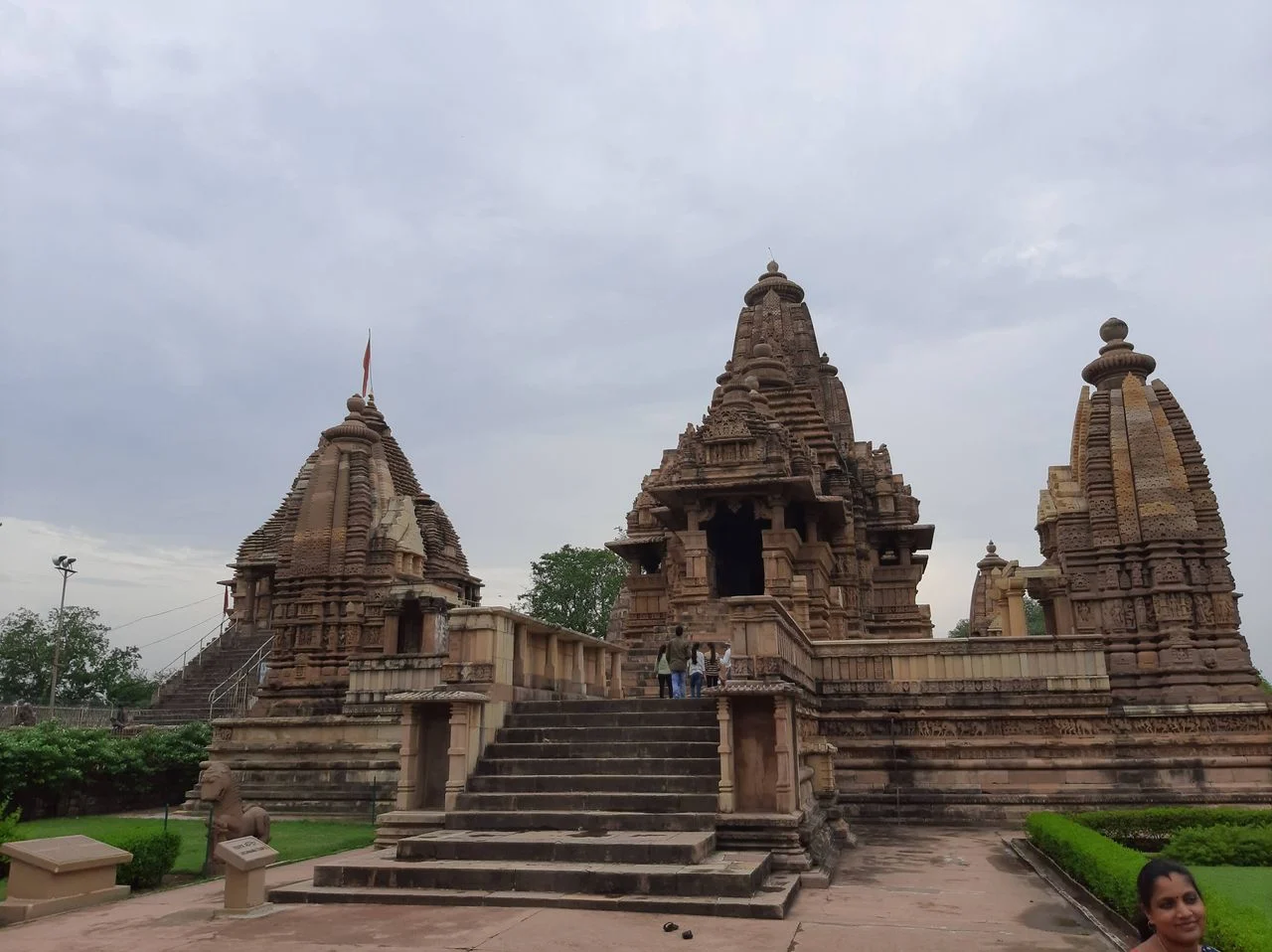
What is special about the Kandariya Mahadeva Temple?
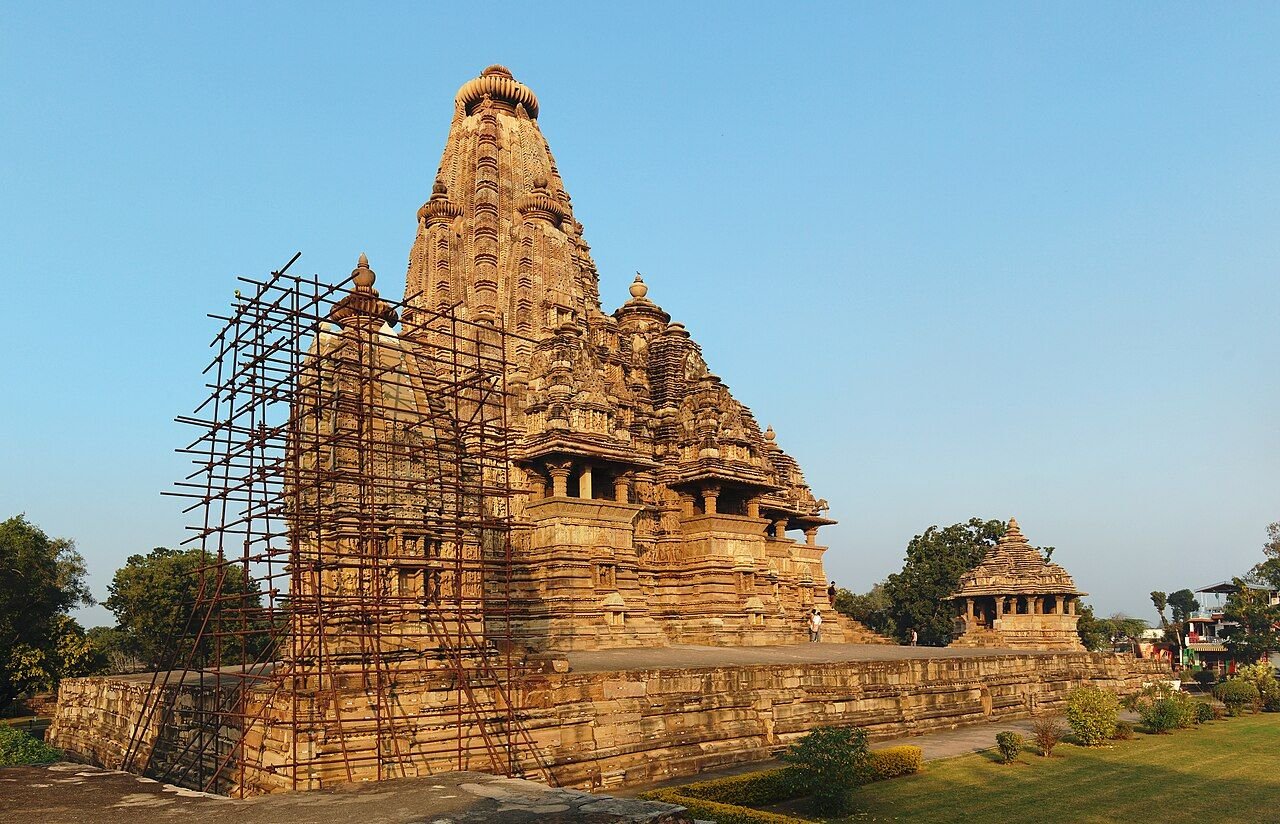
The Kandariya Mahadeva Temple, dedicated to Shiva, is generally dated to the first half of the 11th century and is the largest and tallest temple at Khajuraho, rising about 30 m from a high platform. Its shikhara is a cluster of smaller towers that builds up toward a single peak, a design usually read as a stone image of a mountain range. UNESCO’s summary describes its sculpture among the great masterpieces of Indian art.
Walk the platform slowly. The bands of carving run in tiers: gods and goddesses in the highest bands, then celestial nymphs (apsaras), musicians, dancers, couples and scenes from daily life. Inside, a long hall leads to a sanctum with a lingam, and the ceilings carry carved pendants.
Which other Khajuraho temples should you see?
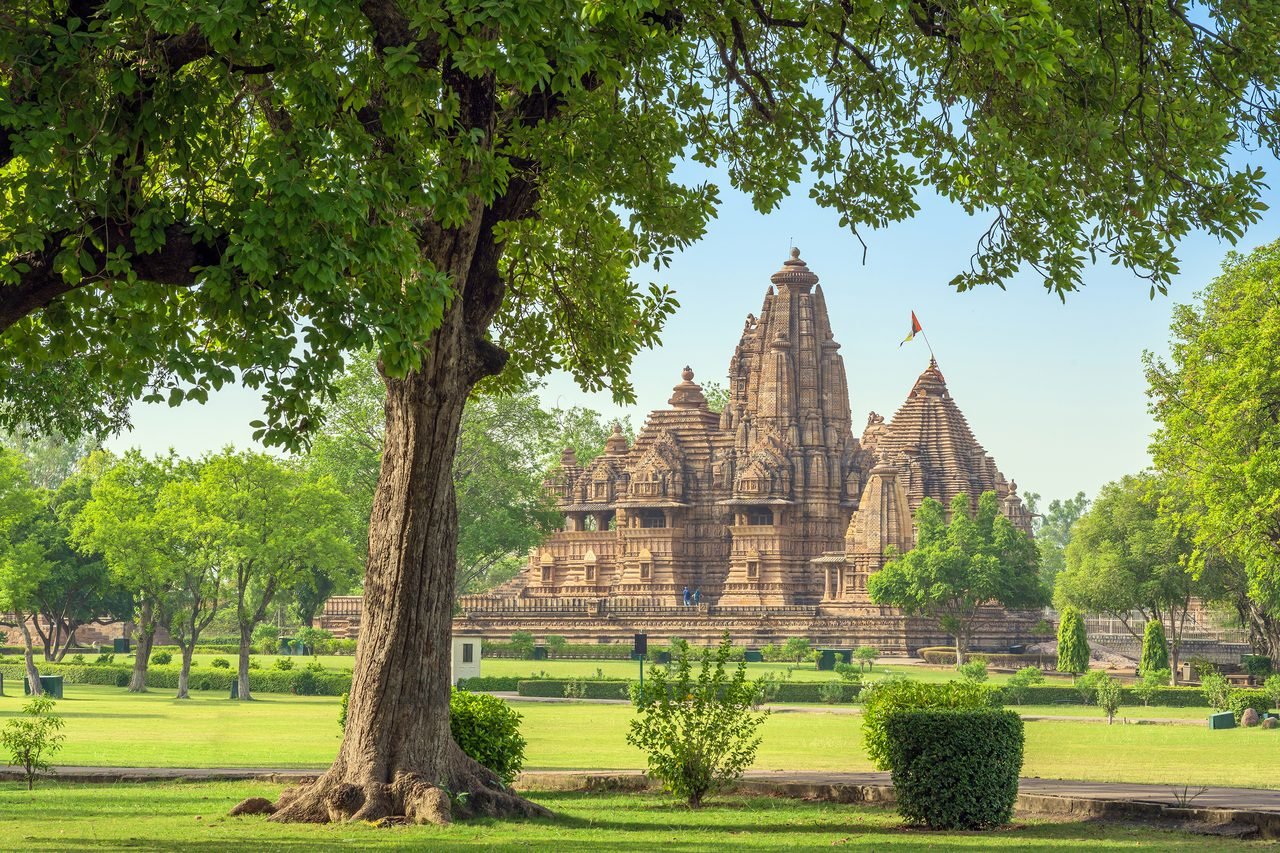
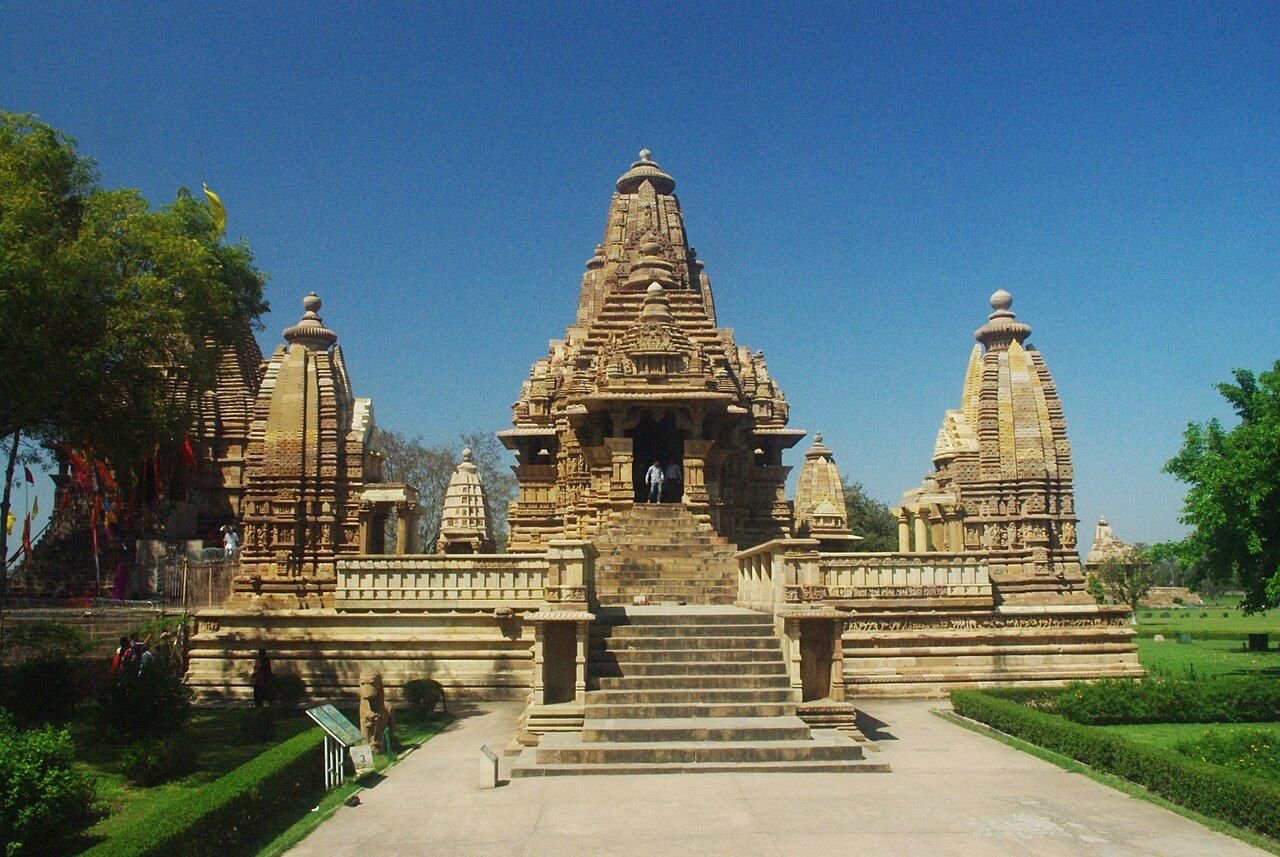
- Lakshmana Temple. A Vaishnava temple generally dated to the mid-10th century and often linked to the ruler Yashovarman. It is among the earliest of the large temples and is famous for its panels of friezes running around the platform.
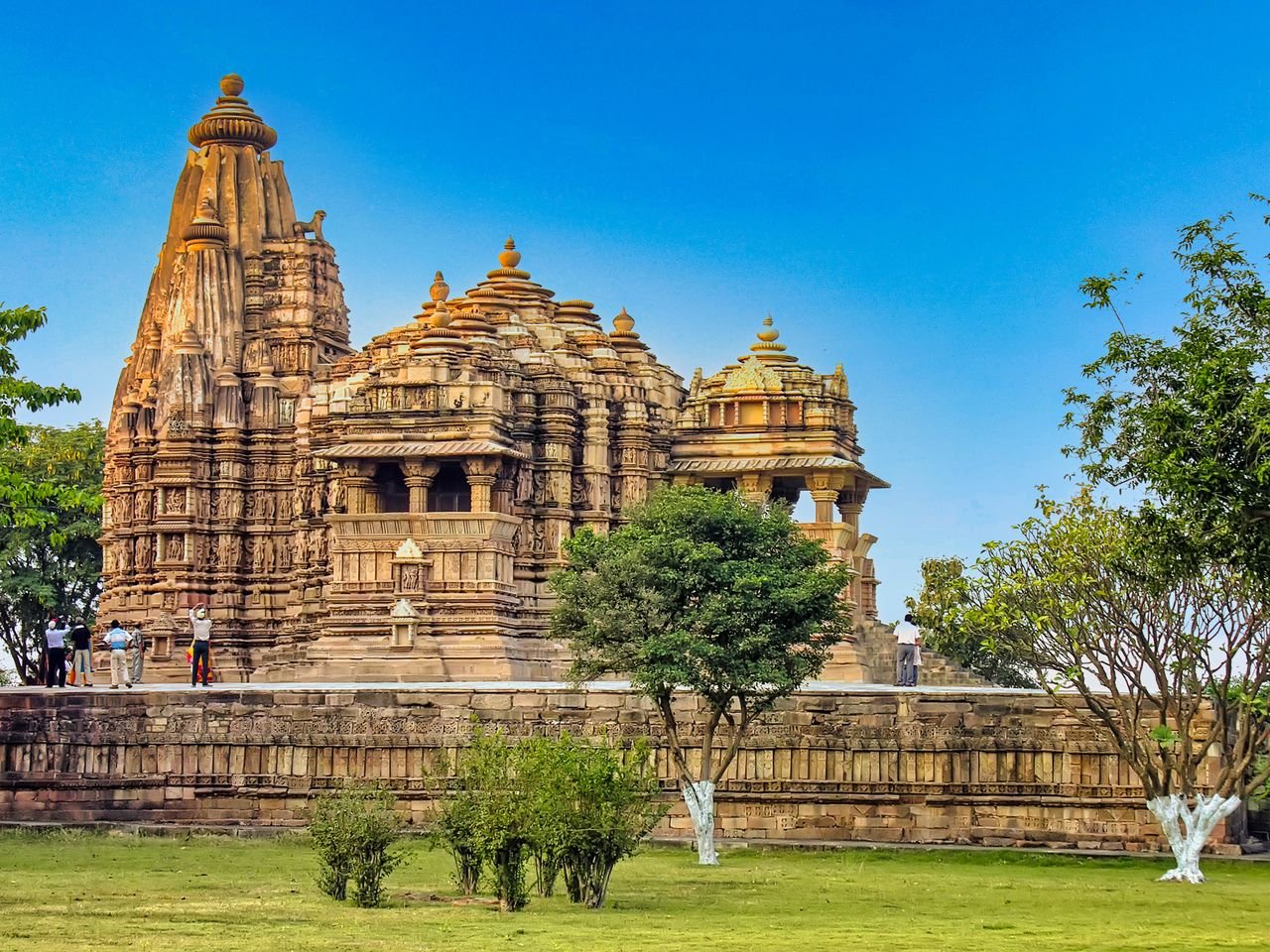
- Vishvanatha Temple. A Shiva temple whose inscription points to a date around 1002 CE. It faces a small shrine that houses a large Nandi bull.
- Chitragupta Temple. A rare Khajuraho temple dedicated to the sun god Surya, with a striking eleven-headed image of Vishnu inside.
- Matangeshwara Temple. A simple, still-active Shiva shrine with a large lingam, where worship continues and a fair marks Maha Shivaratri.
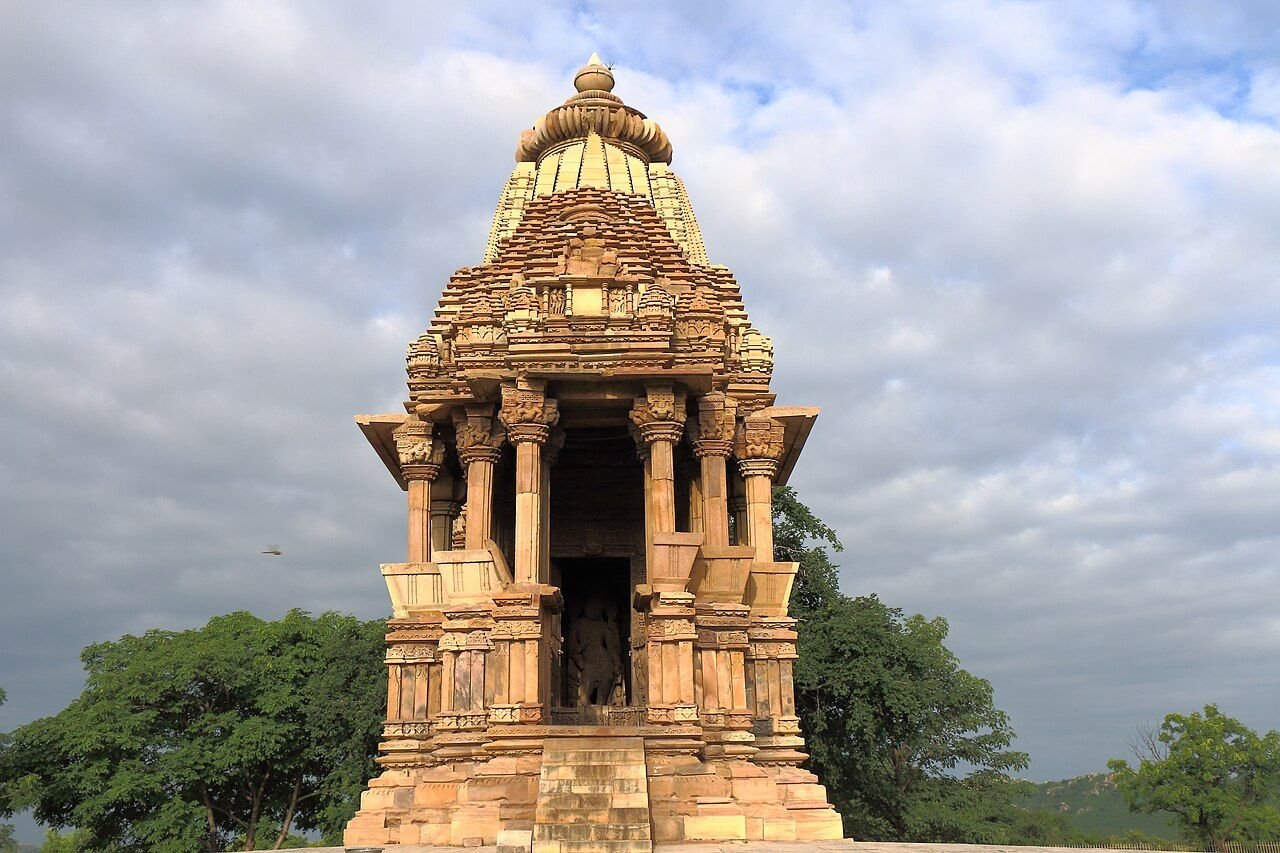
- Chaturbhuj Temple. A 12th-century southern group temple with a large Vishnu image. It is one of the few Khajuraho temples without the erotic panels, which makes it a good stop for visitors who prefer to see the quieter side of the site.
What do the Khajuraho sculptures really show?
Khajuraho is famous for its erotic carvings, but they are a small share of the total, often put at around a tenth. The vast majority of the sculpture shows ordinary and divine life: deities, warriors, hunters, musicians, mothers with children, girls looking in mirrors and dancers at rehearsal. UNESCO’s own summary lists worship scenes, couples, dancers, musicians and domestic life together as the site’s themes.
Why the erotic panels exist is debated. Scholars offer several readings, including that they reflect the Tantric traditions of the period, that they represent auspicious fertility symbolism, or that they are part of a wider vision that treats desire as one aspect of life. None of these explanations is settled, so treat any guide’s confident single answer with care. The dance and music carved on the walls link directly to the performing arts we describe in our guide to India’s eight classical dance forms and to the Navarasa, the nine rasas of Indian art.
How are the temples built?
The Khajuraho temples are built of sandstone in the Nagara style, without mortar, from fitted blocks resting on a high plinth (jagati). Each temple follows a similar plan: an entrance porch, a hall (mandapa), a vestibule and a sanctum, aligned on one axis. Larger temples add transepts and an ambulatory path around the sanctum, and the roof rises in steps toward the main tower. The tall platform lifts the temple above the ground and gives worshippers a processional path at sculpture height.
How did Khajuraho get its name?
The name is usually traced to khajur, the Hindi word for the date palm. Tradition says the old city gates were once flanked by golden date-palm trees, though that detail comes from later accounts and cannot be checked today. Medieval travellers who passed through the region recorded variants of the name, which shows the town was known well beyond the Chandela kingdom.
What mistakes should first-time visitors avoid?
- Seeing only the Western Group. It is the best-preserved cluster, but the eastern Jain temples and the southern group give a fuller picture of the Chandela style.
- Arriving at midday. The stone radiates heat and the harsh light flattens the carving. Early morning and late afternoon are better.
- Expecting every panel to be erotic. Most of the sculpture shows daily life and deities, and good guides spend much of their time on those panels.
- Skipping a guide. The reliefs are narrative panels, and without context they are easy to misread.
Watch: Khajuraho on film
These three videos give a feel for the scale and carving of the site. The first is a documentary from Prasar Bharati and the second is from Madhya Pradesh Tourism; the third looks closely at the Kandariya Mahadeva Temple.
How do you plan a visit to Khajuraho?
Plan on a full day for the three groups, or half a day if you only want the Western Group. Start early, because the stone gets hot by mid-morning and the light on the carvings is best in the first hours after sunrise and again in late afternoon. A local licensed guide is worth hiring: the panels are easy to walk past without someone to point out the stories.
- Getting there. Khajuraho has a small airport with limited flights, and a railway station, and the nearest big railheads such as Jhansi are a few hours away by road. Check current schedules before you book.
- Tickets and timings. The Western Group is ticketed by ASI and generally open daily from sunrise to sunset, with separate fees for Indian and foreign visitors. Fees and hours are revised from time to time, so check the notice at the gate.
- Evening show. A sound-and-light show is usually held in the Western Group gardens in the evening. Confirm the language and timing when you arrive.
- Dance festival. The Khajuraho Dance Festival is held at the Western Group, normally in February, and brings classical dancers to perform against the floodlit temples.
- Etiquette. Dress modestly, remove shoes where signs ask you to, and treat active shrines such as Matangeshwara as places of worship.
How does Khajuraho compare with other heritage sites?
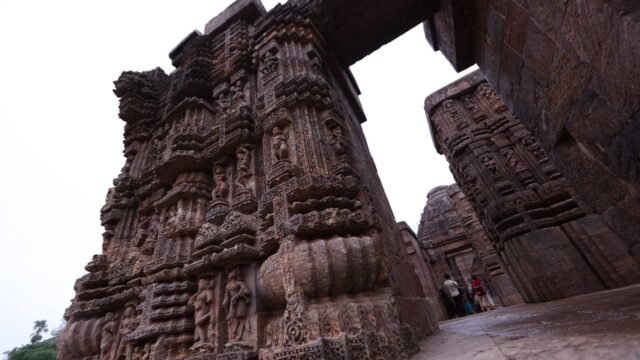
Khajuraho is best understood alongside India’s other great sculptural sites. The cave temples at Ajanta and Ellora show earlier rock-cut art, the stepwell at Rani ki Vav in Patan shows the Solanki carving tradition, and the ruins of Hampi show the later Vijayanagara style. Closer in time and idea is the chariot temple at Konark in Odisha, built in the 13th century.
Sources used for this article: UNESCO World Heritage Centre’s entry for the Khajuraho Group of Monuments (list 240) and the Wikipedia article on the Khajuraho Group of Monuments. Where sources differ on the number of surviving temples and on construction dates, the text gives ranges. Photographs are used under Creative Commons licences with credit shown beneath each picture.
Frequently asked questions
-
Where are the Khajuraho temples located?
They are in Khajuraho town, Chhatarpur district, in the Bundelkhand region of Madhya Pradesh.
-
Who built the Khajuraho temples?
The Chandela dynasty built them, with the main phase of construction between about 950 and 1050 CE.
-
Is Khajuraho a UNESCO World Heritage Site?
Yes. The Khajuraho Group of Monuments was inscribed in 1986 under criteria (i) and (iii).
-
How many Khajuraho temples are left?
Tradition says 85 were built. About 20 to 25 survive, and UNESCO’s synthesis counts 23, depending on how structures are grouped.
-
Which is the biggest temple at Khajuraho?
The Kandariya Mahadeva Temple, dedicated to Shiva, is the largest and tallest, at about 30 m.
-
Are all Khajuraho sculptures erotic?
No. The erotic carvings are a small part of the total. Most sculpture shows deities, nymphs, musicians, dancers and everyday life.
-
What is the best time to visit Khajuraho?
October to March is best because the weather is mild. Summers are very hot.