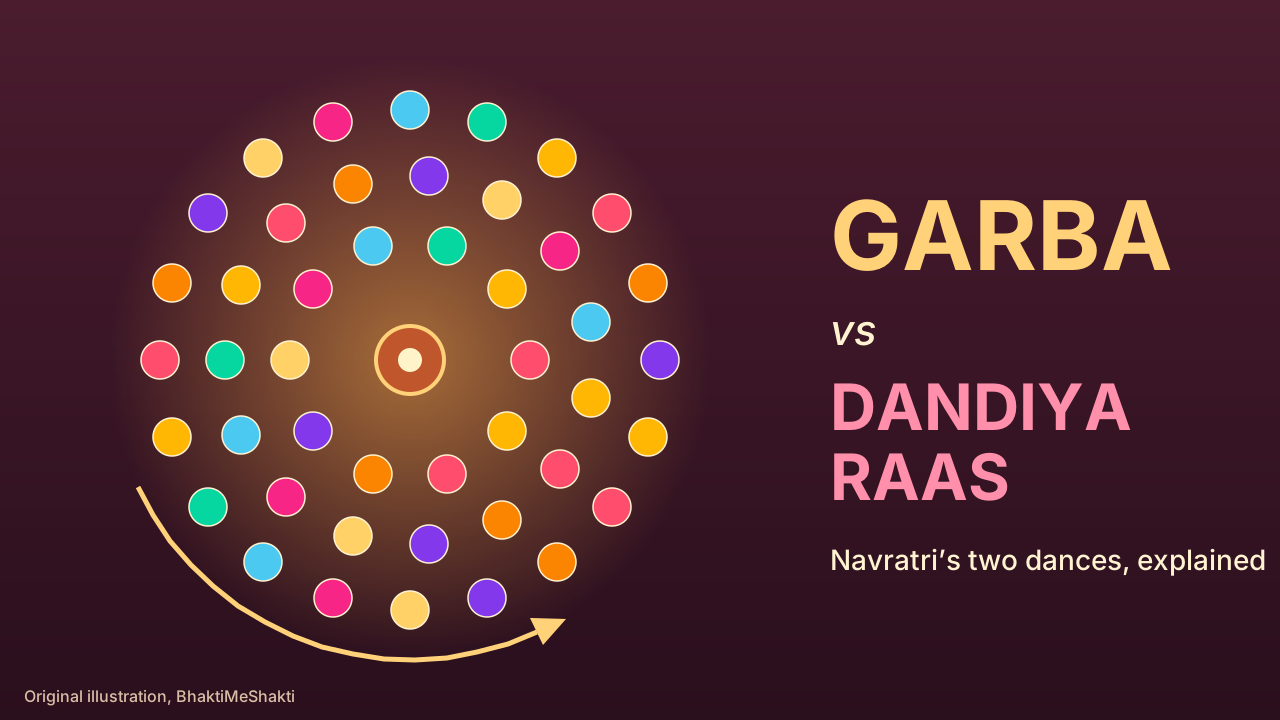
Garba and Dandiya Raas are the two signature dances of Navratri in Gujarat. Garba is a devotional circle dance performed around a lamp or an image of the goddess, with clapping and no sticks. Dandiya Raas is a faster dance in pairs with decorated sticks, said to recall Durga’s battle with Mahishasura. In 2026, Navratri runs from Sunday 11 October to Monday 19 October, with Dussehra on 20 October.
Updated 6 October 2026.
What is the difference between Garba and Dandiya Raas?
| Garba | Dandiya Raas | |
|---|---|---|
| Core idea | A devotional circle dance honouring the goddess | An energetic stick dance |
| Props | None; dancers clap | A pair of decorated sticks (dandiyas) |
| Formation | Circles, often concentric, around a lamp or image | Pairs, with partners changing as the dance goes on |
| Tempo | Starts slow and builds to whirling | Fast and playful |
| Linked story | Worship of Shakti, the feminine divine | A mock fight between Durga and Mahishasura; some link it to Krishna’s raas lila |
| UNESCO status | “Garba of Gujarat” inscribed 6 December 2023 | Not separately inscribed |
In practice the two have blended. Several guides note that on most Navratri nights an evening begins with Garba, often around the time of the aarti, and moves into Dandiya Raas later, though this varies by venue.
What is Garba?
UNESCO describes Garba as a ritualistic and devotional dance performed during Navratri, the festival dedicated to Shakti, the feminine energy. The dance takes place around a perforated earthenware pot lit with an oil lamp, or an image of the mother goddess Amba. Dancers move around the centre in a counter-clockwise circle with simple movements, singing and clapping in unison. It begins with slow circular movements, and the tempo gradually builds to a whirl.
The name is linked to garbha deep, the lamp inside a perforated clay pot placed at the centre of the circle. Several sources describe the pot as symbolising the womb and the light as life growing within.
What is Dandiya Raas?
Dandiya Raas is danced with two sticks per person, usually in pairs. It is often described as a mock fight between the goddess Durga and the demon king Mahishasura, with the clashing sticks standing for Durga’s swords. Other accounts connect raas to the circle dances of Krishna and the gopis, known as raas lila. Sources also differ on its origins: one describes it as traditionally a men’s dance, while another says men and women have traditionally played it together. Today everyone joins in.
Did UNESCO recognise Dandiya Raas too?
No. UNESCO inscribed Garba of Gujarat on its Representative List of the Intangible Cultural Heritage of Humanity on 6 December 2023, during the 18th session of the Intergovernmental Committee in Kasane, Botswana. It was India’s 15th element on the list. UNESCO’s text credits Garba with fostering social equality by diluting socio-economic, gender and religious barriers. Dandiya Raas was not separately inscribed, though the two are often danced together.
When is Navratri 2026?
- Begins: Sunday 11 October 2026, with Ghatasthapana
- Maha Navami: Monday 19 October 2026
- Vijayadashami (Dussehra): Tuesday 20 October 2026
These dates are consistent across the panchang-based guides I checked, but local calendars can differ by a day, so confirm with your local temple or panchang. Garba season opens in Gujarat and Mumbai on the first night.
Tips if you are joining your first Garba
- Follow the circle. Move counter-clockwise with everyone else, and match the clapping rhythm before worrying about steps.
- Start with a simple pattern. One popular Vadodara style is a six-step dodiyu: forward, then backward, clapping at intervals.
- You do not need training. Garba is open to all ages, and people dance regardless of experience.
- Dandiya later. Sticks usually appear after the early circle dancing, so you can warm up first.
Watch: Garba of Gujarat
Sources used for this article: UNESCO’s Intangible Cultural Heritage entry and film for Garba of Gujarat; the Press Information Bureau’s release on the inscription; Wikipedia’s entries on Garba and Dandiya Raas; Outlook Traveller’s feature on Garba; The Tribune’s report on Vadodara’s Garba; and panchang-based Navratri 2026 guides from Vedic Temple, Andaaz Fashion, Knewspaper and Amdavad Gully. Where sources differ, the text says so. The illustration is original.
Frequently asked questions
-
What is the main difference between Garba and Dandiya?
Garba is a devotional circle dance performed around a lamp or goddess image, with clapping and no sticks. Dandiya Raas is a faster dance in pairs using two decorated sticks, said to recall Durga’s mock fight with Mahishasura.
-
Are Garba and Dandiya the same dance?
No, though they are often danced together during Navratri. Garba is traditionally done without sticks in circles, while Dandiya Raas uses sticks in pairs.
-
Which direction do Garba dancers move?
According to UNESCO, dancers move around the central lamp or image in a counter-clockwise circle.
-
What is the garbo or garbha deep?
It is the perforated earthen pot holding a lit lamp that stands at the centre of the Garba circle. Several sources describe it as symbolising the womb and the life-giving light within.
-
Did UNESCO recognise Dandiya Raas?
No. UNESCO inscribed Garba of Gujarat on 6 December 2023 as India’s 15th element on its Intangible Cultural Heritage list. Dandiya Raas was not separately inscribed.
-
When is Navratri 2026?
Sharad Navratri 2026 begins on Sunday 11 October with Ghatasthapana and runs to Maha Navami on Monday 19 October, with Vijayadashami (Dussehra) on Tuesday 20 October. Confirm with your local panchang.
-
Do you need to know the steps to join Garba?
No. Garba is open to all ages and experience levels. Follow the circle, match the clapping, and learn the simple steps as you go.