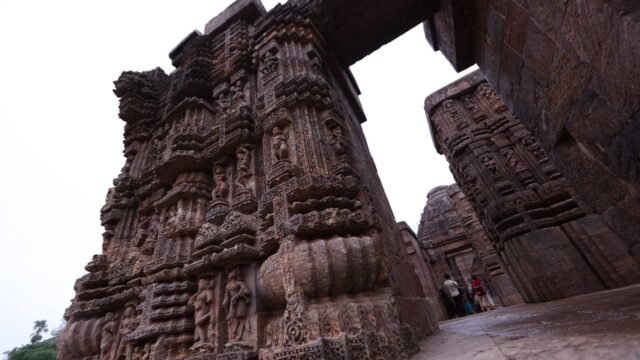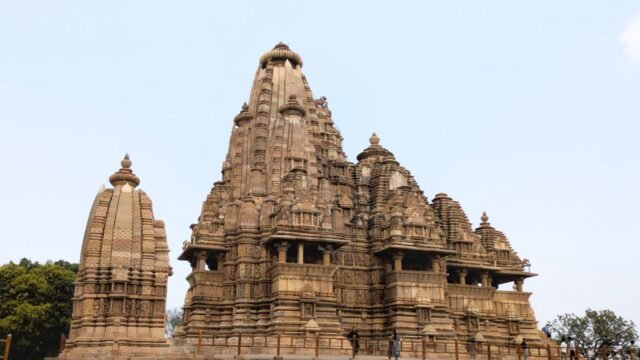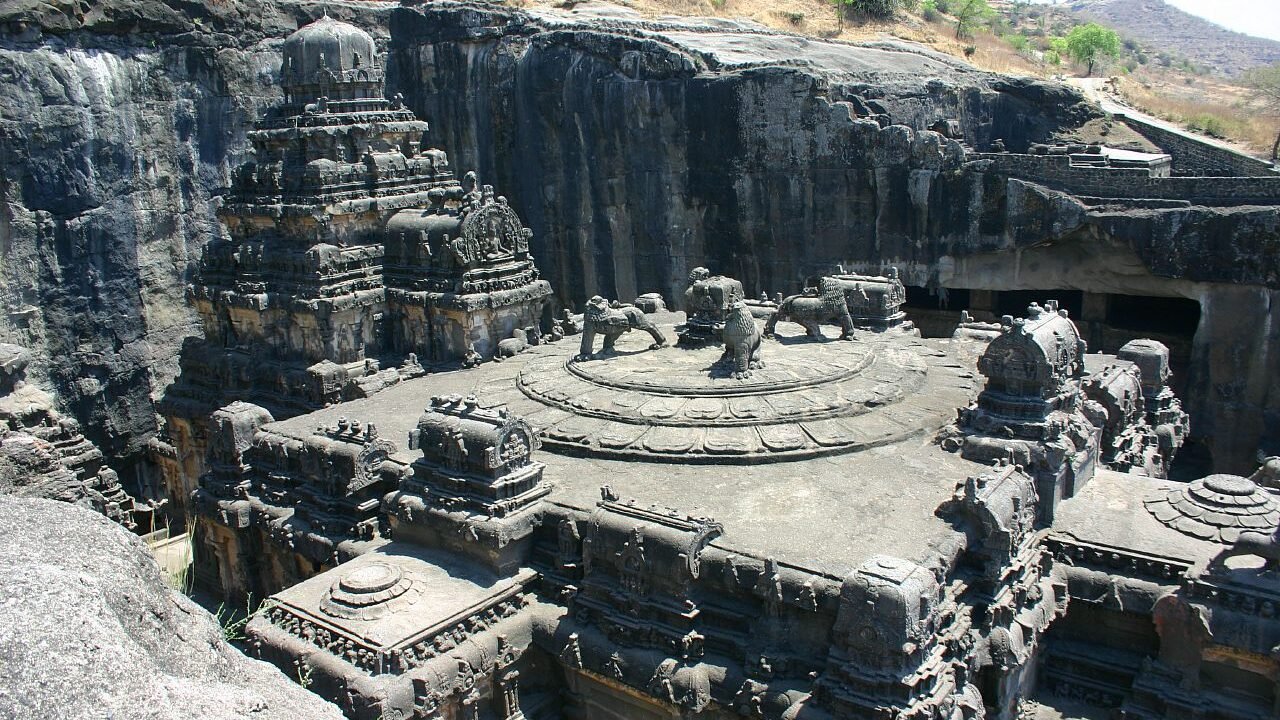
Ajanta and Ellora are two UNESCO World Heritage rock-cut cave complexes in Maharashtra, both inscribed in 1983. Ajanta, about 100 km from Chhatrapati Sambhajinagar (formerly Aurangabad), has 30 Buddhist caves famous for ancient paintings. Ellora, about 30 km from the city, has 34 Buddhist, Hindu and Jain caves, including the Kailasa temple. Ajanta is closed on Mondays and Ellora on Tuesdays.
Updated 6 October 2026. Closing days and distances follow several current guides; confirm timings and ticket prices with the Archaeological Survey of India (ASI) before you travel.
What is the difference between Ajanta and Ellora?
| Ajanta | Ellora | |
|---|---|---|
| UNESCO inscription | 1983 | 1983 |
| Caves | 30 | 34 (12 Buddhist, 17 Hindu, 5 Jain) |
| Religion | Buddhist | Buddhist, Hindu and Jain side by side |
| When | Two phases: about the 2nd–1st century BCE, and the 5th–6th century CE | Mainly about 600–1000 CE; UNESCO’s summary stretches the work to the 12th century |
| Famous for | Ancient paintings of the Buddha’s life and the Jataka tales | The Kailasa temple (Cave 16), carved from rock |
| Distance from the city | About 100 km | About 30 km |
| Closed on | Mondays | Tuesdays |
What is special about the Ajanta Caves?
The 30 Ajanta caves are cut into a basalt cliff above a river gorge in the Sahyadri hills. UNESCO notes that the first Buddhist caves date from the 2nd and 1st centuries BCE, and that many more richly decorated caves were added in the Gupta period of the 5th and 6th centuries CE. The Maharashtra tourism department describes prayer halls with vaulted ceilings, carved pillars and large stupas. The caves are best known for their painted walls and ceilings, which show episodes from the Buddha’s life and his previous lives (the Jataka tales).
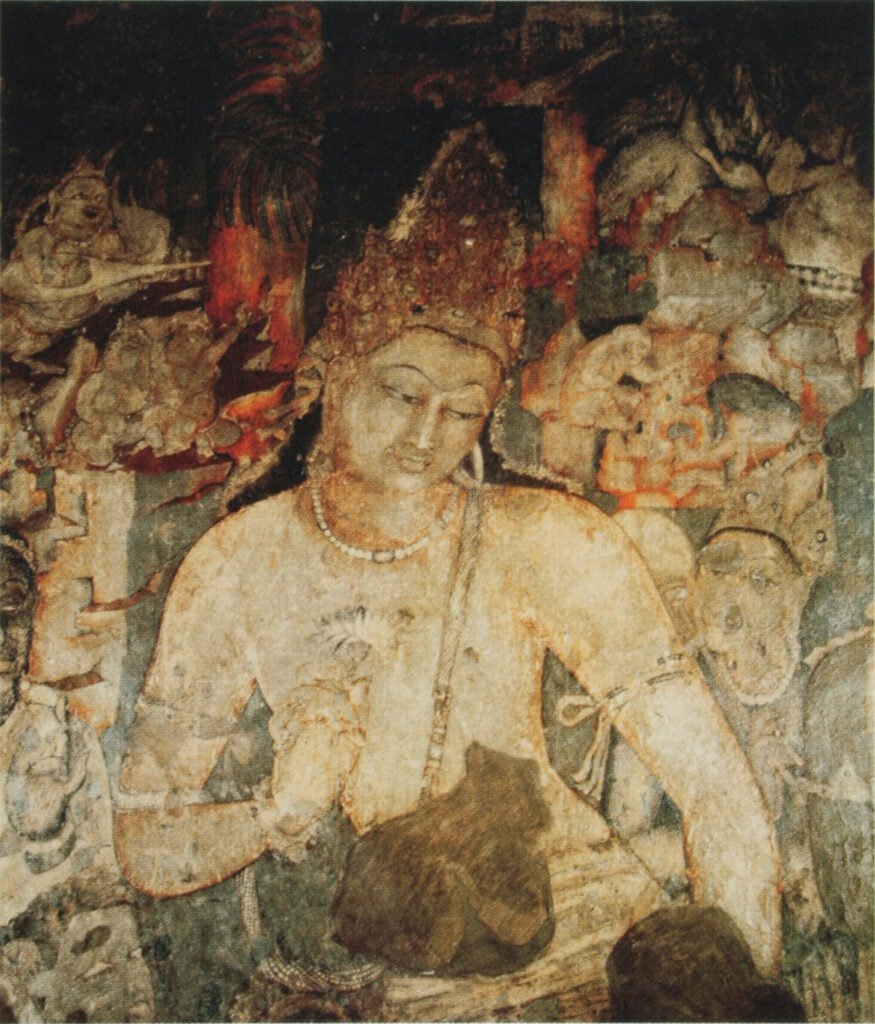
- Cave 1: home to the Padmapani painting, often cited as the site’s best-known mural.
- Cave 2: Jataka panels, including the Vidhurapandita story, with painted ceilings.
- Caves 16 and 17: further Jataka narratives, including the “Dying Princess” panel in Cave 16.
Sources credit the Vakataka dynasty, especially King Harishena, with sponsoring the later phase at Ajanta.
What is special about the Ellora Caves?
Ellora’s 34 caves run along a roughly 2 km escarpment: caves 1–12 are Buddhist, 13–29 Hindu and 30–34 Jain. UNESCO says the ensemble reflects a spirit of co-existence and religious tolerance, with rock-cut work carried out in three phases. Scholars describe an earlier Buddhist phase (about 600 to 730 CE) followed by Hindu and Jain building (about 730 to 950 CE).
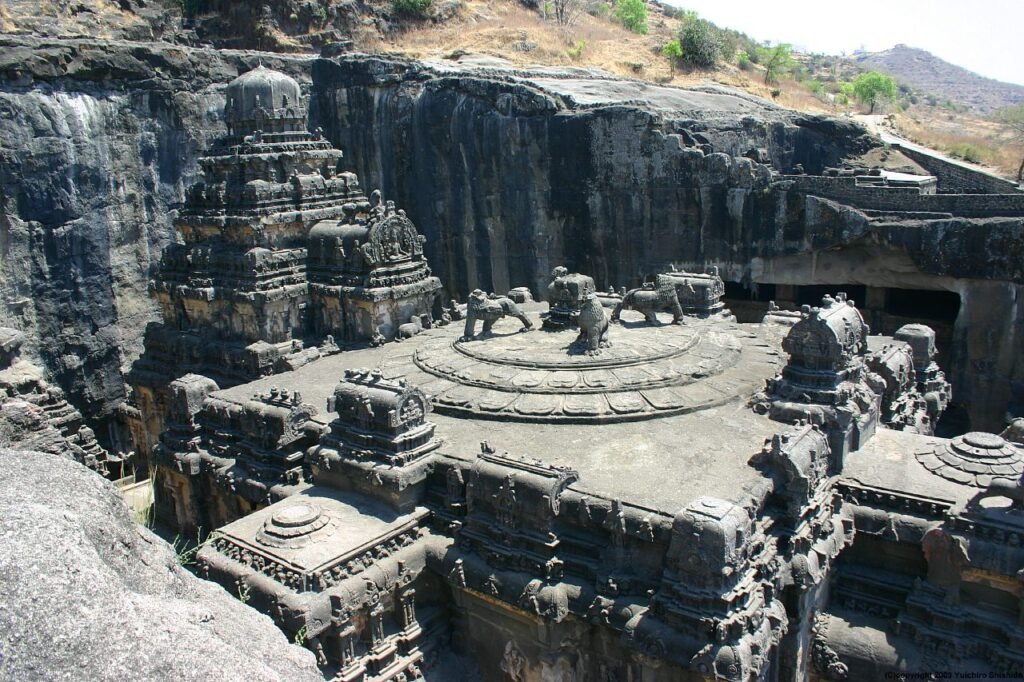
The highlight is Cave 16, the Kailasa temple, dedicated to Shiva and shaped like a chariot to represent Mount Kailasa. It is described as the largest single monolithic rock excavation in the world, and UNESCO calls it the culmination of rock-cut architecture in India. It is not a cave in the usual sense but a freestanding temple carved out of the cliff. It is usually dated to the late 8th century and linked to the Rashtrakuta king Krishna, and a famous panel shows Ravana shaking Mount Kailasa while Shiva reassures a frightened Parvati.
Which should you visit first?
- Check the closing days first. Ajanta is closed on Mondays and Ellora on Tuesdays, so never plan Ajanta on a Monday or Ellora on a Tuesday.
- Only one day? One guide recommends Ellora, because it is much closer and Cave 16 is the single most dramatic sight.
- Two days? Split them: the sites are about 100 km apart, so they are best visited on separate days.
How do you get to Ajanta and Ellora?
Both are based from Chhatrapati Sambhajinagar, the city officially renamed from Aurangabad in 2023, so you will still see both names on signs and train tickets. The city has an airport and a railway station, and visitors take buses or taxis to the caves. Ajanta is roughly 100–108 km away, about a 2.5-hour drive, so most people hire a car for the day; Ellora is about 30 km from the city. One older guide lists Ajanta’s hours as 9 am to 5 pm and Ellora’s as sunrise to sunset, but hours and ticket prices change, so check ASI. For more heritage ideas, see our guides to the Taj Mahal and Hampi.
Watch: the Ajanta Caves
Sources used for this article: UNESCO World Heritage Centre pages and films for Ajanta and Ellora; Maharashtra Tourism’s Ajanta page; Wikipedia’s entry on the Ellora Caves; Britannica Kids; Sahapedia and Cornell University Library’s notes on the Kailasa temple; and visitor guides from Nomira, Pahun Holidays, Ira Hotels, Travel India Smart and others for closing days and distances. Where sources differ, the text says so. Photographs are used under Creative Commons or public-domain terms, credited beneath each image.
Frequently asked questions
-
Which day are Ajanta and Ellora closed?
Ajanta is closed on Mondays and Ellora is closed on Tuesdays, so plan Ajanta for any day except Monday and Ellora for any day except Tuesday.
-
How many caves are there at Ajanta and Ellora?
Ajanta has 30 Buddhist caves. Ellora has 34 caves: 12 Buddhist, 17 Hindu and 5 Jain.
-
How far are Ajanta and Ellora from Aurangabad?
Ajanta is about 100 km from Chhatrapati Sambhajinagar (formerly Aurangabad), roughly a 2.5-hour drive, and Ellora is about 30 km from the city. The two sites are about 100 km apart.
-
Are Ajanta and Ellora UNESCO World Heritage Sites?
Yes. Both were inscribed on the UNESCO World Heritage List in 1983.
-
What is the Kailasa temple at Ellora?
The Kailasa temple, Cave 16, is a chariot-shaped temple to Shiva carved out of the rock face. It is described as the largest single monolithic rock excavation in the world and is usually dated to the late 8th century.
-
What are the Ajanta Caves famous for?
Ajanta is famous for its ancient Buddhist wall paintings showing the life of the Buddha and the Jataka tales, as well as its rock-cut prayer halls and monasteries.
-
Can you visit Ajanta and Ellora in one day?
It is difficult because they are about 100 km apart. Guides recommend visiting them on separate days, or choosing Ellora if you have only one day.
-
Is Aurangabad the same as Chhatrapati Sambhajinagar?
Yes. Aurangabad was officially renamed Chhatrapati Sambhajinagar in 2023, though both names are still seen on signs and tickets.