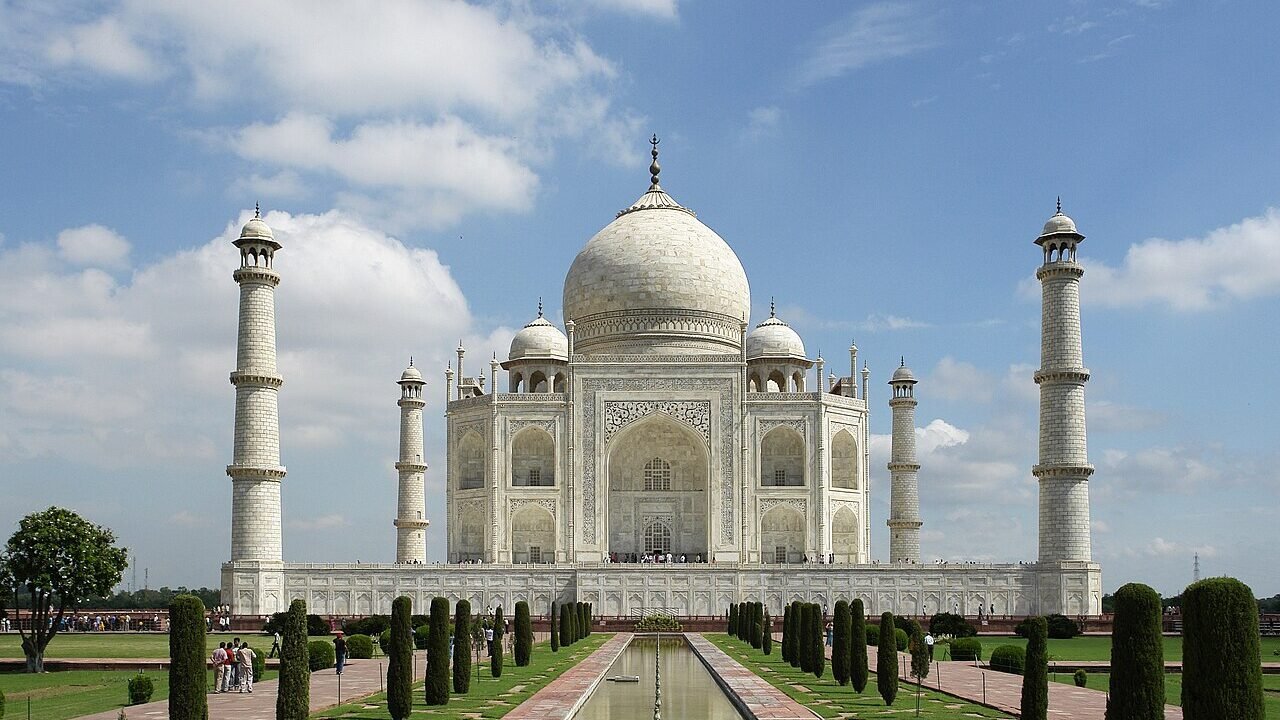
The Taj Mahal is a white marble mausoleum in Agra, built by the Mughal emperor Shah Jahan for his wife Mumtaz Mahal between about 1632 and 1653. According to the Archaeological Survey of India (ASI), entry is ₹50 for Indian visitors and ₹1,100 for foreign visitors, plus an optional ₹200 to enter the main mausoleum. It is closed to visitors every Friday.
Updated 6 October 2026. Prices and rules below follow ASI’s published rates; they can change, so confirm on the official site before you travel.
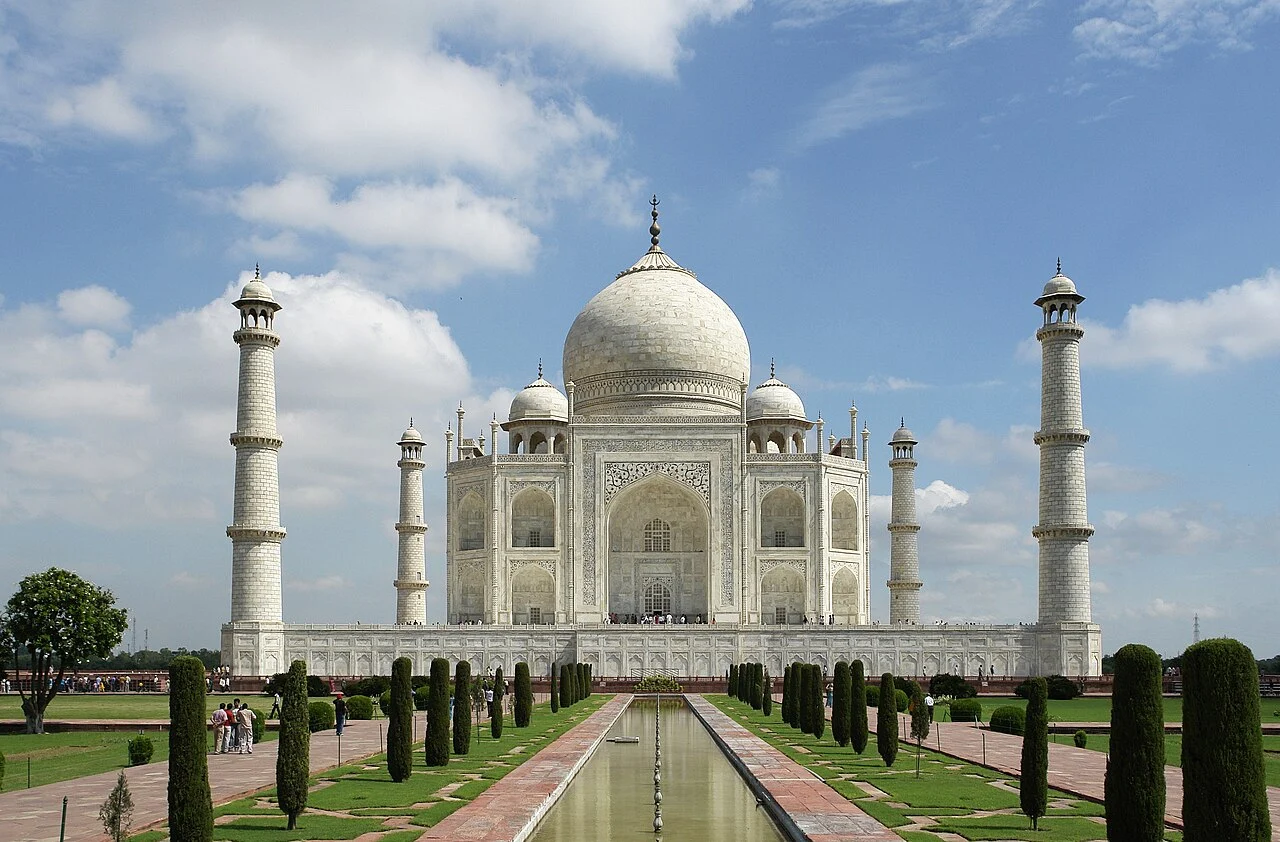
Taj Mahal at a glance
| Location | Agra, Uttar Pradesh, on the bank of the Yamuna river |
| Built by | Shah Jahan, fifth Mughal emperor (reigned 1628–58), for Mumtaz Mahal |
| Construction | Began about 1632; main mausoleum largely finished around 1648; whole complex around 1653 |
| Chief architect | Ustad Ahmad Lahori, leading a board of architects |
| World Heritage status | UNESCO site since 1983 |
| Managed by | Archaeological Survey of India |
| Closed | Every Friday |
How much is a Taj Mahal ticket in 2026?
| Visitor | Entry | Main mausoleum (optional) |
|---|---|---|
| Indian citizens | ₹50 | + ₹200 |
| Foreign visitors / NRI | ₹1,100 | + ₹200 |
| SAARC / BIMSTEC visitors | ₹540 | + ₹200 |
| Children under 15 | Free | — |
ASI notes that the extra ₹200 ticket is required to go inside the main mausoleum, and that tickets can be bought online through ASI’s own sites (tajmahal.gov.in and asiagracircle.in) as well as at the gates. Ticket windows are listed as opening one hour before sunrise and closing 45 minutes before sunset. Several guides add that OCI cardholders are charged the Indian rate and that foreign visitors should carry a passport; confirm both with ASI.
What are the Taj Mahal timings?
- Days: Saturday to Thursday. The Taj Mahal is closed to visitors on Fridays.
- Hours: Sunrise to sunset. Guides report that it opens about 30 minutes before sunrise and closes about 30 minutes before sunset, so the exact times shift through the year.
- Night viewing: Offered on a limited basis around the full moon, in batches of 50 people for 30 minutes, and not on Fridays or during Ramadan. Guides quote tickets of about ₹510 for Indians and ₹750 for foreigners, but the dates, evening hours and booking rules vary by source, so check with the ASI office in Agra.
What is the best time to visit the Taj Mahal?
Sources consistently name October to March as the best season, when Agra is cooler and drier, though it is also the busiest. Within a day, early morning is widely recommended for softer light on the marble and thinner crowds.
Who built the Taj Mahal, and why?
Shah Jahan commissioned it as a tomb for his wife Mumtaz Mahal, who died in childbirth in 1631; they had been married since 1612. Britannica says building began about 1632, while some sources give 1631. More than 20,000 workers and artisans are said to have worked on it under a board of architects led by Ustad Ahmad Lahori, and the white marble came from Makrana in Rajasthan. Shah Jahan, who died in 1666, was later buried beside Mumtaz Mahal.
UNESCO inscribed the Taj Mahal in 1983, describing it as the jewel of Muslim art in India and a universally admired masterpiece of world heritage. It was also chosen in 2007 as one of the New7Wonders of the World in a global poll.
What is special about the Taj Mahal’s design?
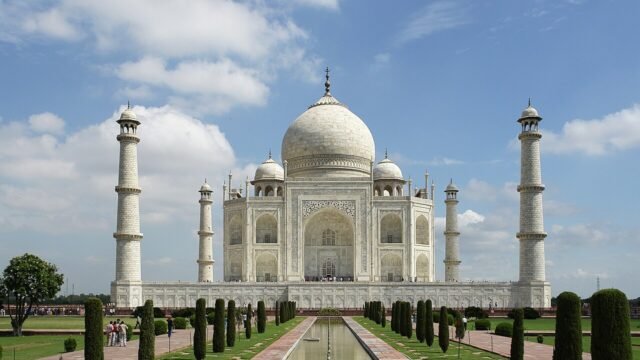
- Perfect symmetry. The mausoleum has four minarets, four small pavilions and one central dome. Smarthistory notes the minarets are ornamental, not used for the call to prayer.
- A paradise garden. ASI describes the complex as conceived as an earthly replica of Mumtaz’s house in paradise, laid out as a char bagh garden.
- Marble and sandstone. The main mausoleum is entirely white marble, while the flanking buildings are red sandstone. A mosque stands to the west, completed in 1643, and a matching building called the jawab stands to the east to complete the symmetry.
- An unusual position. Unlike most Mughal garden tombs, the Taj sits at the end of the garden beside the river instead of at its centre.
How do you get to the Taj Mahal from Delhi?
Agra is about 233 km from Delhi. By road via the Yamuna Expressway the journey takes around three hours, though guides quote three to four depending on traffic. Agra is also well connected to Delhi by rail. For more heritage ideas, see our guides to Hampi and Rani ki Vav.
Watch: the story behind the Taj Mahal
Sources used for this article: the Archaeological Survey of India’s official Taj Mahal ticketing and architecture pages (tajmahal.gov.in); Encyclopaedia Britannica; Wikipedia; Smarthistory’s entry on the Taj Mahal; Google Arts & Culture’s “Taj Mahal: A Tour from the Top” with the ASI; and visitor guides from Squid Travel India, India Legacy, 7wonders.org and others for night viewing and travel details. Where sources differ, the text says so. The photograph is used under a Creative Commons licence with credit shown beneath it.
Frequently asked questions
-
What is the Taj Mahal ticket price in 2026?
According to ASI, entry is 50 rupees for Indian visitors, 1,100 rupees for foreign visitors and 540 rupees for SAARC and BIMSTEC visitors, plus an optional 200 rupees to enter the main mausoleum. Children under 15 enter free.
-
Which day is the Taj Mahal closed?
The Taj Mahal is closed to visitors every Friday.
-
What are the Taj Mahal opening hours?
It is open from sunrise to sunset, Saturday to Thursday. Guides report that it opens about 30 minutes before sunrise and closes about 30 minutes before sunset, and ticket windows open one hour before sunrise and close 45 minutes before sunset.
-
What is the best time to visit the Taj Mahal?
October to March is the most comfortable season, though also the busiest. Early morning is widely recommended for softer light and fewer people.
-
Who built the Taj Mahal and when?
The Mughal emperor Shah Jahan built it for his wife Mumtaz Mahal, who died in 1631. Construction began about 1632, the main mausoleum was largely finished around 1648 and the complex around 1653.
-
Is the Taj Mahal a UNESCO World Heritage Site?
Yes. UNESCO inscribed it in 1983, describing it as the jewel of Muslim art in India and a universally admired masterpiece of world heritage.
-
Can you see the Taj Mahal at night?
Limited night viewing is offered around the full moon, in batches of 50 people for 30 minutes, and not on Fridays or during Ramadan. Dates, hours and ticket prices vary by source, so confirm with ASI in Agra.
-
How far is the Taj Mahal from Delhi?
Agra is about 233 km from Delhi, roughly three hours by road via the Yamuna Expressway.