The Mountain Railways of India are three narrow-gauge “toy train” lines that together form one UNESCO World Heritage Site: the Darjeeling Himalayan Railway in West Bengal, the Nilgiri Mountain Railway in Tamil Nadu and the Kalka–Shimla Railway in North India. The Darjeeling line was listed in 1999, the Nilgiri line was added in 2005 and the Kalka–Shimla line on 8 July 2008. The Nilgiri line is India’s only rack railway.
Updated 9 October 2026. Fares, timings and which services run steam or diesel change, so check current details with Indian Railways before you travel. Each railway below has its own photo carousel.
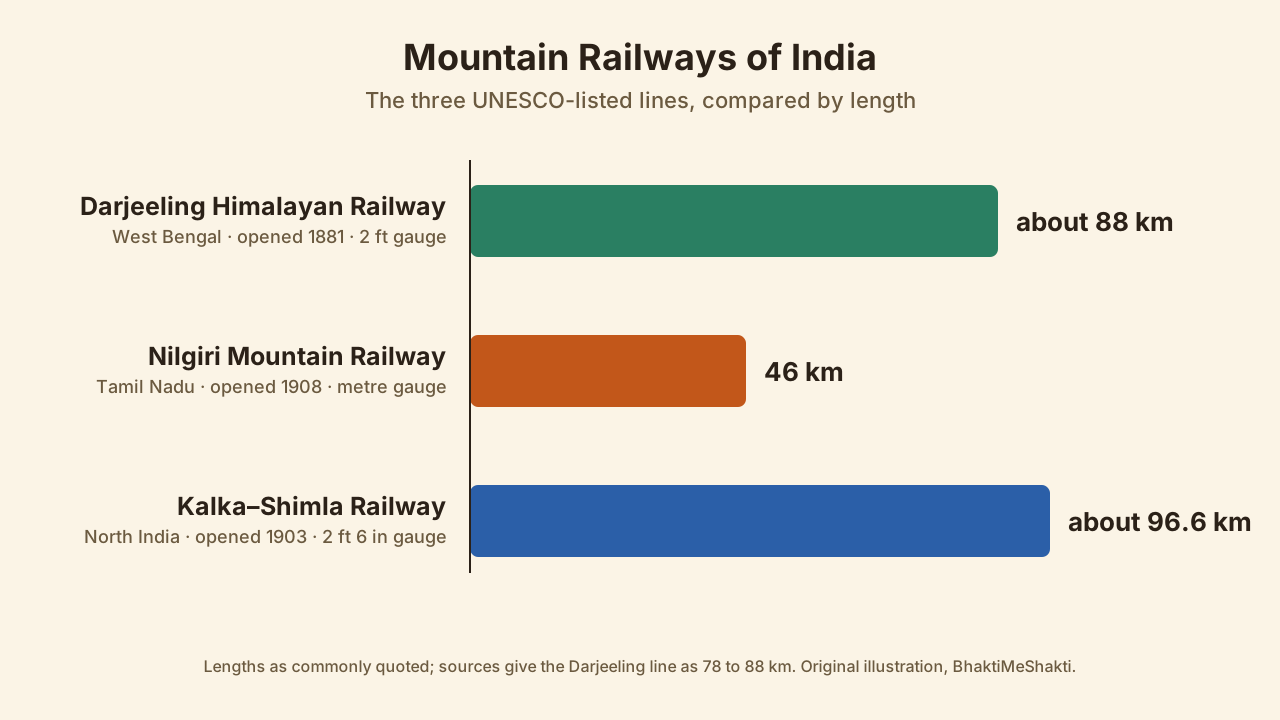
The three Mountain Railways of India at a glance
| Darjeeling Himalayan | Nilgiri Mountain | Kalka–Shimla | |
|---|---|---|---|
| Route | Siliguri / New Jalpaiguri to Darjeeling | Mettupalayam to Udhagamandalam (Ooty) | Kalka to Shimla |
| Length | About 88 km (sources vary) | 46 km | About 96.6 km |
| Opened | 1881 | 1908 | 1903 |
| Gauge | 2 ft (610 mm) | Metre gauge (1,000 mm) | 2 ft 6 in (762 mm) |
| UNESCO listing | 1999 | 2005 (extension) | 2008 (extension) |
| Known for | Batasia Loop, steam “B-class” engines | India’s only rack railway | 103 tunnels and hundreds of bridges |
Why are these railways UNESCO World Heritage?
UNESCO describes the three lines as outstanding examples of bold, ingenious engineering for building an effective rail link through rugged mountain terrain. The Darjeeling Himalayan Railway was inscribed first, in 1999; the Nilgiri Mountain Railway was added as an extension in July 2005, and the Kalka–Shimla Railway followed on 8 July 2008. The site is now known collectively as Mountain Railways of India, and it is one of 45 World Heritage Sites in India; see our complete list of India’s UNESCO sites.
The three lines were all built to solve the same problem: how to move people and goods from the plains up to hill stations that the British used as summer retreats and, in Darjeeling’s case, as a centre of the tea trade. Narrow gauge made that possible because tighter curves and steeper gradients are easier to build on rough ground. The result is three very different railways that share one idea, which is why they are listed together rather than separately.
What is special about the Darjeeling Himalayan Railway?
Nicknamed the “Toy Train”, the Darjeeling line is a 2 ft (610 mm) gauge railway that opened in 1881 and was the first Indian mountain railway to be listed. National Geographic notes it climbs from about 120 m at Siliguri to roughly 2,257 m (7,407 ft) at Ghum, India’s highest railway station. The Batasia Loop, built in 1919, spirals the track over itself through a tunnel to ease the gradient on the climb into Darjeeling. The Darjeeling district website says most scheduled services use six diesel locomotives, while vintage British-built B-class steam engines haul special trains and the steam-hauled “Red Panda” service runs between Darjeeling and Kurseong.
The line’s length is quoted differently depending on the source: about 88 km on the current route, and around 82 km (51 miles) in one account of the original run, so the figure above is approximate.
What sets Darjeeling apart is how closely the railway is woven into the town. The track runs beside and across roads, past markets and houses, so a ride feels less like a scenic excursion and more like travelling through a living place at walking pace. If you only have time for a short trip, the steam-hauled run between Darjeeling and Kurseong and the stop at the Batasia Loop are the usual choices, and a clear morning gives the best chance of seeing the mountains behind it.
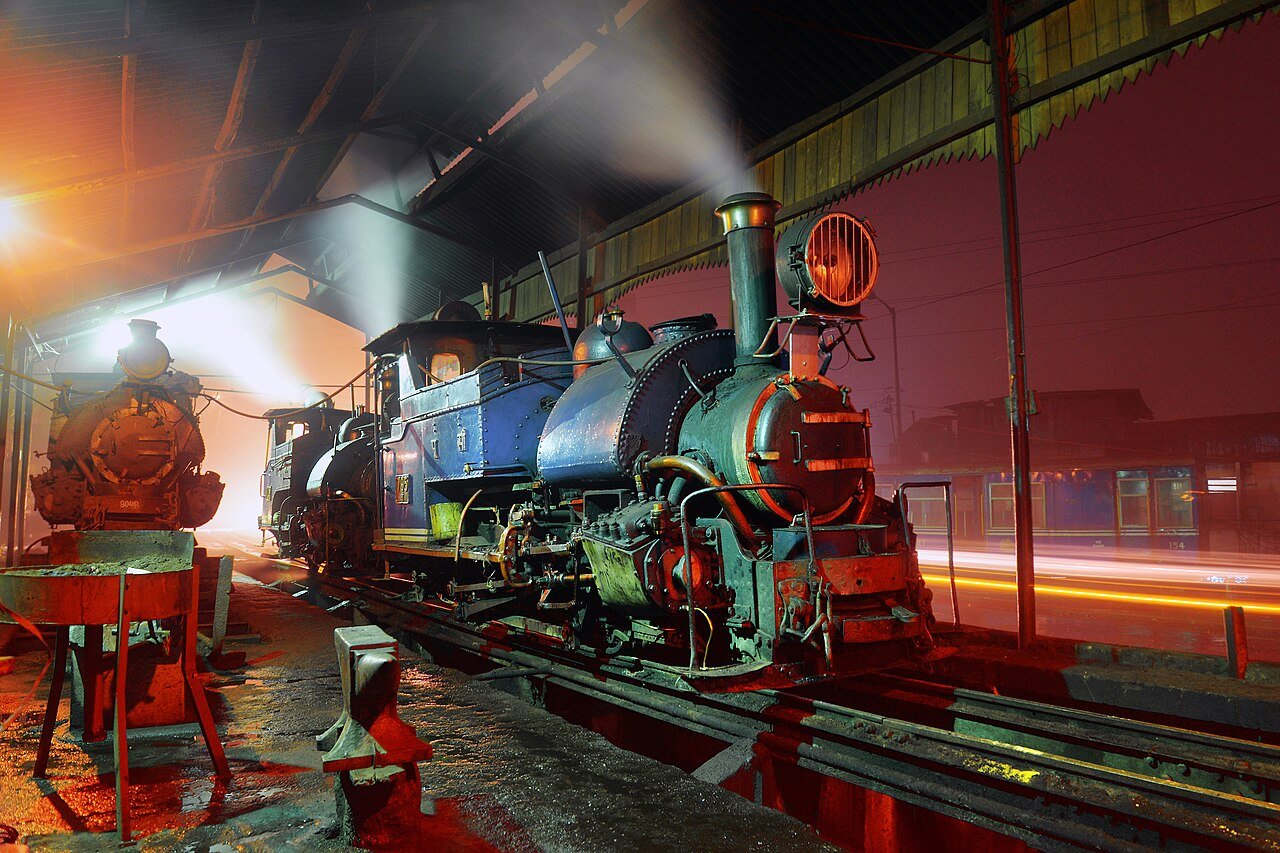
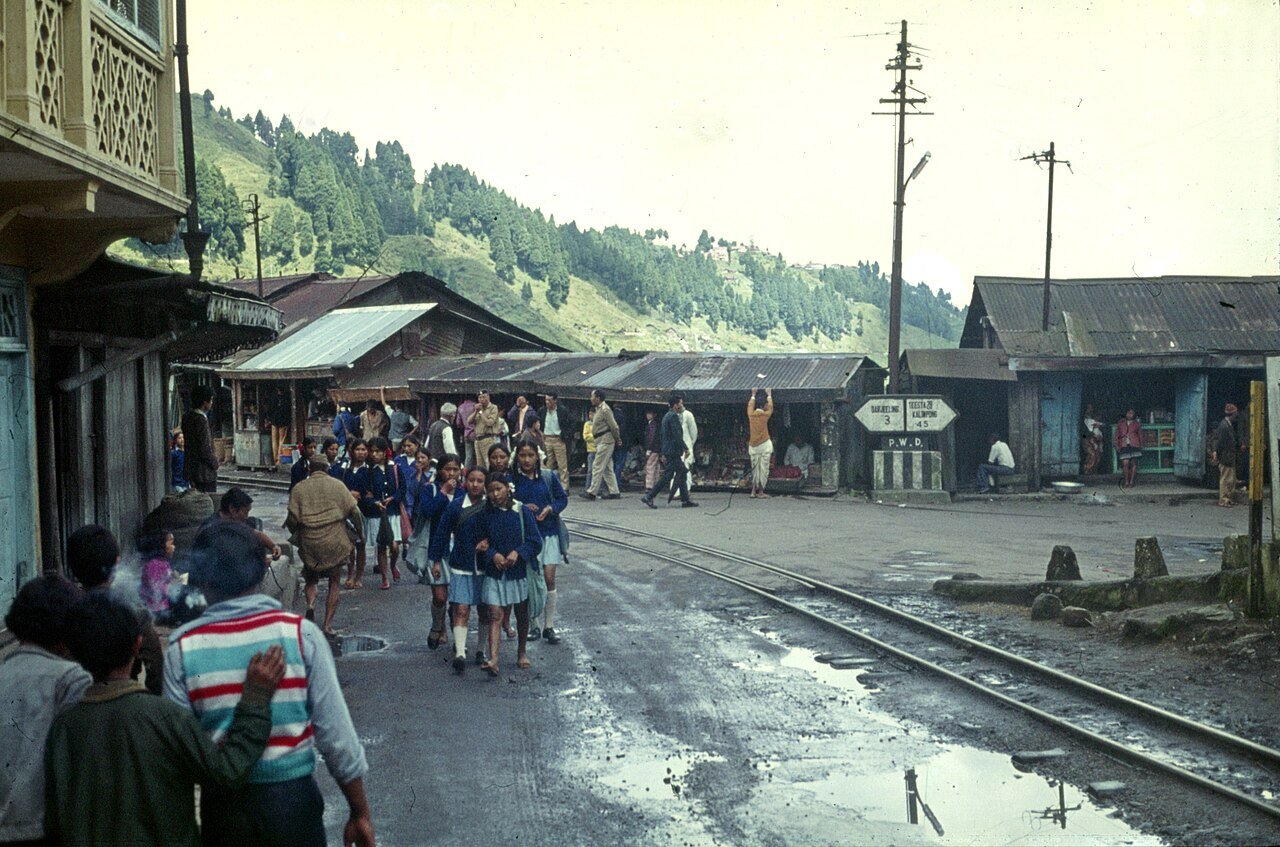
Swipe or scroll for more photos →
What is special about the Nilgiri Mountain Railway?
The Nilgiri line links Mettupalayam on the plains with the hill station of Udhagamandalam (Ooty) over 46 km of metre-gauge track. Plans for it were first made in 1854, but the terrain was so daunting that work did not begin until 1891, and it opened in 1908. It is the only rack railway in India: on the steep section a cog system (the Abt rack-and-pinion) grips the track so that trains can climb. Guides describe 16 tunnels and a route through tea estates, ravines and forest, and note that steam locomotives still run on the line.
The rack is the key to understanding this railway. On ordinary track a train relies on friction between wheel and rail, which fails on a steep slope. Here a toothed rail sits between the running rails and a gear on the locomotive meshes with it, so the engine can pull itself uphill and hold the train back on the way down. Seeing the rack section up close, as in the photographs below, explains why the Nilgiri line is treated as an engineering landmark and not only a scenic ride.
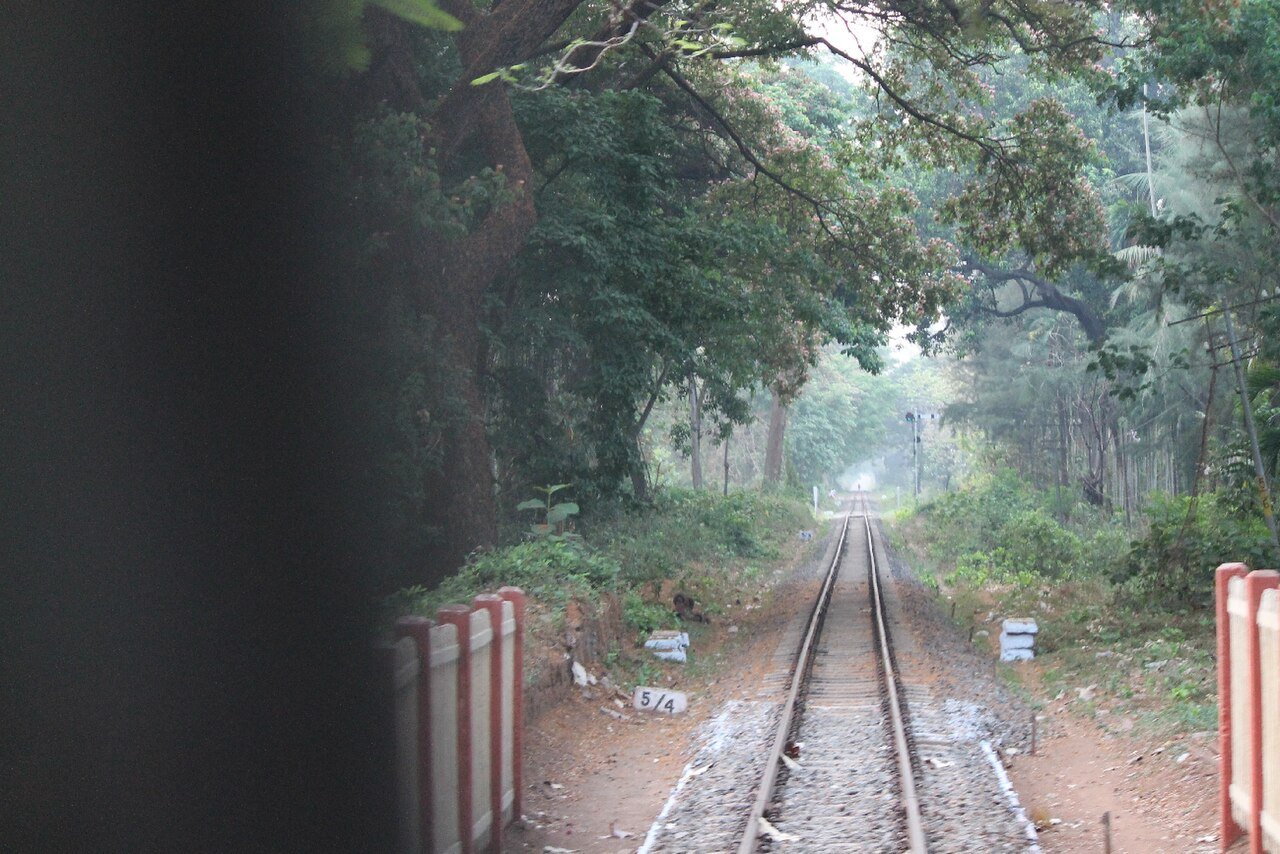
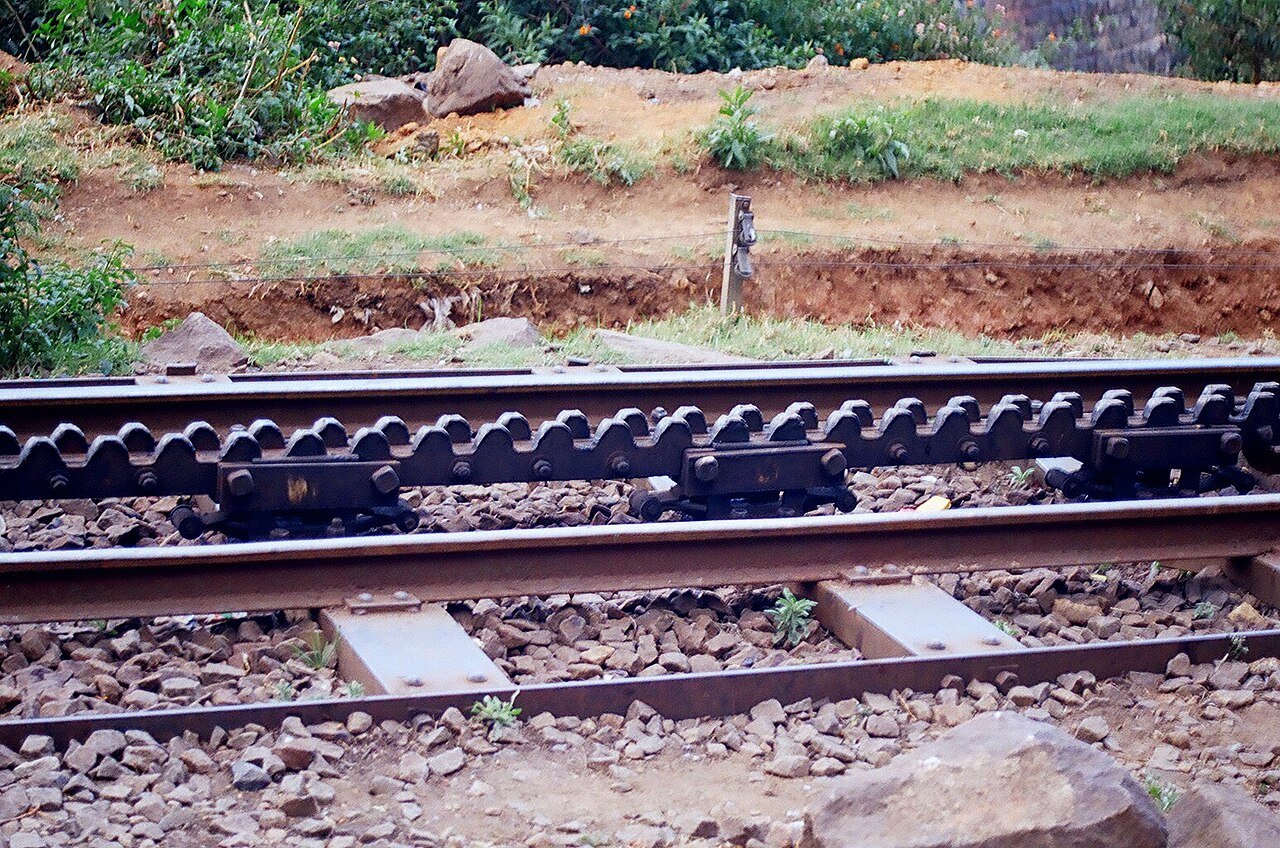
Swipe or scroll for more photos →
What is special about the Kalka–Shimla Railway?
The Kalka–Shimla line is a 2 ft 6 in (762 mm) narrow-gauge railway of about 96 km that opened in 1903, after the broad-gauge Delhi–Kalka line made a branch to Shimla practical. National Geographic says it climbs about 1,420 m (4,659 ft) and was built so that British rulers could escape the plains’ heat for their summer capital. It runs through 103 tunnels (one of which is out of service) and across several hundred bridges and viaducts; guides give figures from about 800 to 864 bridges.
This is the line to choose if you want to see how much work it took to carry a railway up a mountainside. The track repeatedly disappears into tunnels and re-emerges onto arched bridges, and the stations along the way are small hill stops where the train waits and passengers step out for tea. Because bridge and tunnel counts differ between sources, treat the numbers as approximate and enjoy the sense of continual crossing and climbing instead.
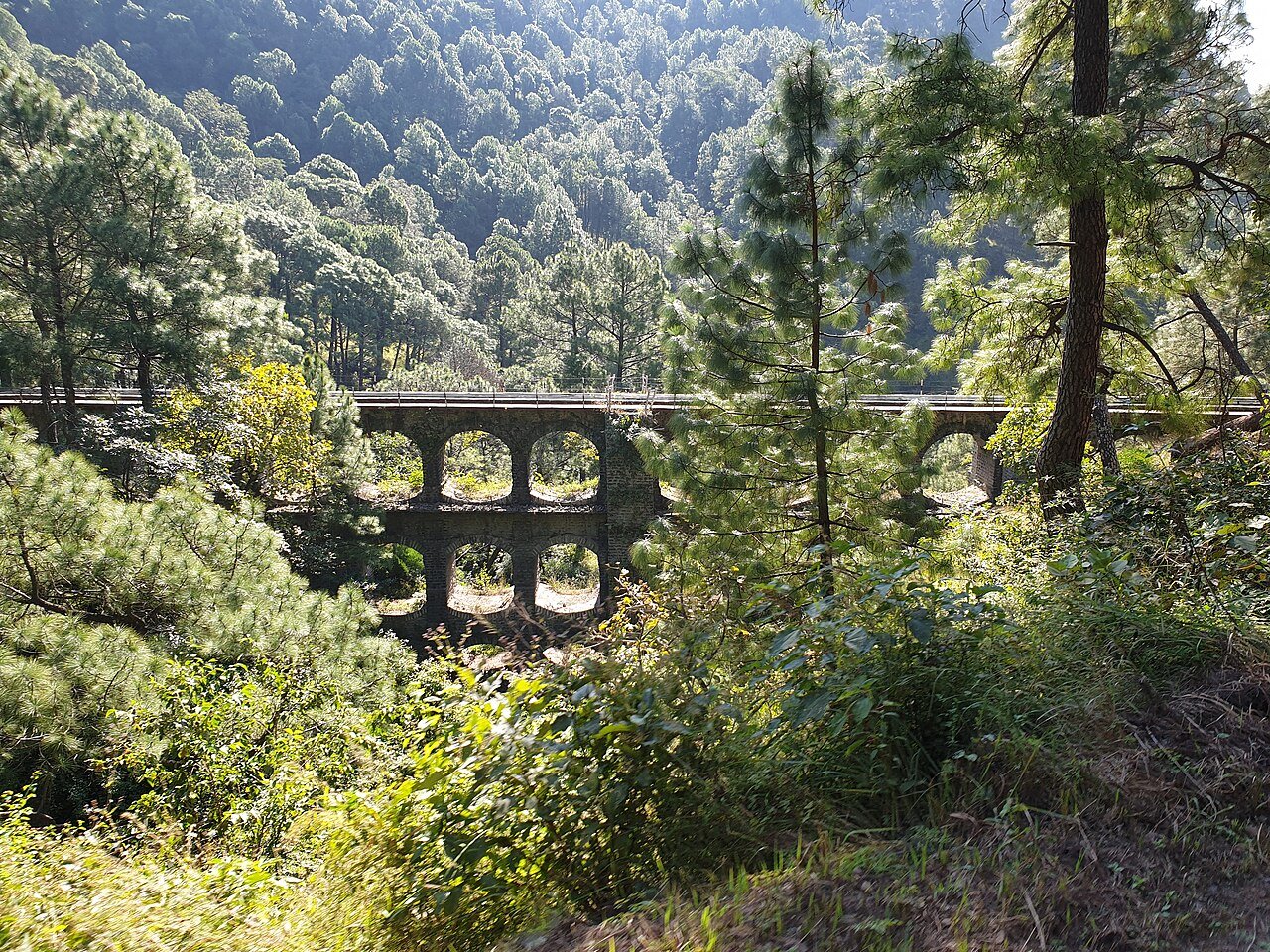
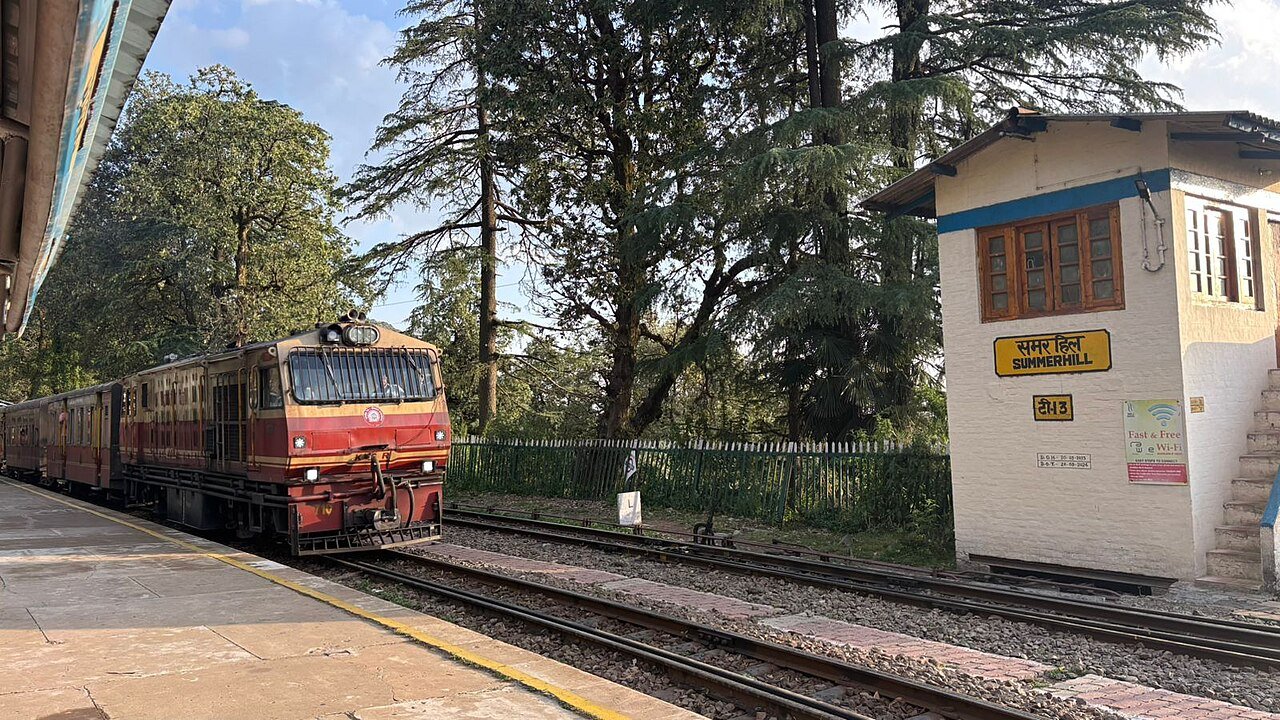
Swipe or scroll for more photos →
Which railway should you ride?
- Darjeeling for steam heritage and the Batasia Loop, where guides say Kanchenjunga forms the backdrop on clear days.
- Nilgiri for the unique rack-and-pinion climb and tea-estate scenery on the way to Ooty.
- Kalka–Shimla for the sheer number of tunnels and bridges on a Himalayan climb.
Whichever you choose, book ahead for steam or heritage services because they are limited, allow for delays on the hills, and carry a light jacket, since the upper stations are noticeably cooler than the plains.
Sources used for this article: Wikipedia’s entries on the Mountain Railways of India, the Nilgiri Mountain Railway and the Kalka–Shimla Railway; New World Encyclopedia; National Geographic’s guide to the mountain railways; the Darjeeling district website (darjeeling.gov.in); and travel guides from Audley Travel, TravelTriangle, Railway Adventures and Spot a Train. Where sources differ, the text says so. Photographs are from Wikimedia Commons under Creative Commons licences, with the photographer and licence in each caption. The bar-chart illustration is original.
Frequently asked questions
-
What are the Mountain Railways of India?
They are three UNESCO-listed narrow-gauge hill railways: the Darjeeling Himalayan Railway, the Nilgiri Mountain Railway and the Kalka–Shimla Railway.
-
When were the Mountain Railways of India listed by UNESCO?
The Darjeeling Himalayan Railway was listed in 1999, the Nilgiri Mountain Railway was added in 2005 and the Kalka–Shimla Railway was added on 8 July 2008.
-
Which Indian railway is a rack railway?
The Nilgiri Mountain Railway between Mettupalayam and Ooty is the only rack railway in India, using the Abt rack-and-pinion system on the steepest section.
-
How long is each mountain railway?
The Darjeeling Himalayan Railway is about 88 km (sources vary), the Nilgiri Mountain Railway is 46 km and the Kalka–Shimla Railway is about 96.6 km.
-
How many tunnels does the Kalka–Shimla Railway have?
It has 103 tunnels, one of which is out of service, so 102 are in use.
-
Why are they called toy trains?
The Darjeeling line was playfully called the toy train for its small size and narrow gauge, and the nickname is now used for all three lines.
-
What is the highest station on the Darjeeling Himalayan Railway?
Ghum, at about 2,257 metres (7,407 feet), is described as India’s highest railway station.