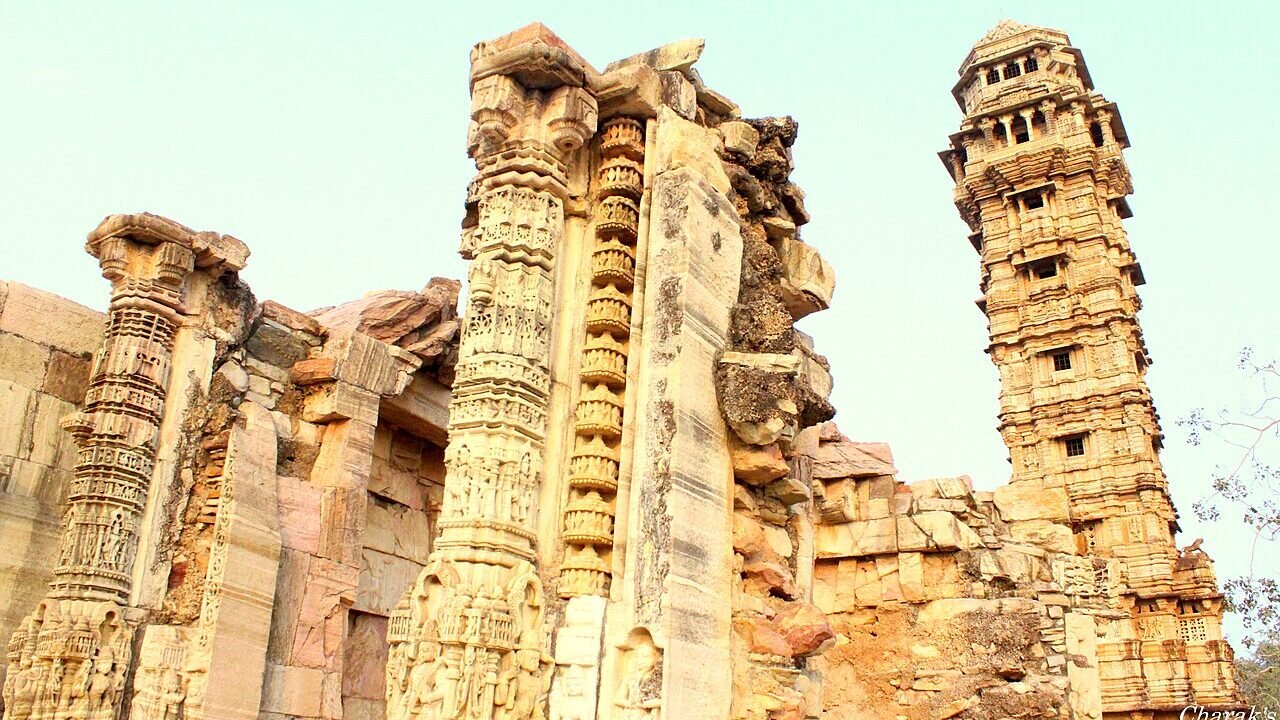
Chittorgarh Fort is a hilltop fort in southern Rajasthan and one of six Hill Forts of Rajasthan inscribed as a UNESCO World Heritage Site in 2013. It covers about 700 acres on a hill roughly 180 m high, was besieged three times (1303, 1535 and 1567–68), and is best known for the Vijay Stambh, the Tower of Victory. It lies about 112–119 km from Udaipur, depending on the source.
Updated 6 October 2026. Ticket fees and opening hours differ between guides, so confirm them on the ASI notice at the gate or with a local office before you go.
Chittorgarh Fort at a glance
| Location | Chittorgarh, Rajasthan, about 112–119 km from Udaipur (sources vary) |
| UNESCO status | Inscribed 2013 (37th session, Phnom Penh) as one of six Hill Forts of Rajasthan |
| Size | About 700 acres on a hill roughly 180 m high; Atlas Obscura estimates about 13 km of walking to see all of it |
| Major sieges | 1303, 1535 and 1567–68 |
| Best known for | Vijay Stambh, Kirti Stambh, Rana Kumbha Palace and Padmini’s Palace |
| Hours | Open daily; guides give 9 am to 5 pm or 9 am to 6 pm |
Why is Chittorgarh Fort a UNESCO World Heritage Site?
UNESCO lists six forts together as the Hill Forts of Rajasthan: Chittorgarh, Kumbhalgarh, Ranthambore (Sawai Madhopur), Gagron (Jhalawar), Amer (Jaipur) and Jaisalmer. It describes them as the fortified seats of Rajput princely states that flourished between the 8th and 18th centuries, with fortifications up to 20 km in circumference, enclosed towns and temples, and water-harvesting structures that are largely still in use. The group was inscribed under criteria (ii) and (iii). Our complete list of India’s UNESCO sites shows where the Hill Forts fit among the 45.
What are the three sieges of Chittorgarh?
| Year | Attacker | Notes |
|---|---|---|
| 1303 | Alauddin Khalji, Sultan of Delhi | During the reign of the Guhila king Ratnasimha; later tradition links the attack to Rani Padmini |
| 1535 | Bahadur Shah, Sultan of Gujarat | A second major siege; traditional accounts describe another jauhar |
| 1567–68 | Akbar | The final major siege; the Mewar capital later moved to Udaipur |
The Padmini story is a good example of how legend and history blur here. Popular accounts say Alauddin attacked because he desired Rani Padmini, but one historian, Kishori Saran Lal, believes a jauhar (mass self-immolation) did happen after the 1303 conquest while dismissing the Padmini legend as unhistorical. Another, Banarsi Prasad Saksena, considers the jauhar narrative a later fabrication because the contemporary writer Khusrow does not mention one. Treat the details as tradition, and the sieges themselves as the firm part of the record.
What should you see inside Chittorgarh Fort?
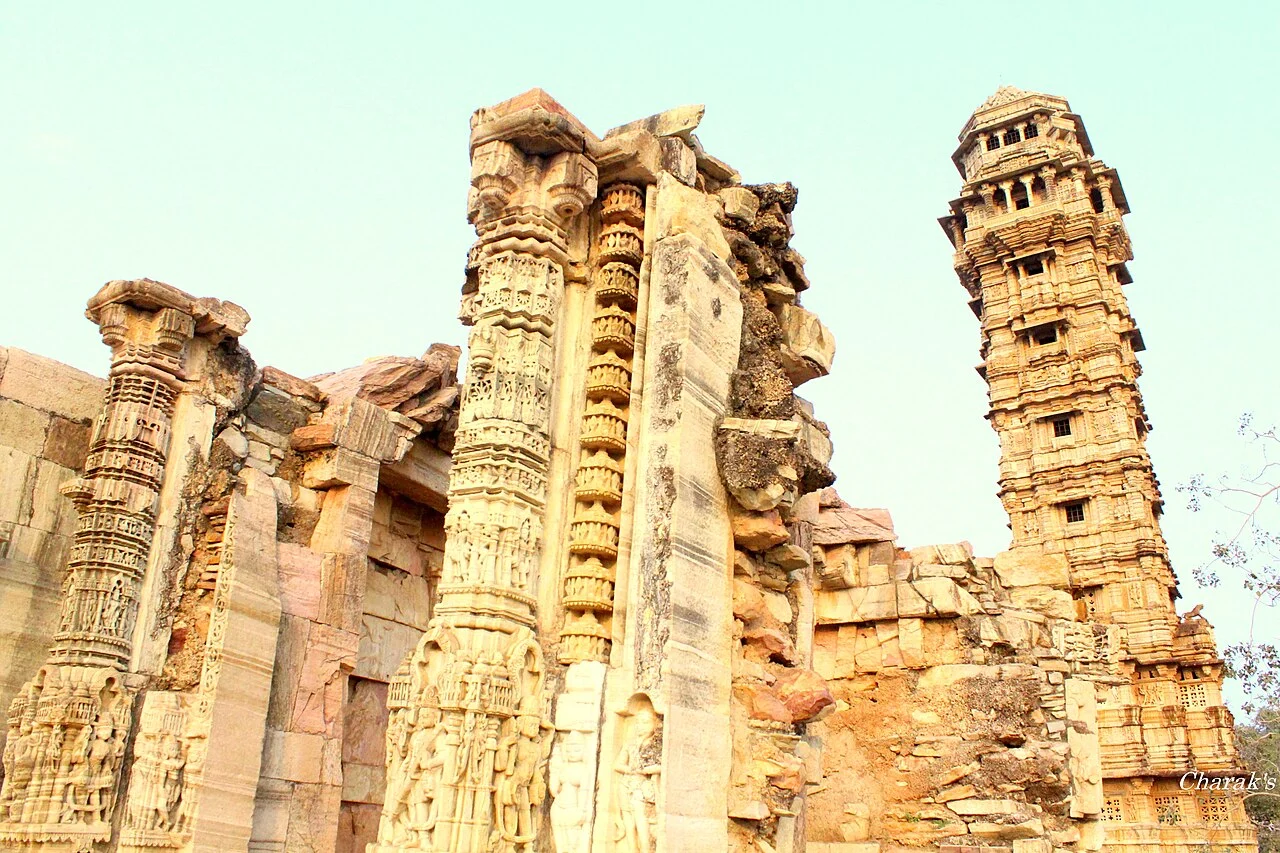
- Vijay Stambh (Tower of Victory). A nine-storey carved tower, roughly 37 m tall, built by Rana Kumbha of Mewar in the mid-15th century (dated about 1440–1448) to commemorate his victory over Mahmud Khilji of Malwa. It is dedicated to Vishnu.
- Kirti Stambh (Tower of Fame). An older Jain tower, usually dated to the 12th century, about 24 m tall and dedicated to the first tirthankara, Adinatha.
- Rana Kumbha Palace. One of the oldest structures in the fort, linked in tradition to Rani Padmini and the poet-saint Meera Bai.
- Padmini’s Palace. A popular stop, described by guides as an early example of a water-palace design.
How much is the ticket, and when is it open?
Published fees disagree. One guide lists about ₹50 for Indian visitors (₹25 for seniors and students) and ₹100 for foreign visitors, while another lists ₹40 and ₹600. Because ASI revises its rates, check the official notice at the entrance. Guides report that the fort is open every day, from 9 am to either 5 pm or 6 pm. Allow plenty of time: the complex is large, and a local driver or guide helps with the distances between sights.
Chittorgarh is often combined with other heritage stops on a Rajasthan route. For a comparable journey through a ruined royal city, see our guide to Hampi.
Sources used for this article: UNESCO World Heritage Centre’s pages on the Hill Forts of Rajasthan; Wikipedia’s entries on Chittor Fort, the Hill Forts of Rajasthan and the Vijaya Stambha; Atlas Obscura; Anantam IAS; and visitor guides from Rajasthan Tours & Drivers, Hexahome, Rajasthan Tour Planner and Capture a Trip. Where sources differ, the text says so. The photograph is used under a Creative Commons licence with credit shown beneath it.
Frequently asked questions
-
Is Chittorgarh Fort a UNESCO World Heritage Site?
Yes. It was inscribed in 2013 at the 37th session of the World Heritage Committee as one of the six Hill Forts of Rajasthan.
-
Which are the six Hill Forts of Rajasthan?
Chittorgarh, Kumbhalgarh, Ranthambore, Gagron, Amer and Jaisalmer.
-
How many times was Chittorgarh Fort besieged?
Three major sieges are recorded: by Alauddin Khalji in 1303, by Bahadur Shah of Gujarat in 1535 and by Akbar in 1567–68.
-
Who built the Vijay Stambh?
Rana Kumbha of Mewar built it in the mid-15th century (about 1440–1448) to commemorate his victory over Mahmud Khilji of Malwa.
-
What is the difference between Vijay Stambh and Kirti Stambh?
The Vijay Stambh is a taller nine-storey victory tower built by Rana Kumbha, while the Kirti Stambh is an older Jain tower, usually dated to the 12th century and dedicated to Adinatha.
-
How far is Chittorgarh from Udaipur?
About 112 to 119 km, depending on the source.
-
Is the story of Rani Padmini historically proven?
No. Historians disagree: one accepts that a jauhar happened after 1303 but treats the Padmini legend as unhistorical, and another considers the jauhar account a later fabrication.