Shardiya Navratri 2026 begins on Sunday, 11 October and ends with Vijayadashami (Dussehra) on Tuesday, 20 October. This guide covers the nine forms of Durga, Ghatasthapana, fasting rules, Garba and Durga Puja, and how Navratri is celebrated across India.
What Is Navratri?
Navratri, meaning “nine nights”, is a Hindu festival dedicated to Goddess Durga and her nine forms, the Navadurga. The most widely celebrated is Shardiya Navratri, in the lunar month of Ashvin (September–October), which ends on the tenth day with Vijayadashami, or Dussehra. A second major Navratri, Chaitra Navratri, falls in spring and ends on Ram Navami.
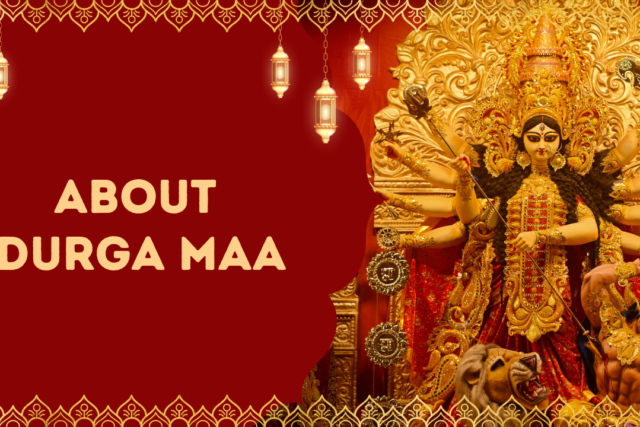
The festival celebrates the victory of Durga over the buffalo demon Mahishasura, told in the Durga Saptashati (Devi Mahatmya) — the triumph of good over evil. Read more about Maa Durga.
When Is Navratri in 2026?
| Event | Date (2026) |
| Ghatasthapana — first day of Navratri | Sunday, 11 October |
| Vijayadashami — Dussehra | Tuesday, 20 October |
The Ghatasthapana muhurat and the exact tithis of Durgashtami and Mahanavami vary by location, and regional calendars can differ by a day. Please confirm with your local Panchang.
What Are the Nine Forms of Durga (Navadurga)?
On each day of Navratri, one form of the goddess is worshipped, in this order:
- Shailaputri — “daughter of the mountain”, born to Himavan; she rides the bull Nandi and represents steadiness and strength.
- Brahmacharini — the goddess in penance, holding a rosary and water pot; she represents devotion and self-discipline.
- Chandraghanta — named for the half-moon shaped like a bell on her forehead; she represents courage.
- Kushmanda — believed to have created the universe with her smile; she represents creative energy.
- Skandamata — the mother of Skanda (Kartikeya), shown holding him in her lap; she represents motherly love.
- Katyayani — born to the sage Katyayana, the warrior form who slew Mahishasura.
- Kalaratri — the fierce, dark form who destroys ignorance and fear.
- Mahagauri — the radiant white form, representing purity and peace.
- Siddhidatri — the giver of siddhis, spiritual attainments and wisdom.
How Do You Perform Ghatasthapana?
Ghatasthapana (also called Kalash Sthapana) invokes the goddess on the first morning of Navratri — in 2026, Sunday, 11 October — at the auspicious muhurat in your local Panchang.
- Sow barley seeds in a clay pot filled with soil.
- Place a kalash filled with water on top, with a betel nut, a coin, rice and mango leaves inside.
- Place a coconut wrapped in red cloth on the kalash.
- Light an akhand jyoti, a lamp kept burning through the nine days — placed safely away from curtains and children.
The barley sprouts that grow over the nine days, called jaware, are seen as a sign of prosperity.
What Are the Navratri Fasting Rules?
Many devotees fast during Navratri — some for all nine days, others on the first and last days, and others eating a single meal a day.
- Allowed: fruits, milk, curd, sabudana, kuttu (buckwheat) and singhara (water chestnut) flour, rajgira (amaranth), potatoes, sweet potatoes, peanuts and rock salt (sendha namak).
- Avoided: wheat, rice, pulses, ordinary salt, onion, garlic, meat and alcohol.
- Kanya Pujan: on Ashtami or Navami, many families worship young girls as forms of the goddess, washing their feet and serving them a meal — often halwa, puri and chana — before breaking the fast.
If you are dancing Garba late into the night while fasting, drink plenty of water. Children, the elderly, pregnant women and anyone with diabetes or another medical condition should not keep a strict fast, and should seek a doctor’s advice if needed.
What Is Garba?
Garba is the circular devotional dance of Gujarat, performed every night of Navratri around a lamp or image of the goddess. The name comes from garbha deep — a lamp inside a perforated clay pot, symbolising the life and divine energy within the womb. The circle represents the cycle of life, and the lamp at its centre the unchanging divine. Dandiya Raas, danced with pairs of sticks, is traditionally associated with Krishna’s raas with the gopis.
In December 2023, UNESCO inscribed Garba of Gujarat on its Representative List of the Intangible Cultural Heritage of Humanity.
How Is Navratri Celebrated Across India?
- West Bengal and eastern India: the last days become Durga Puja, with the goddess worshipped in grand pandals from Shashthi to Vijaya Dashami. UNESCO inscribed Durga Puja in Kolkata on its Intangible Cultural Heritage list in 2021. See our guide to the most iconic Durga Puja pandals.
- Gujarat: nine nights of Garba and Dandiya.
- North India: fasting, Kanya Pujan and Ramlila performances of the Ramayana, ending on Dussehra with the burning of effigies of Ravana, Meghnad and Kumbhakarna.
- South India: Golu (Bommai Kolu), displays of dolls on stepped platforms, and Mysuru Dasara in Karnataka; the ninth day is Ayudha Puja, and on Vijayadashami children begin learning in Vidyarambham.
Which Prayers Are Recited During Navratri?
Devotees commonly recite the Durga Saptashati, often in full across the nine days; the Durga Chalisa; and the Durga aarti Om Jai Ambe Gauri each morning and evening.
Frequently Asked Questions About Navratri
-
When is Navratri in 2026?
Shardiya Navratri 2026 begins with Ghatasthapana on Sunday, 11 October and ends with Vijayadashami, or Dussehra, on Tuesday, 20 October. The Ghatasthapana muhurat and the tithis of Durgashtami and Mahanavami vary by location, so devotees should confirm them with a local Panchang.
-
What are the nine forms of Durga worshipped in Navratri?
The nine forms of Durga worshipped in Navratri, the Navadurga, are, in order, Shailaputri, Brahmacharini, Chandraghanta, Kushmanda, Skandamata, Katyayani, Kalaratri, Mahagauri and Siddhidatri. One form is worshipped on each of the nine days, beginning with Shailaputri on the first day and ending with Siddhidatri on the ninth.
-
Why is Navratri celebrated?
Navratri celebrates Goddess Durga’s victory over the buffalo demon Mahishasura, told in the Devi Mahatmya or Durga Saptashati, symbolising the triumph of good over evil. Its tenth day, Vijayadashami or Dussehra, also marks Rama’s victory over Ravana in North Indian tradition.
-
What is Ghatasthapana?
Ghatasthapana, or Kalash Sthapana, is the ritual that begins Navratri: a kalash of water with mango leaves and a coconut is placed over a clay pot of sown barley, invoking the goddess, and an akhand jyoti lamp is lit to burn through the nine days. In 2026 it falls on Sunday, 11 October.
-
What can you eat during the Navratri fast?
During the Navratri fast devotees eat fruits, milk, curd, sabudana, kuttu and singhara flour, rajgira, potatoes, sweet potatoes, peanuts and rock salt, while avoiding wheat, rice, pulses, ordinary salt, onion and garlic. Children, the elderly, pregnant women and people with medical conditions should not fast strictly.
-
What is the difference between Chaitra and Shardiya Navratri?
Shardiya Navratri falls in the lunar month of Ashvin, in September or October, and ends with Vijayadashami; it is the larger festival, with Garba and Durga Puja. Chaitra Navratri falls in spring, in March or April, marks the Hindu new year in many regions and ends with Ram Navami.
-
Is Garba a UNESCO heritage?
Yes. In December 2023, UNESCO inscribed Garba of Gujarat, the circular devotional dance performed on the nights of Navratri, on its Representative List of the Intangible Cultural Heritage of Humanity. Durga Puja in Kolkata had been inscribed on the same list in 2021.
-
What is Kanya Pujan?
Kanya Pujan is a Navratri ritual performed on Ashtami or Navami in which young girls are worshipped as forms of the goddess: their feet are washed, a tilak is applied, and they are served a meal, often halwa, puri and chana, and given gifts. Many devotees break their Navratri fast afterwards.