
Ganesh Chaturthi 2026 Date
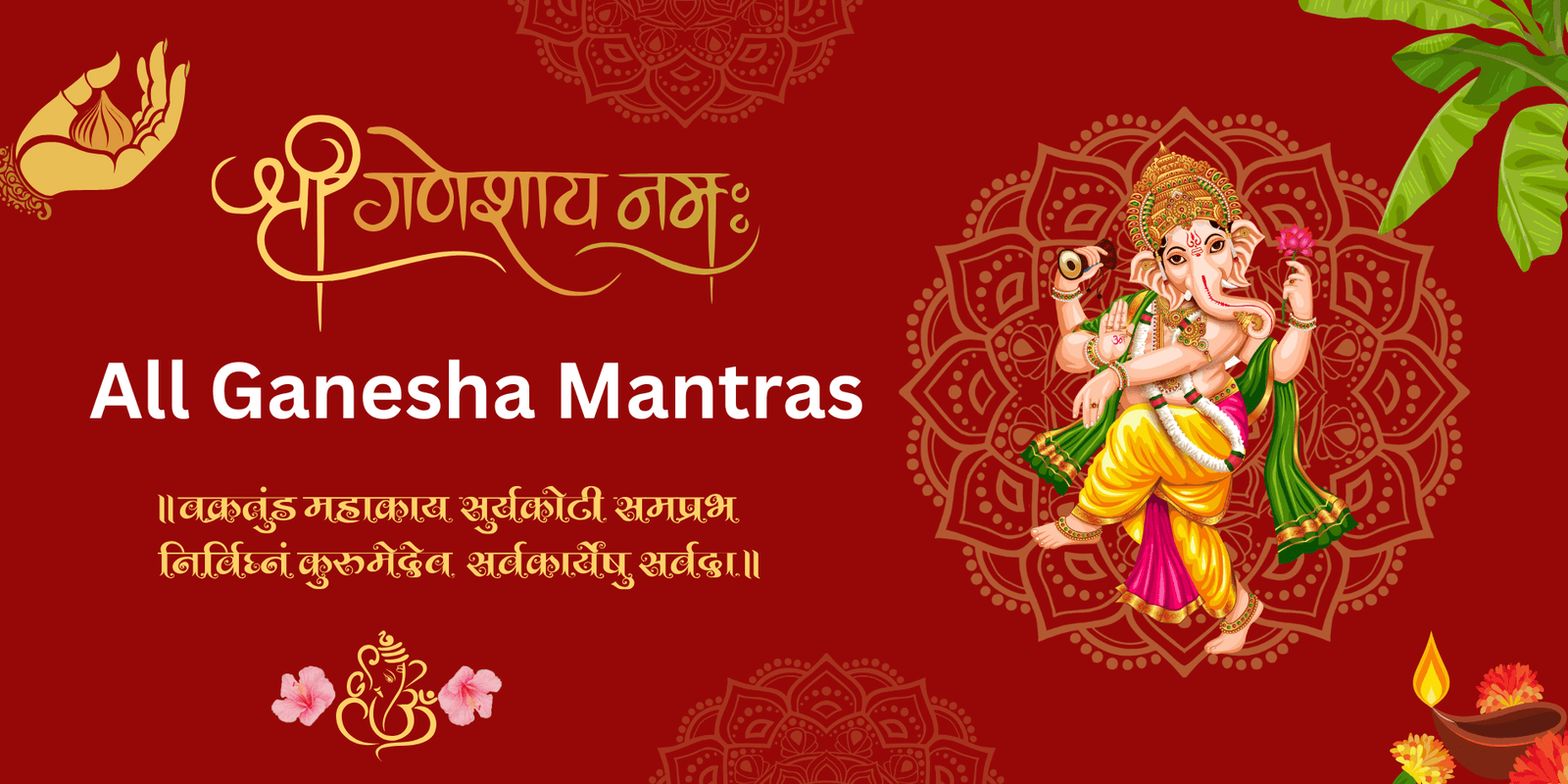
Ganesh Chaturthi, lovingly known as Ganeshotsav or Vinayaka Chaturthi, is one of the most revered festivals in Hinduism. Dedicated to Lord Ganesha—the remover of obstacles, the harbinger of wisdom, and the deity of auspicious beginnings—the festival is celebrated with immense devotion not only across India but also by millions of devotees around the world.
In 2026, Ganesh Chaturthi will be celebrated on Monday, 14 September, marking the beginning of the ten-day Ganeshotsav. The festivities culminate with Anant Chaturdashi (Ganesh Visarjan) on Friday, 25 September 2026. While some regional Panchangs may differ slightly in timings, the primary observance across India is on 14 September, as reported by The Economic Times.
More Than a Festival—A Celebration of Faith, Unity and Hope
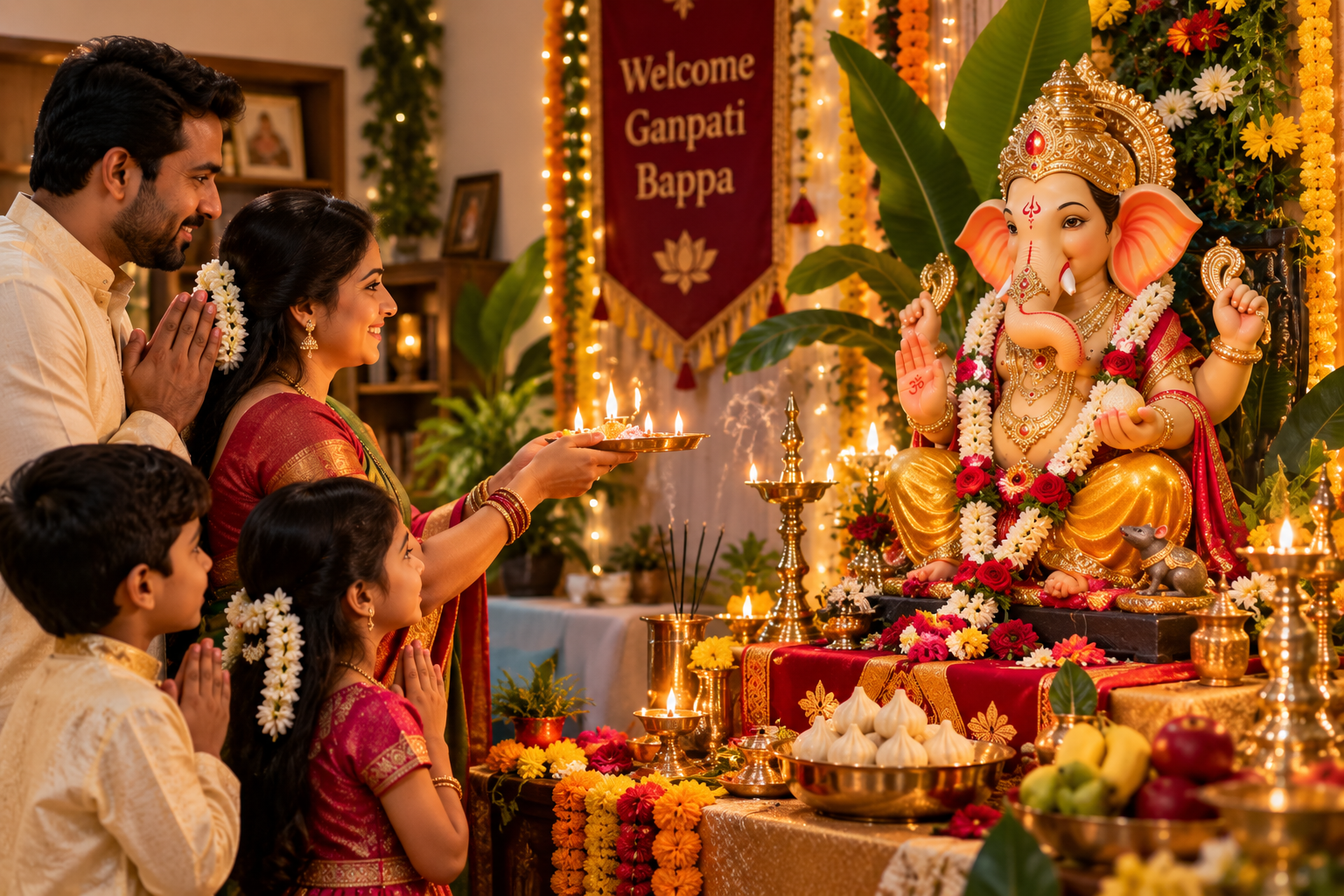
Every year, the arrival of Ganpati Bappa fills homes, temples, and streets with devotion, music, and happiness. From the bustling lanes of Mumbai to small villages across India, and from temples in London and New York to Indian communities in Australia and Mauritius, the chant of “Ganpati Bappa Morya!” echoes with unparalleled enthusiasm.
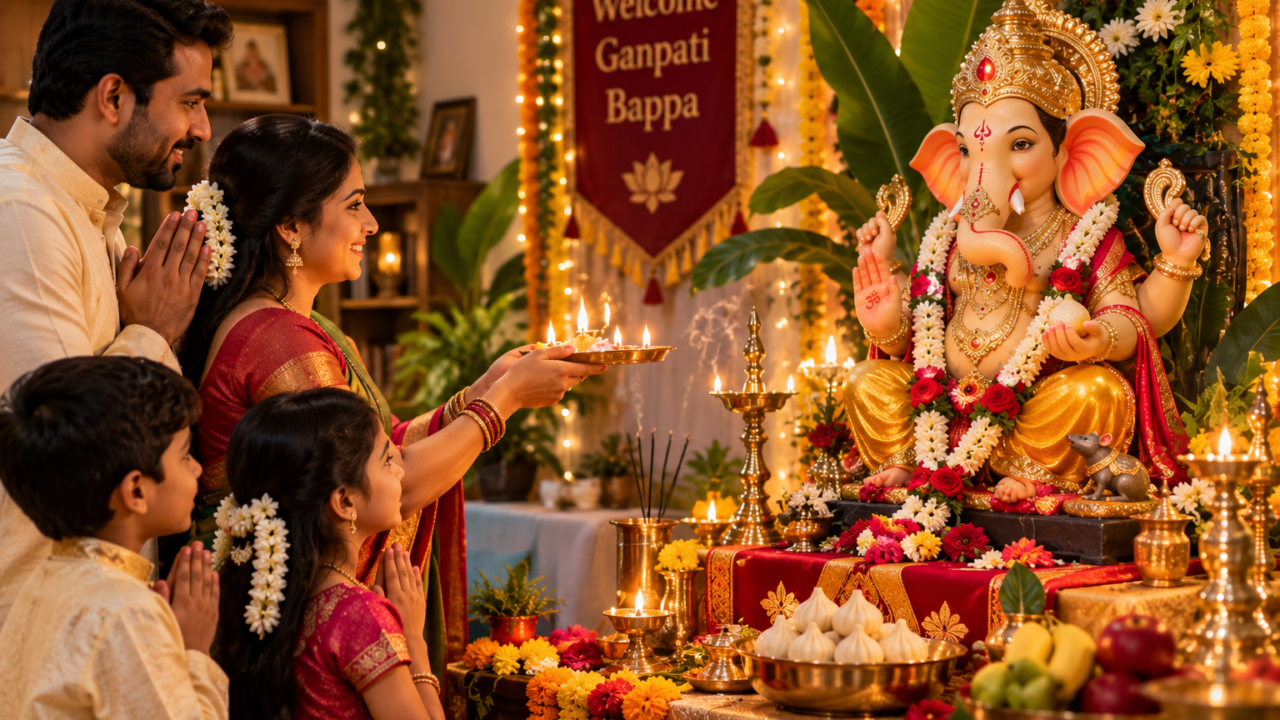
Ganesh Chaturthi is not merely about installing an idol of Lord Ganesha—it is about inviting divine wisdom, positivity, and prosperity into our lives. Families come together to decorate their homes, prepare delicious Modaks, perform daily Aarti, chant sacred mantras, and seek Lord Ganesha’s blessings for success, health, and happiness.
The festival also reflects timeless values of:
- Devotion and faith
- Family togetherness
- Community harmony
- Service to society
- Respect for nature through eco-friendly celebrations
Whether celebrated in a grand public pandal or within the quiet sanctity of a home, Ganesh Chaturthi reminds us that true prosperity begins with wisdom, humility, and compassion.
Why is Lord Ganesha Worshipped First?
Among all Hindu deities, Lord Ganesha occupies a unique and special place. Every auspicious ceremony—be it a wedding, housewarming, business inauguration, religious ritual, or even the beginning of writing a book—traditionally starts with prayers to Lord Ganesha.
He is known by many revered names:
- Vighnaharta – Remover of Obstacles
- Siddhivinayak – Bestower of Success
- Ganapati – Lord of the Ganas
- Lambodara – The One with the Large Belly
- Ekadanta – The One-Tusked Lord
- Buddhipriya – Lover of Wisdom
According to Hindu scriptures, Lord Shiva himself declared that Lord Ganesha would always be worshipped before every deity, making Him Pratham Pujya—the first among those to be worshipped.
This is why devotees begin every new journey, examination, business venture, or important life event by invoking Lord Ganesha’s blessings.
The Divine Story Behind Lord Ganesha’s Birth
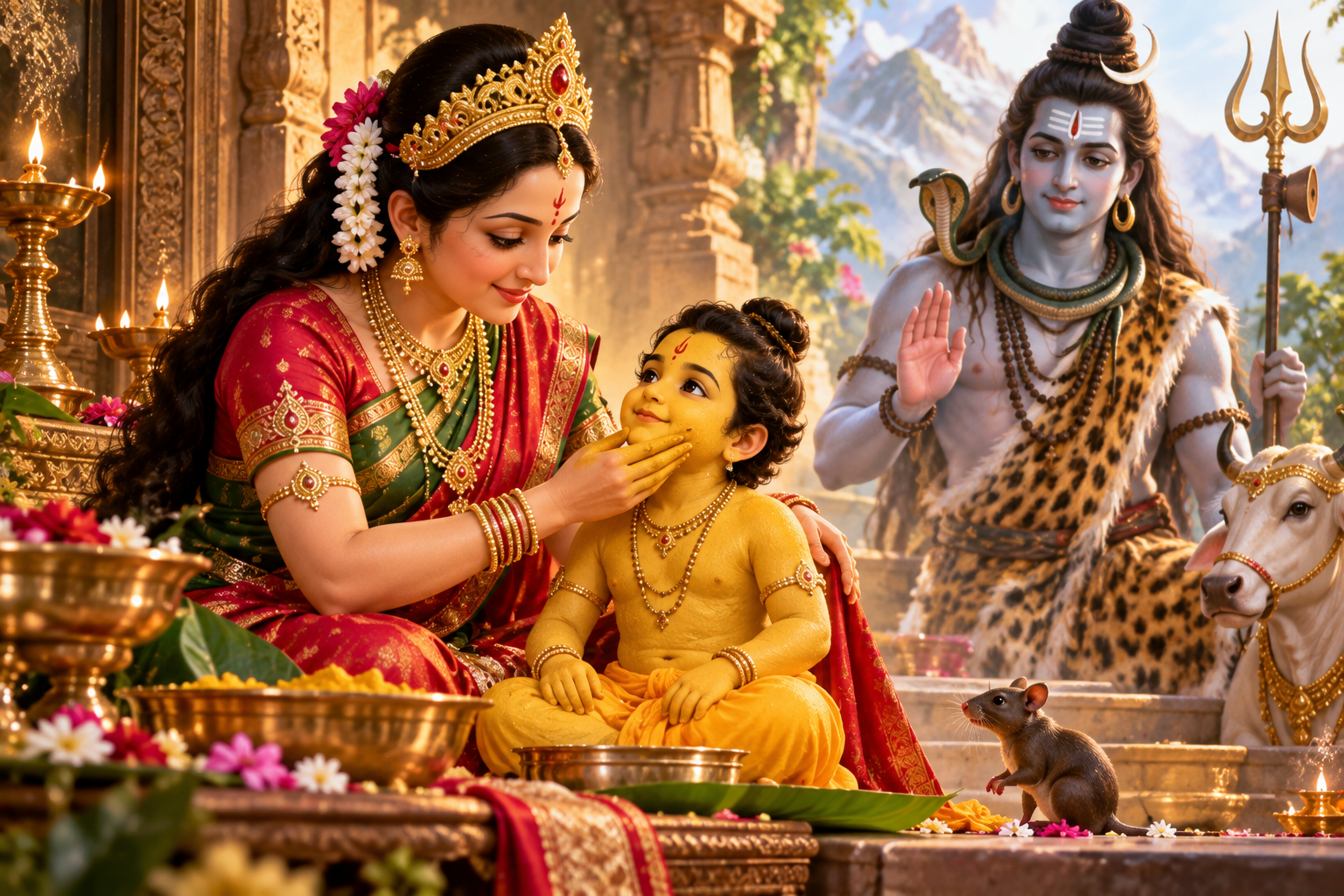
One of the most cherished stories in Hindu mythology describes the birth of Lord Ganesha.
According to the Shiva Purana, Goddess Parvati created a young boy using the sacred turmeric paste from her body while preparing for a bath. She breathed life into him and instructed him to guard the entrance, allowing no one inside.
When Lord Shiva returned to Mount Kailash, the young boy—unaware of His identity—stopped Him from entering. Enraged by this unexpected resistance, Lord Shiva severed the boy’s head during the confrontation.
Seeing Goddess Parvati devastated with grief, Lord Shiva immediately promised to restore the child to life. He instructed His attendants to bring the head of the first living being they encountered facing north. They returned with the head of a young elephant.
Lord Shiva placed the elephant’s head upon the child’s body, restored him to life, and blessed him with immortality and supreme honor.
He proclaimed:
“From this day forward, you shall be worshipped before every deity and every auspicious undertaking.”
Thus, Lord Ganesha became the eternal symbol of wisdom, intelligence, humility, and the removal of obstacles.
The Spiritual Meaning of Lord Ganesha’s Form
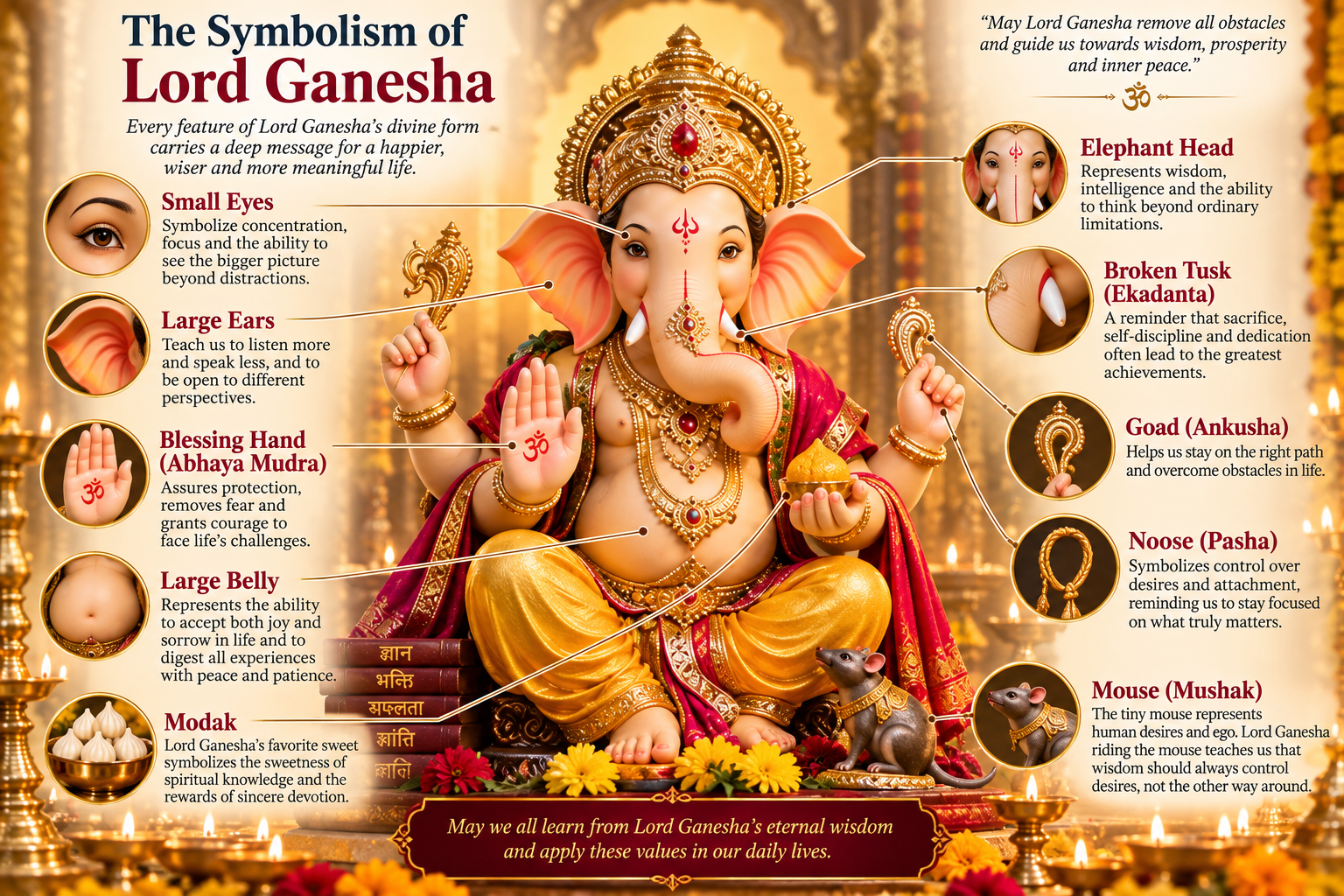
Every feature of Lord Ganesha’s divine appearance conveys a profound life lesson.
Elephant Head
Represents wisdom, intelligence, and the ability to think beyond ordinary limitations.
Large Ears
Teach us to listen more and speak less.
Small Eyes
Symbolize concentration and focused vision.
Large Belly
Represents the ability to peacefully accept both joy and sorrow in life.
Broken Tusk
A reminder that sacrifice and dedication often lead to the greatest achievements.
Mouse (Mushak)
The tiny mouse symbolizes human desires and ego. Lord Ganesha riding the mouse teaches us that wisdom should always control desires—not the other way around.
Modak
The beloved sweet offered to Lord Ganesha represents the sweetness of spiritual knowledge and inner bliss.
For a deeper look at each of these, read our guide to the spiritual significance of Lord Ganesha.
The Historical Origin of Ganesh Chaturthi
While the worship of Lord Ganesha dates back thousands of years, Ganesh Chaturthi became a large public celebration during India’s freedom movement.
In 1893, the great freedom fighter Lokmanya Bal Gangadhar Tilak transformed what had traditionally been a household festival into a public celebration. During British rule, public gatherings were heavily restricted. Tilak recognized that a shared religious festival could unite people across caste, community, and social divisions.
He encouraged communities to install public Ganesh idols, organize devotional singing, cultural programs, spiritual discourses, and processions. This initiative not only strengthened religious devotion but also fostered unity and inspired people during India’s struggle for independence, a history documented in detail on Wikipedia.
Today, Ganeshotsav continues to symbolize faith, harmony, social service, and cultural pride, making it one of the most cherished festivals in India and among Hindu communities worldwide.
Ganesh Chaturthi in Mumbai – A Celebration Like No Other
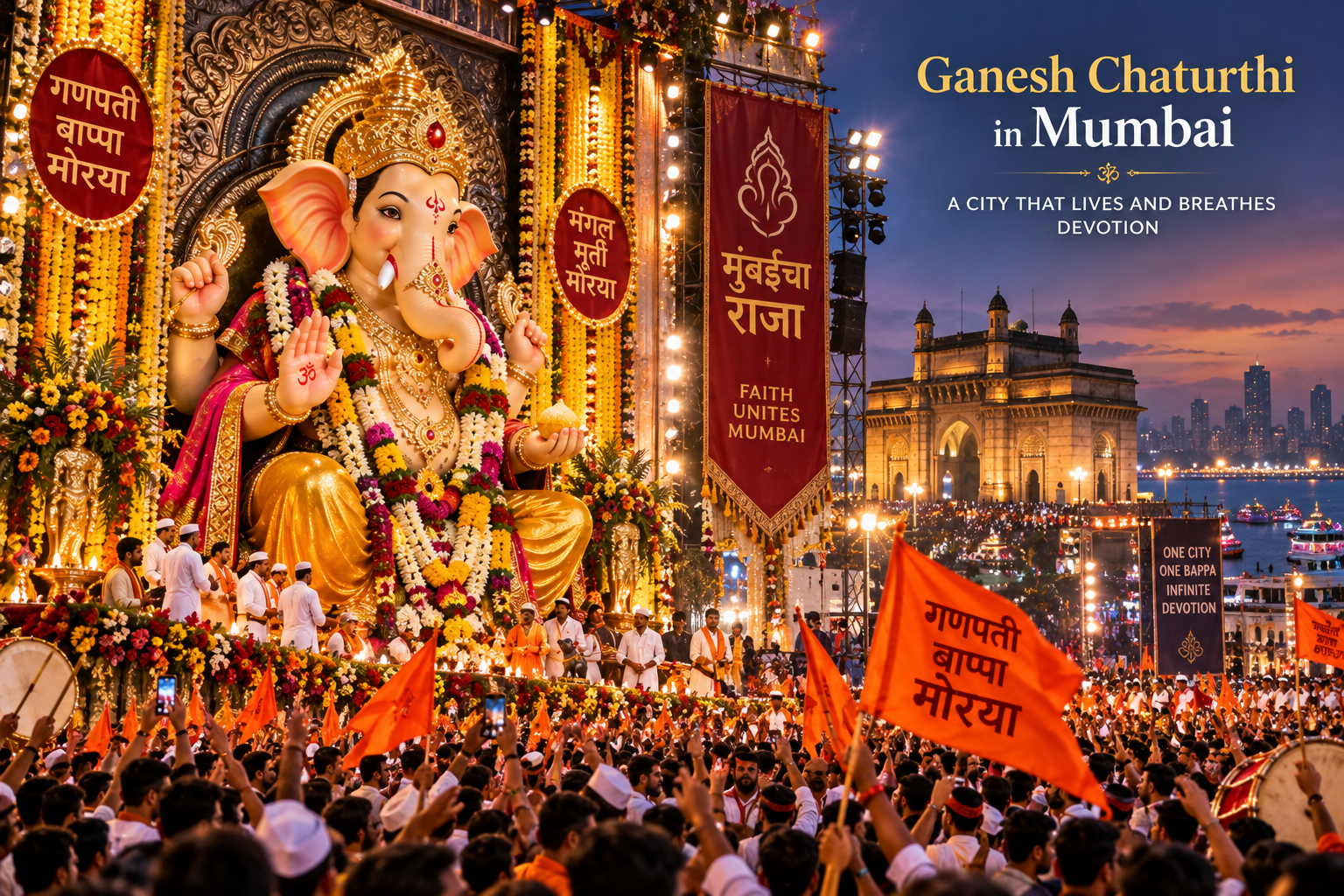
When people think of Ganesh Chaturthi, one city immediately comes to mind—Mumbai. While Lord Ganesha is worshipped across India, Mumbai transforms into a vibrant sea of devotion, music, art, and cultural unity during the ten-day Ganeshotsav.
Weeks before the festival begins, the city’s streets are filled with excitement. Markets bustle with artisans crafting magnificent idols of Lord Ganesha in various sizes and forms. Shops display colorful decorations, flowers, eco-friendly ornaments, lights, and traditional puja items. Every home and neighborhood prepares to welcome Ganpati Bappa with immense joy.
For Mumbaikars, Ganesh Chaturthi is much more than a religious festival—it is an emotion, a tradition passed down through generations, and a celebration that brings together people from all walks of life.
The Legacy of Sarvajanik Ganeshotsav
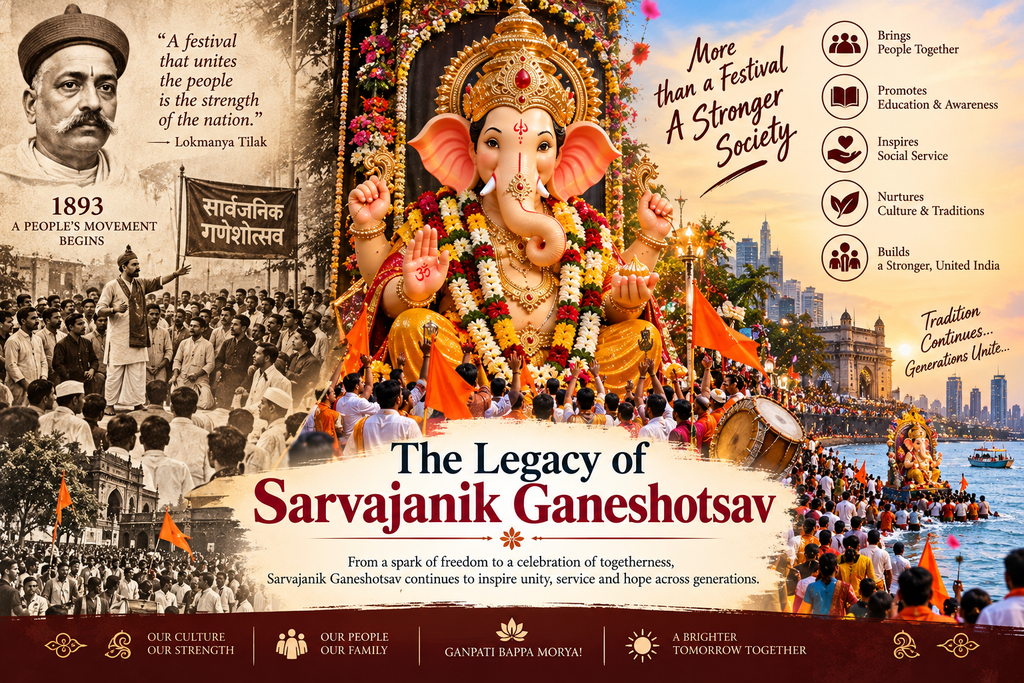
The tradition of Sarvajanik Ganeshotsav (public Ganesh festival) owes much of its popularity to Lokmanya Bal Gangadhar Tilak, who transformed the festival into a community celebration in 1893.
His vision was to create a platform where people could come together irrespective of caste, profession, or economic background. Public Ganesh mandals became centers of devotion, cultural exchange, education, and social awareness.
Even today, thousands of Ganesh mandals across Mumbai and Maharashtra continue this legacy by organizing:
- Daily Aarti and Bhajans
- Cultural performances
- Classical music and dance programs
- Spiritual discourses
- Blood donation camps
- Medical camps
- Educational initiatives
- Food distribution (Annadan)
- Environmental awareness campaigns
This unique blend of spirituality and community service makes Ganesh Chaturthi one of India’s most socially impactful festivals.
Famous Ganesh Mandals in Mumbai
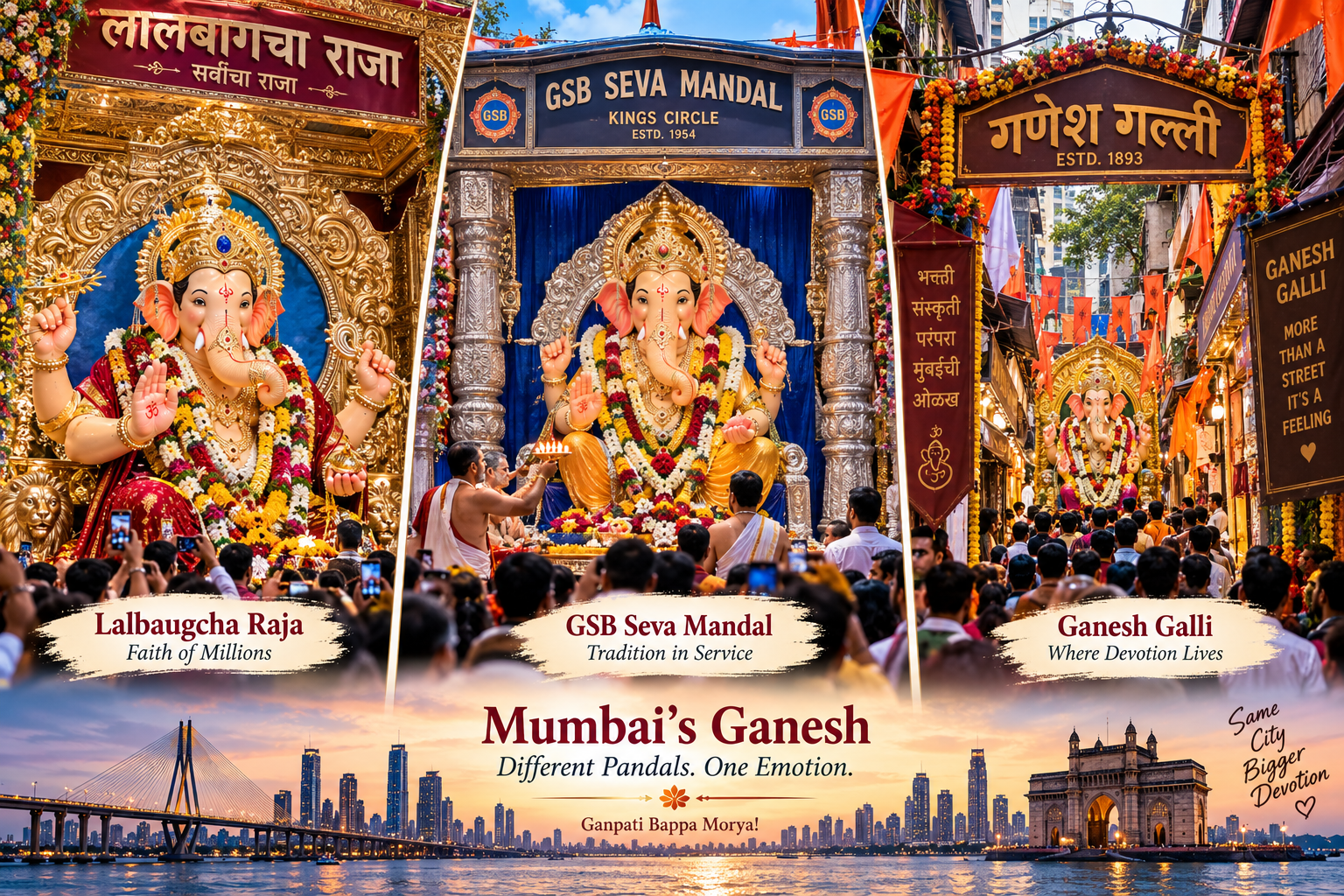
Every year, millions of devotees visit Mumbai to seek blessings from some of the city’s most revered Ganesh idols.
Lalbaugcha Raja
Perhaps the most famous Ganesh idol in the world, Lalbaugcha Raja attracts millions of devotees every year. People often wait for several hours, and sometimes even overnight, for a glimpse of the beloved deity.
Many devotees believe that Lalbaugcha Raja fulfills sincere prayers and heartfelt wishes, earning Him the title of “Navasacha Ganpati” (the wish-fulfilling Ganesha).
GSB Seva Mandal
Known for its beautifully adorned idol and elaborate Vedic rituals, the GSB Seva Mandal Ganpati is celebrated with devotion and grandeur. The idol is traditionally decorated with exquisite gold ornaments donated by devotees over the years.
Ganesh Galli Mumbaicha Raja
This popular mandal is renowned for creating spectacular thematic decorations inspired by famous temples, historical monuments, and spiritual landmarks.
Andhericha Raja
One of Mumbai’s most respected Ganesh mandals, Andhericha Raja is known for its charitable activities and strong community involvement throughout the year.
Khetwadi Ganraj
Famous for its artistic creativity, Khetwadi Ganraj showcases uniquely designed idols and decorative themes that attract thousands of visitors annually.
Our detailed guide covers famous Ganpati pandals across Mumbai and India, including visiting tips.
A City That Never Sleeps During Ganeshotsav
As Ganesh Chaturthi begins, Mumbai seems to acquire a new heartbeat.
Morning Aartis resonate through residential societies, devotional songs play across neighborhoods, and families gather for prayers. Evenings witness beautifully illuminated pandals where devotees queue patiently for darshan.
Children participate in cultural performances, senior citizens lead devotional singing, volunteers organize charitable activities, and local communities come together to celebrate as one extended family.
One of the most remarkable aspects of Mumbai’s Ganeshotsav is its spirit of inclusiveness. People from different religions, cultures, and backgrounds often visit Ganesh pandals, appreciating the artistry, traditions, and atmosphere of devotion.
The festival truly reflects India’s timeless philosophy of “Unity in Diversity.”
Ganesh Chaturthi Across Maharashtra
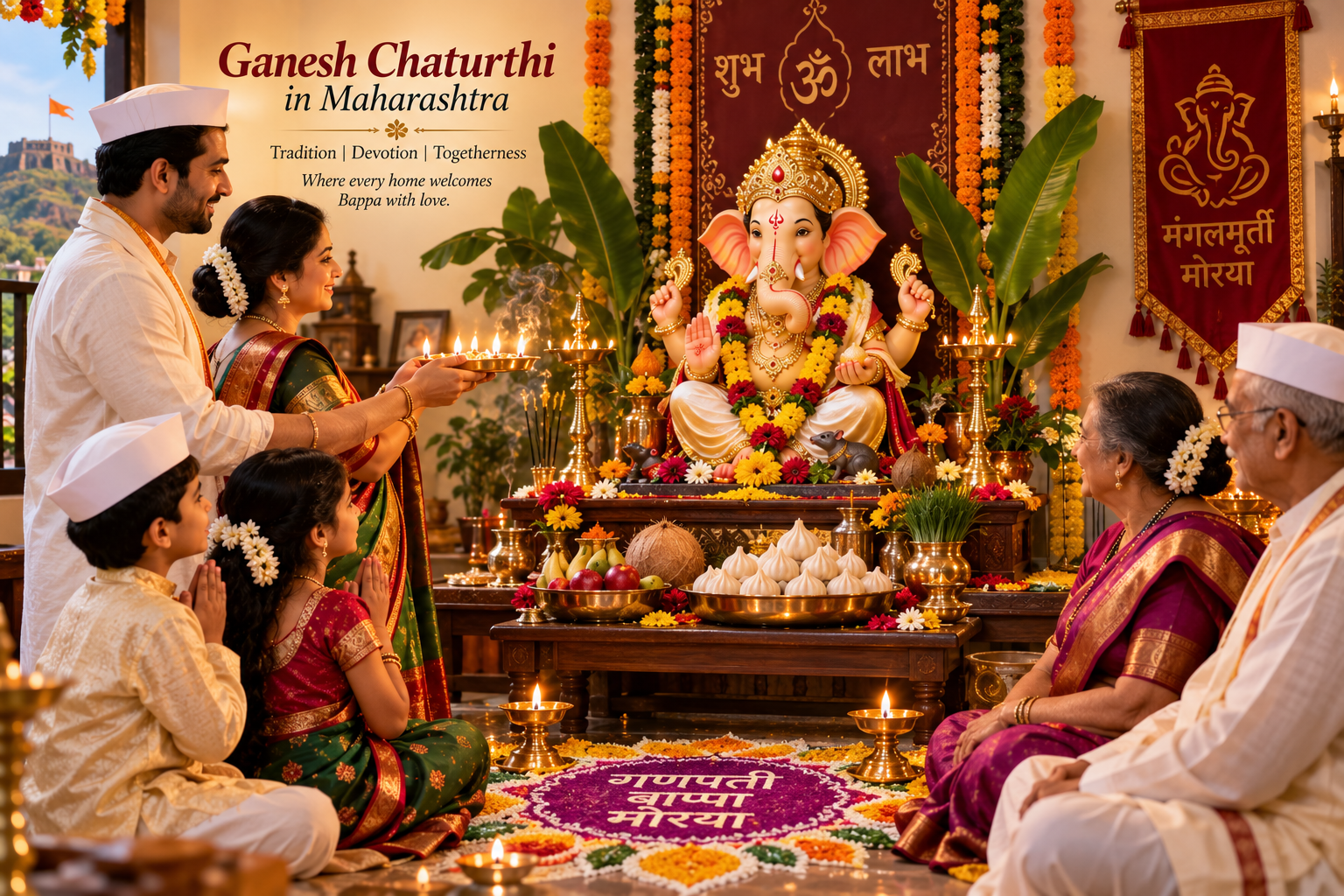
While Mumbai is globally recognized for its grand celebrations, every region of Maharashtra celebrates Ganesh Chaturthi with equal devotion.
In cities such as Pune, Nashik, Nagpur, Kolhapur, Sangli, Solapur, and Aurangabad, families install Lord Ganesha’s idol at home, perform daily prayers, recite sacred hymns, and welcome relatives and friends.
Traditional offerings include:
- Modak
- Puran Poli
- Shrikhand
- Coconut sweets
- Fruits
- Durva grass
- Red flowers
The fragrance of incense, the sound of bells, and the chanting of sacred mantras create a deeply spiritual atmosphere throughout the state.
How Ganesh Chaturthi is Celebrated Across India
Although Maharashtra is closely associated with Ganesh Chaturthi, Lord Ganesha is worshipped with equal reverence in many parts of India.
Karnataka
Ganesh Chaturthi is celebrated with traditional rituals, Vedic chanting, and delicious homemade delicacies such as Kadubu and Modaka. Families often craft eco-friendly clay idols and perform Visarjan in nearby lakes or rivers.
Andhra Pradesh and Telangana
Known as Vinayaka Chavithi, the festival is marked by elaborate community pandals, devotional music, and cultural performances. Large public idols are installed in cities such as Hyderabad and Visakhapatnam, attracting thousands of devotees.
Tamil Nadu
In Tamil Nadu, devotees celebrate Vinayagar Chaturthi by installing beautifully decorated clay idols, offering Kozhukattai (a traditional sweet similar to Modak), and participating in temple processions.
Goa
Ganesh Chaturthi, locally known as Chavath, is one of Goa’s most cherished festivals. Families return to their ancestral homes to celebrate together, decorate their homes with natural foliage, and prepare traditional festive dishes.
Gujarat
Across Gujarat, devotees perform Ganesh Puja at homes and temples. Community celebrations have grown significantly over the years, especially in cities like Ahmedabad, Surat, and Vadodara, where beautifully decorated pandals attract large gatherings.
North India
States such as Delhi, Uttar Pradesh, Rajasthan, Madhya Pradesh, and Haryana have witnessed a steady rise in Ganesh Chaturthi celebrations over the past few decades. Public Ganesh mandals, devotional events, and cultural programs have become increasingly popular.
The Spirit Beyond Religion
One of the most beautiful aspects of Ganesh Chaturthi is its ability to unite people.
Across India, individuals from different faiths often visit Ganesh pandals to admire the artistry, participate in charitable activities, or simply experience the festive atmosphere. Schools, offices, housing societies, and local communities celebrate together, fostering mutual respect and harmony.
The festival reminds us that while traditions may differ, values such as compassion, gratitude, service, and unity are universal.
Ganesh Chaturthi Celebrations Around the World
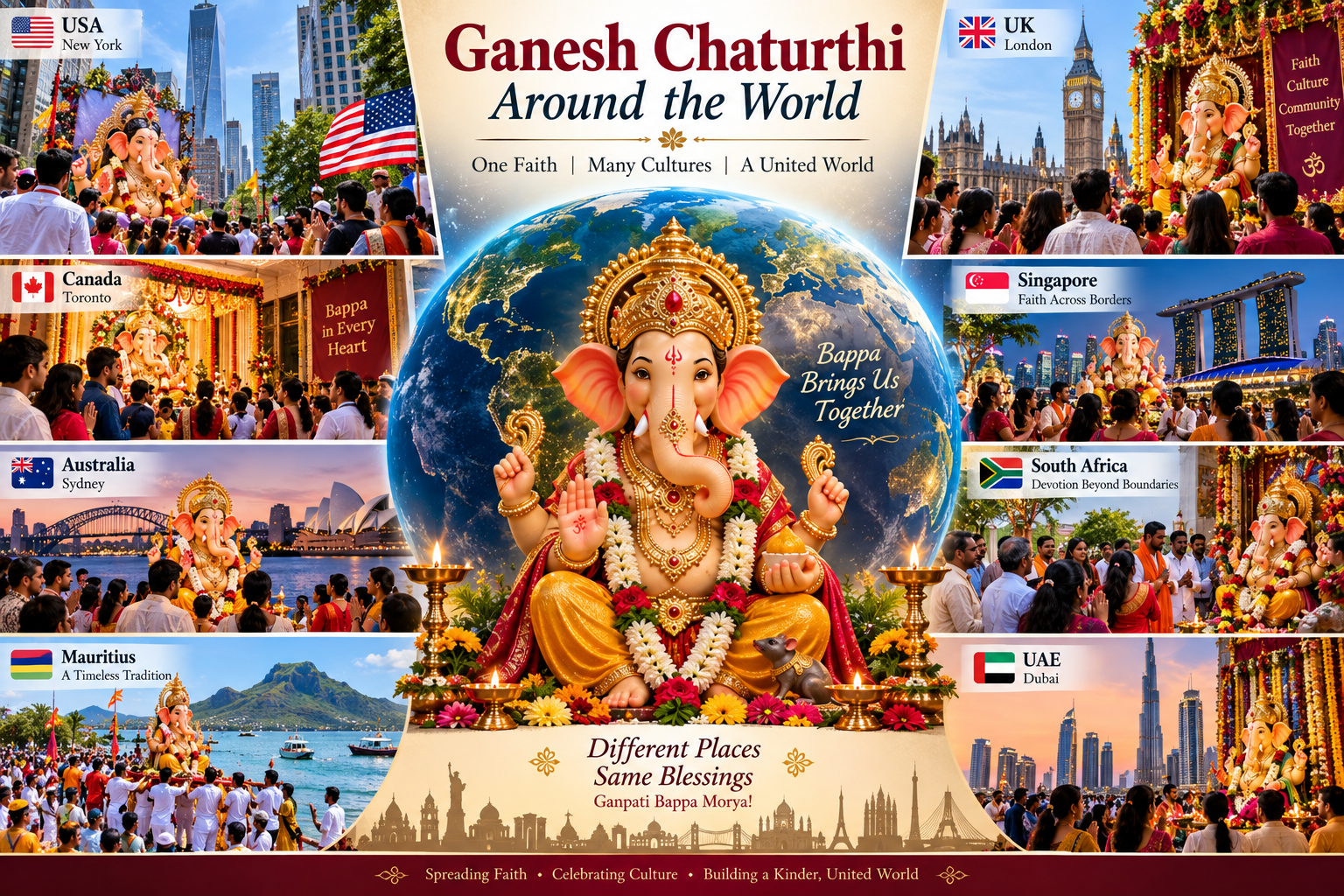
Lord Ganesha’s message of wisdom, prosperity, and new beginnings transcends geographical boundaries. Today, Ganesh Chaturthi is celebrated with immense devotion in many countries where Indian communities have made their homes. Over the years, the festival has become a beautiful expression of faith, culture, and unity, bringing people together regardless of nationality or background.
United States
Cities like New York, New Jersey, California, Chicago, Houston, and Atlanta witness vibrant Ganesh Chaturthi celebrations. Hindu temples organize Ganesh Puja, Aarti, devotional singing, cultural performances, children’s activities, and community meals. Many families also install Lord Ganesha’s idol at home and perform traditional rituals with the same devotion as in India.
United Kingdom
The United Kingdom, particularly London, Leicester, Birmingham, and Manchester, hosts grand Ganesh Chaturthi celebrations. Hindu temples and cultural organizations conduct prayers, music concerts, classical dance performances, and spiritual discourses. Devotees from various communities come together to celebrate the festival with great enthusiasm.
Canada
Indian communities across Toronto, Brampton, Vancouver, Calgary, and Montreal celebrate Ganeshotsav with temple gatherings, devotional programs, and community events. The festival provides an opportunity for younger generations to stay connected with their cultural and spiritual heritage.
Australia and New Zealand
Ganesh Chaturthi has become increasingly popular in cities such as Sydney, Melbourne, Brisbane, Perth, and Auckland. Community organizations and temples arrange Ganesh idol installations, bhajans, cultural performances, and eco-friendly immersion ceremonies.
Singapore and Malaysia
Both Singapore and Malaysia have thriving Hindu communities. Temples are beautifully decorated, and devotees gather for special prayers, Aarti, and religious processions. The celebrations reflect the rich cultural diversity of these nations.
Mauritius
Mauritius is home to a large Hindu population, making Ganesh Chaturthi one of the country’s most significant religious festivals. Families install idols, perform daily prayers, and immerse Lord Ganesha’s idol in rivers or the sea on the final day, preserving traditions passed down through generations.
Nepal, Fiji, South Africa, and the Middle East
Ganesh Chaturthi is also celebrated in Nepal, Fiji, South Africa, the United Arab Emirates, Oman, Qatar, and several other countries where Indian communities reside. Temples become centers of devotion, while families celebrate with prayers, traditional food, and cultural gatherings.
The growing global celebration of Ganesh Chaturthi reflects how spiritual traditions can unite people across cultures while preserving their heritage.
Traditional Ganesh Chaturthi Rituals
While customs may vary from region to region, the essence of Ganesh Chaturthi remains the same—welcoming Lord Ganesha with devotion and bidding Him farewell with gratitude.
1. Cleaning and Decorating the Home
The festival begins with cleaning the house and decorating the entrance with Rangoli, flowers, mango leaves, and colorful lights. A clean and beautifully decorated home symbolizes welcoming divine blessings.
2. Ganesh Idol Installation (Sthapana)
The idol of Lord Ganesha is placed on a decorated platform facing east or north. Many devotees choose eco-friendly clay idols to support environmental conservation.
3. Pran Pratishtha
During the installation ceremony, sacred mantras are chanted to invoke the divine presence of Lord Ganesha into the idol.
4. Daily Puja and Aarti
For the next ten days, devotees perform daily worship by offering:
- Fresh flowers
- Durva grass
- Modaks
- Coconut
- Fruits
- Incense
- Diyas
Sacred hymns, Ganesh Mantras, and Ganesh Aarti are recited with devotion.
5. Community Celebrations
Many neighborhoods organize:
- Bhajan evenings
- Spiritual discourses
- Classical music concerts
- Cultural competitions
- Charity initiatives
- Free medical camps
- Food distribution for the needy
These activities highlight the festival’s spirit of service and togetherness.
The Spiritual Meaning of Ganesh Visarjan
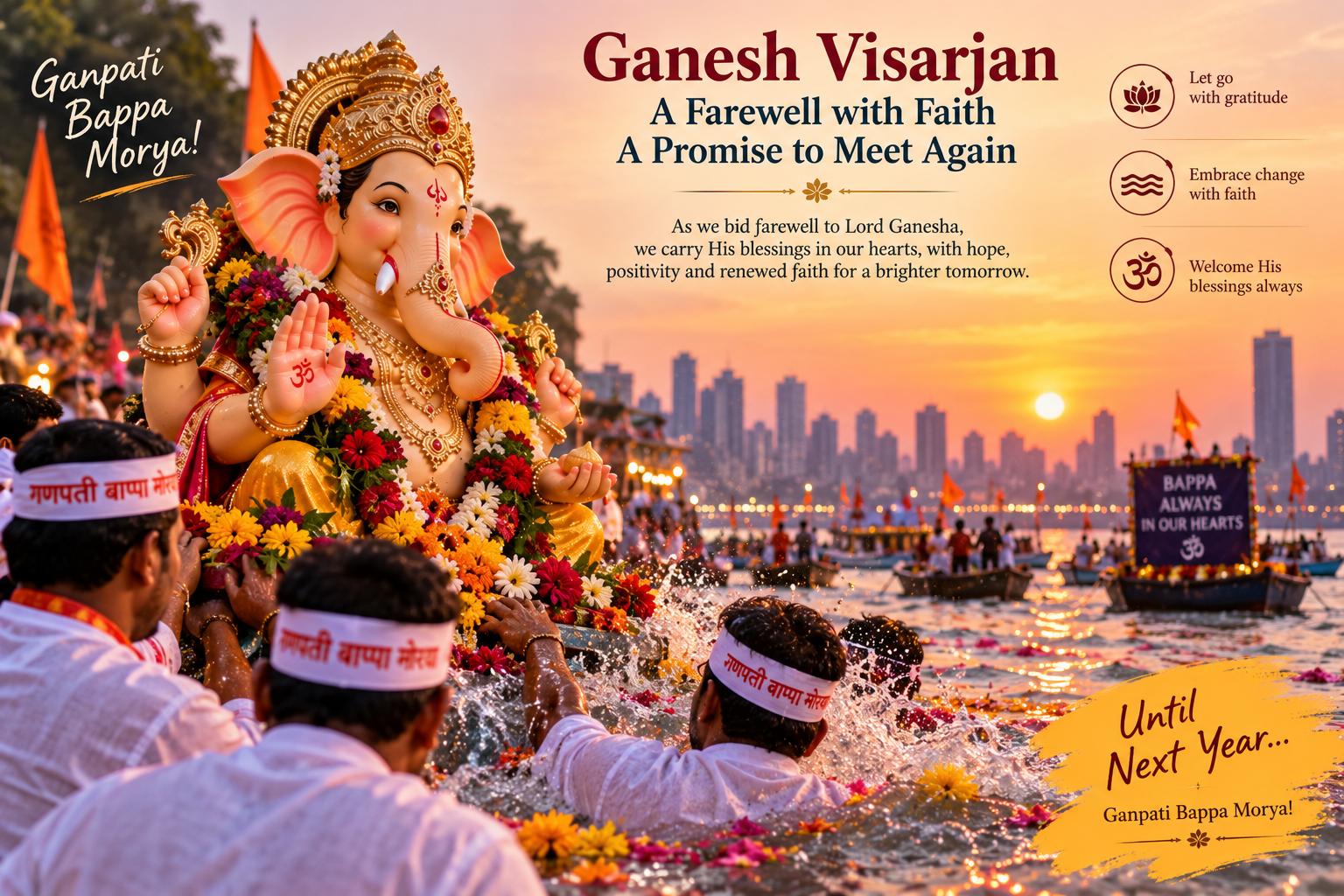
The final day of Ganesh Chaturthi, known as Anant Chaturdashi, is marked by Ganesh Visarjan, the ceremonial immersion of Lord Ganesha’s idol in water.
To many, it is an emotional farewell filled with chants of:
“Ganpati Bappa Morya! Pudchya Varshi Lavkar Ya!”
(Glory to Lord Ganesha! Please return early next year!)
But beyond the colorful processions and celebrations lies a profound spiritual message.
Ganesh Visarjan reminds us that everything in the material world is temporary. We welcome Lord Ganesha into our homes with love and devotion, celebrate His presence, and then respectfully return the idol to nature. This symbolizes the eternal cycle of creation, preservation, and dissolution.
The festival teaches us to:
- Let go of ego and attachment.
- Accept change with grace.
- Express gratitude for divine blessings.
- Carry Lord Ganesha’s teachings in our hearts throughout the year.
Eco-Friendly Ganesh Chaturthi
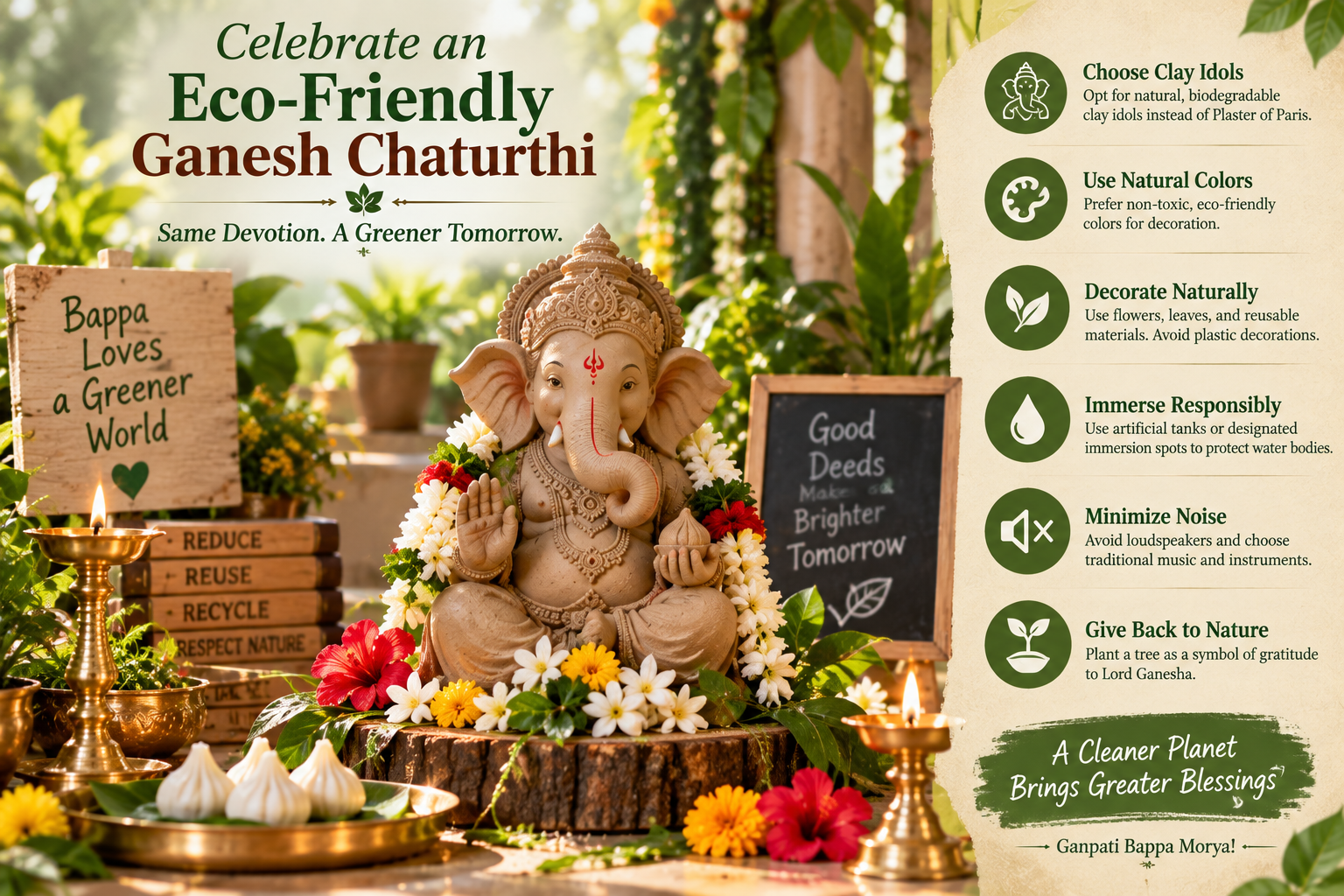
As awareness about environmental conservation grows, many devotees are embracing eco-friendly Ganeshotsav.
Simple steps can make a significant difference:
- Choose clay idols instead of Plaster of Paris.
- Use natural, non-toxic colors.
- Decorate with flowers, leaves, and reusable materials.
- Avoid plastic decorations.
- Immerse idols in artificial tanks where available.
- Minimize noise pollution by using traditional instruments instead of loudspeakers.
- Plant a tree as part of the celebration.
Celebrating responsibly reflects Lord Ganesha’s teachings of harmony with nature and respect for all living beings.
Interesting Facts About Ganesh Chaturthi
- Lord Ganesha is revered as the God of Wisdom, Knowledge, Prosperity, and New Beginnings.
- Modak is considered Lord Ganesha’s favorite sweet and symbolizes the sweetness of spiritual wisdom.
- The mouse (Mushak) represents the ability to control desires and ego.
- Ganesh Chaturthi is celebrated not only in India but in more than 25 countries around the world through temples and Indian cultural organizations.
- The festival promotes values of unity, compassion, service, gratitude, and devotion.
Living the Spirit of Ganesh Chaturthi
The true celebration of Ganesh Chaturthi extends beyond rituals. It lies in adopting Lord Ganesha’s virtues in our daily lives:
- Seek knowledge with humility.
- Face challenges with courage.
- Respect family and elders.
- Serve society selflessly.
- Protect nature.
- Begin every endeavor with faith and positivity.
When these values become part of our lives, the blessings of Lord Ganesha continue long after the festival concludes.
Conclusion: Welcoming Lord Ganesha with Faith and Gratitude
Ganesh Chaturthi is much more than the installation of a beautiful idol or the celebration of a grand festival—it is a journey of devotion, wisdom, gratitude, and spiritual awakening.
For centuries, Lord Ganesha has inspired millions of devotees to begin every new chapter in life with faith and optimism. Whether it is starting a new business, pursuing education, building a home, or embarking on a personal journey, His blessings remind us that success is achieved through wisdom, perseverance, humility, and righteous actions.
From the magnificent public celebrations in Mumbai and Maharashtra to the heartfelt prayers offered in homes across India and the vibrant festivities organized in countries such as the United States, United Kingdom, Canada, Australia, Singapore, Malaysia, Mauritius, Nepal, and South Africa, Ganesh Chaturthi beautifully demonstrates how spirituality transcends geographical boundaries.
The festival also reminds us of our responsibilities—not only towards our families and communities but also towards nature. By choosing eco-friendly idols, reducing waste, and celebrating responsibly, we honor Lord Ganesha while protecting the environment for future generations.
As we welcome Ganesh Chaturthi 2026, let us pray that Lord Ganesha blesses every home with happiness, removes every obstacle from our path, fills our hearts with wisdom and compassion, and guides us towards a life of peace, prosperity, and spiritual fulfillment.
🙏 Ganpati Bappa Morya! Mangal Murti Morya! 🙏
Frequently Asked Questions (FAQs)
-
When is Ganesh Chaturthi in 2026?
Ganesh Chaturthi will be celebrated on Monday, 14 September 2026. The ten-day festival concludes with Ganesh Visarjan (Anant Chaturdashi) on Friday, 25 September 2026.
-
Why is Ganesh Chaturthi celebrated?
Ganesh Chaturthi commemorates the birth of Lord Ganesha, the son of Lord Shiva and Goddess Parvati. He is worshipped as the remover of obstacles, the deity of wisdom, prosperity, and auspicious beginnings.
-
Why is Lord Ganesha worshipped before every auspicious occasion?
According to Hindu tradition, Lord Shiva blessed Lord Ganesha with the honor of being Pratham Pujya—the first deity to be worshipped before every religious ceremony, celebration, or important undertaking. Devotees believe His blessings remove obstacles and ensure success.
-
Why is Ganesh Chaturthi celebrated for ten days?
The ten-day celebration symbolizes inviting Lord Ganesha into our homes and hearts, seeking His blessings through daily worship, and finally bidding Him a respectful farewell during Ganesh Visarjan. It reflects the eternal cycle of creation, preservation, and renewal.
-
Why are Modaks offered to Lord Ganesha?
Modak is believed to be Lord Ganesha’s favorite sweet. It symbolizes the sweetness of knowledge, spiritual fulfillment, and the rewards of sincere devotion.
-
Why is Ganesh Visarjan performed?
Ganesh Visarjan represents the impermanence of the physical world and the eternal presence of the Divine. It teaches devotees to embrace change with faith, gratitude, and detachment while carrying Lord Ganesha’s teachings within their hearts.
-
Which cities are famous for Ganesh Chaturthi celebrations?
Mumbai, Pune, Nashik, Nagpur, Hyderabad, Bengaluru, Chennai, Goa, Ahmedabad, and several other cities across India are renowned for their vibrant Ganesh Chaturthi celebrations.
-
Is Ganesh Chaturthi celebrated outside India?
Yes. The festival is celebrated by Hindu communities in countries including the United States, United Kingdom, Canada, Australia, New Zealand, Singapore, Malaysia, Mauritius, Nepal, South Africa, Fiji, and the United Arab Emirates, reflecting the global devotion to Lord Ganesha.