A cancer diagnosis and its treatment can change everyday life in ways that touch the body, the mind, relationships, and a person’s sense of control. Alongside medical care, many people look for gentle practices that help them feel more comfortable and grounded. Yoga may be one such practice when it is adapted to the individual and used with the support of the healthcare team.
The key message is simple: yoga does not treat or cure cancer. It may, however, support quality of life through gentle movement, breathing, relaxation, and mindful attention. The most helpful practice is usually the one that respects a person’s energy, symptoms, treatment plan, and personal preferences.
Medical Disclaimer
This article is for education and general wellbeing only. Yoga is a complementary practice and is not a cure for cancer or a replacement for surgery, chemotherapy, radiation therapy, immunotherapy, medicines, or any other treatment prescribed by a qualified clinician. Before beginning or changing a yoga routine, ask your oncology team what is appropriate for your diagnosis, treatment stage, symptoms, blood counts, surgery recovery, and mobility.
Yoga as Complementary Supportive Care
In cancer care, supportive or integrative practices are used alongside — never instead of — evidence-based medical treatment. Yoga can include physical postures, breathing practices, relaxation, meditation, and attention to the present moment. A session can be as simple as supported stretches in a chair, a few minutes of slow breathing, or a restorative pose with blankets and cushions.
A qualified instructor can modify yoga for limited mobility, fatigue, neuropathy, lymphedema risk, bone health concerns, or recovery after surgery. There is no need to force a pose or work through pain. Comfort, safety, and self-awareness matter more than flexibility or fitness.

Can Yoga Cure Cancer?
No. There is no reliable scientific evidence that yoga cures, reverses, or replaces treatment for cancer. It should never be presented as an alternative to oncology care. Its value lies in supportive wellbeing — helping some people manage stress, sleep difficulties, fatigue, stiffness, and the emotional strain of treatment.
What Does the Scientific Evidence Suggest?

Research on yoga in oncology has grown substantially over the past two decades, and the evidence is now specific enough to say where yoga is well-supported and where it is not.
- The 2023 Society for Integrative Oncology–ASCO guideline on anxiety and depression in adults with cancer recommends yoga, with moderate-certainty evidence, for reducing anxiety in people with breast cancer during and after chemotherapy.
- The National Comprehensive Cancer Network (NCCN) lists yoga as an option clinicians can consider for cancer-related fatigue, anticipatory nausea and vomiting, distress, and some survivorship concerns.
- A 2024 ASCO–Society for Integrative Oncology update on cancer-related fatigue found yoga most helpful after treatment has finished; during active treatment, practices such as tai chi and qigong had more consistent evidence for fatigue specifically.
- By contrast, a 2022 SIO–ASCO guideline on cancer pain found the evidence for yoga and pain was not yet strong enough for a specific recommendation, unlike acupuncture, massage, or hypnosis, which had moderate-strength support.
Put together, this means yoga has real, guideline-backed support for anxiety and for post-treatment fatigue, more general support for quality of life and sleep, and weaker evidence specifically for pain. Results also vary because studies differ in yoga style, programme length, and the groups studied, so yoga is best treated as a personalised supportive option rather than a guaranteed outcome.
This evidence is strongest when yoga is gentle, supervised or taught by a trained professional, and integrated with conventional care. Individual medical circumstances always take priority over a general recommendation. For the parallel picture on meditation and mindfulness in cancer care, see our companion guide on how meditation can support emotional wellbeing during cancer treatment.
Physical Benefits of Gentle Yoga
Cancer treatment, time in bed, surgery, medication effects, and stress can all contribute to stiffness, reduced confidence in movement, and changes in posture. Gentle yoga may offer a manageable way to reconnect with the body.
Mobility and flexibility
Slow, supported movements may help ease everyday stiffness in the neck, shoulders, back, hips, and legs. The aim is comfortable range of motion, not deep stretching.
Balance and posture
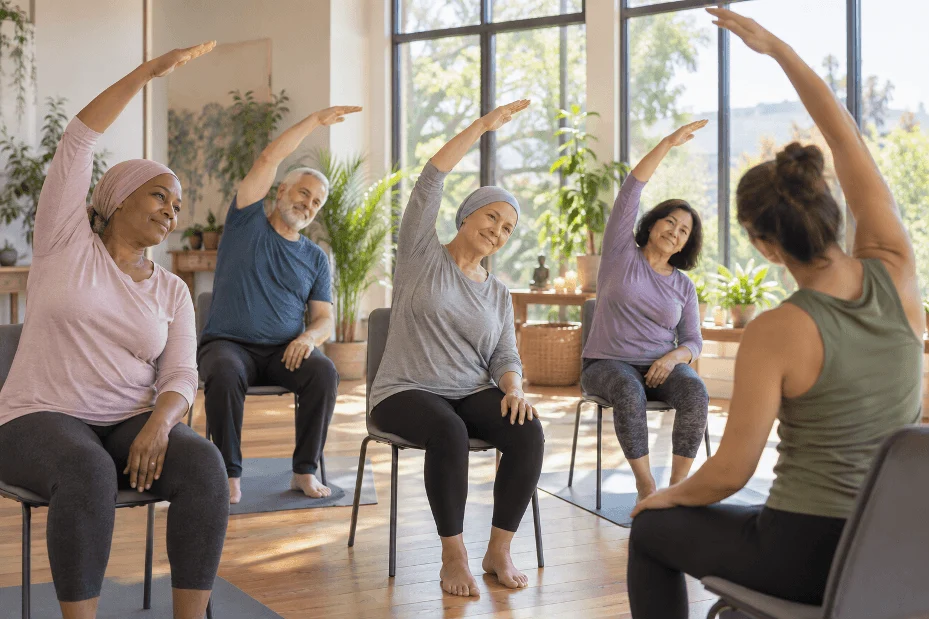
Simple standing or chair-based postures can encourage body awareness, upright posture, and balance. A wall, chair, or other stable support can make practice safer.
Gentle activity and body awareness
Restorative and chair yoga provide light activity on days when a conventional workout feels unrealistic. Mindful movement can help people notice tiredness, pain, dizziness, or limits early and adjust before overdoing it.
Emotional and Mental Health Benefits of Yoga During Cancer Care

Fear, uncertainty, sadness, anger, and anxiety are common responses to a cancer diagnosis. Appointments, procedures, changing routines, and waiting for results can feel overwhelming. Yoga cannot remove these challenges, but it may give people a quiet, practical way to pause and reconnect with the present moment.
Reducing stress
Stress can activate the body’s fight-or-flight response. Gentle movement, slower breathing, and relaxation may help encourage the parasympathetic, or rest-and-digest, response. Many people report feeling calmer after even a short, comfortable session.
Managing anxiety
Uncertainty about treatment, test results, or recovery can intensify anxiety, and this is the area where yoga has the strongest guideline support of any symptom discussed here. Mindful breathing and simple movement may help shift attention away from constant worry and toward immediate sensations. Yoga is not a treatment for anxiety disorders, and people who are struggling should seek appropriate professional support.
Improving sleep quality
Pain, medication effects, stress, and hospital routines can disrupt sleep. A gentle evening practice may help relax the body, quiet the mind, reduce muscle tension, and create a calmer transition toward bedtime. Our guide to evening yoga routines for better rest covers this in more depth.
Helping manage cancer-related fatigue
Cancer-related fatigue can persist even after rest. As the guideline evidence above suggests, yoga’s support for fatigue is best established once active treatment has ended; during treatment, short sessions, rest breaks, and low-effort practices are usually more realistic than pushing through exhaustion, and other approaches may be better studied for that period. Either way, individually tailored activity is what the evidence favours, not a fixed programme.
Supporting emotional resilience
Yoga can create space for acceptance, patience, gratitude, self-awareness, compassion, and hope. These are not requirements to feel positive all the time; they are gentle skills that may help people meet difficult days with more kindness toward themselves.
The Mind-Body Connection
Yoga recognises that tension in the mind and body often travel together. When the body relaxes through supported movement and breathing, some people notice improvements in mood and emotional balance. Experiences differ, but many survivors describe feeling calmer, more connected, and more hopeful.
Understanding Pranayama and Safe Breathing Practices

Pranayama is the yogic practice of breath regulation. For people who are tired or unable to do physical postures, gentle breathing may be an accessible way to practise relaxation and mindful awareness.
Potential benefits include encouraging relaxation and a calmer nervous system, reducing feelings of stress or anxiety, promoting mindful attention, and supporting comfortable breathing habits.
After discussing suitability with a healthcare professional or qualified yoga therapist, people may explore diaphragmatic breathing, deep belly breathing, equal breathing, or gentle alternate-nostril breathing if appropriate. Practices involving forceful exhalation or long breath holds are not suitable for everyone, particularly during active treatment. Our full guide to pranayama breathing techniques covers these methods and their precautions in detail.

Which Types of Yoga Are Most Suitable?
Not every style of yoga is appropriate during treatment. In general, gentler, adaptable styles are preferred. A trained instructor can tailor the practice to the person rather than expecting the person to fit the practice.
| Yoga style | General suitability | Notes |
|---|---|---|
| Restorative yoga | Often suitable | Uses cushions and blankets to support relaxation. |
| Chair yoga | Often suitable | Helpful with fatigue or limited mobility. |
| Gentle Hatha yoga | Often suitable | Slow, controlled movement with modifications. |
| Yin yoga | Sometimes | May need adjustments for mobility; check with the care team. |
| Power yoga | Usually not during active treatment | High intensity may be inappropriate. |
| Hot yoga | Not recommended | Heat and dehydration may increase risks. |
Safety First: Important Precautions

Yoga should always be adapted to the individual’s condition. Before beginning, obtain approval from the oncology team, tell the instructor about the diagnosis and treatment, avoid pain, stay hydrated, wear comfortable clothing, and rest whenever needed. Stop immediately and seek medical advice for dizziness, chest pain, severe shortness of breath, new neurological symptoms, or any unusual symptom.
When should yoga be postponed or modified?
- Fever or active infection
- Severe anaemia or extremely low blood counts
- Uncontrolled pain
- Certain bone conditions or bone metastases
- Immediately after surgery, until medically cleared
- Significant balance problems without supervision
Every person’s situation is different. Medical guidance is essential, especially when there are surgical restrictions, ports, ostomies, lymphedema concerns, neuropathy, or changes in treatment.
Best Beginner Yoga Poses for People Living With Cancer

The most suitable routine depends on diagnosis, treatment stage, energy levels, and medical advice. Gentle, restorative movements are often preferred. Always seek approval from the oncology team before starting yoga, particularly after surgery or during active treatment. For a broader set of gentle options once you’re comfortable with these, see our guide to 10 best yoga poses for full-body awareness.
Mountain Pose (Tadasana)
A simple standing posture that encourages good posture and body awareness. Potential benefits: improves posture, enhances balance, encourages mindful breathing.
Cat-Cow Stretch (Marjaryasana–Bitilasana)
A gentle movement that mobilises the spine; it can be done on hands and knees or adapted to a chair. Potential benefits: helps reduce stiffness, encourages spinal flexibility, promotes coordinated breathing.
Child’s Pose (Balasana)
A restorative resting posture that can be modified with cushions or bolsters. Potential benefits: encourages relaxation, gently stretches the back, promotes calmness.
Legs-Up-the-Wall Pose (Viparita Karani)
A restorative posture that many people find relaxing. Avoid or modify it if the healthcare team advises against it. Potential benefits: encourages relaxation, may help relieve tired legs, supports stress reduction.
Seated Forward Fold (modified)
A gentle fold performed on a chair or cushion, adapted for comfort. Potential benefits: encourages flexibility, supports relaxation, can be adapted for comfort.

A Simple 20-Minute Daily Yoga Routine
This example should be adapted to individual needs and medical advice. Consistency is often more valuable than intensity.
- Gentle breathing — 3 minutes
- Neck and shoulder mobility — 3 minutes
- Gentle stretching — 5 minutes
- Restorative poses — 5 minutes
- Guided relaxation — 4 minutes
Yoga During Treatment and Recovery

Yoga during chemotherapy
Chemotherapy can affect energy levels differently from day to day. Some people may feel well enough for gentle movement, while others may need complete rest. Choose short sessions, focus on breathing and relaxation, hydrate, and stop if unwell. The goal is comfort and wellbeing, not exercise performance.
Yoga during radiation therapy
Radiation therapy may cause tiredness or skin sensitivity in the treated area. Gentle yoga may help maintain flexibility and reduce stress, but movements should not irritate sensitive areas. The healthcare team can advise on precautions.
Yoga after cancer surgery
Recovery after surgery varies by procedure. Obtain medical clearance, begin slowly, avoid strain around the surgical area, and consider working with an instructor familiar with post-surgical rehabilitation. Healing takes time.

Common Myths About Yoga and Cancer
| Myth | Evidence-aware perspective |
|---|---|
| Yoga can cure cancer. | There is no reliable scientific evidence that yoga cures cancer. It can be a supportive practice but must not replace medical treatment. |
| Cancer patients should avoid all physical activity. | Many people benefit from appropriate, medically approved activity. The right approach depends on health and treatment plan. |
| Only experienced yoga practitioners can benefit. | Yoga can be adapted for beginners, older adults, and people with limited mobility through chair and restorative practices. |
| Yoga is only physical exercise. | Yoga can combine movement, breathing, relaxation, mindfulness, and emotional wellbeing. |

Lifestyle Tips to Complement Yoga
Yoga works best as part of a broader approach to supportive wellbeing. Consider prioritising restful sleep, eating a balanced diet recommended by the healthcare team, staying hydrated, practising gentle breathing, spending time outdoors when possible, maintaining social connections, accepting help, and celebrating small milestones. Building a simple daily rhythm, such as with a short daily yoga habit, tends to matter more than any single session.
Conclusion
A cancer diagnosis can be one of life’s most challenging experiences, but supportive practices can help many people navigate treatment with greater comfort and resilience. Yoga offers more than physical movement: it encourages mindful breathing, relaxation, emotional balance, and gentle self-care.
When practised safely and alongside evidence-based medical treatment, yoga may support flexibility, stress reduction, sleep, fatigue management, and overall quality of life. Its strength is not in curing disease, but in helping people reconnect with themselves during a difficult journey. Every deep breath, gentle stretch, and quiet moment of mindfulness can be a form of care for both body and mind.
Frequently Asked Questions
-
Can yoga replace chemotherapy or radiation therapy?
No. Yoga is a complementary practice that may improve wellbeing but must not replace evidence-based cancer treatment.
-
Is yoga safe during chemotherapy?
For many people, gentle yoga can be safe when approved by the healthcare team and adapted to the person’s condition. Discuss exercise plans with an oncologist.
-
How often should people living with cancer practice yoga?
There is no single schedule for everyone. Even 15 to 20 minutes of gentle practice a few times a week may be useful for some people.
-
Which type of yoga is generally most suitable?
Restorative yoga, chair yoga, and gentle Hatha yoga are commonly chosen because they can be adapted to individual abilities.
-
Does yoga have good evidence for reducing anxiety during cancer treatment?
Yes, this is where the evidence is strongest. The 2023 Society for Integrative Oncology-ASCO guideline recommends yoga, with moderate-certainty evidence, for anxiety in people with breast cancer during and after chemotherapy.
-
Does yoga help with cancer-related fatigue?
It may, particularly after active treatment has ended. During treatment, the evidence for other practices such as tai chi and qigong is currently more consistent for fatigue specifically, though individually tailored yoga can still be worthwhile.