

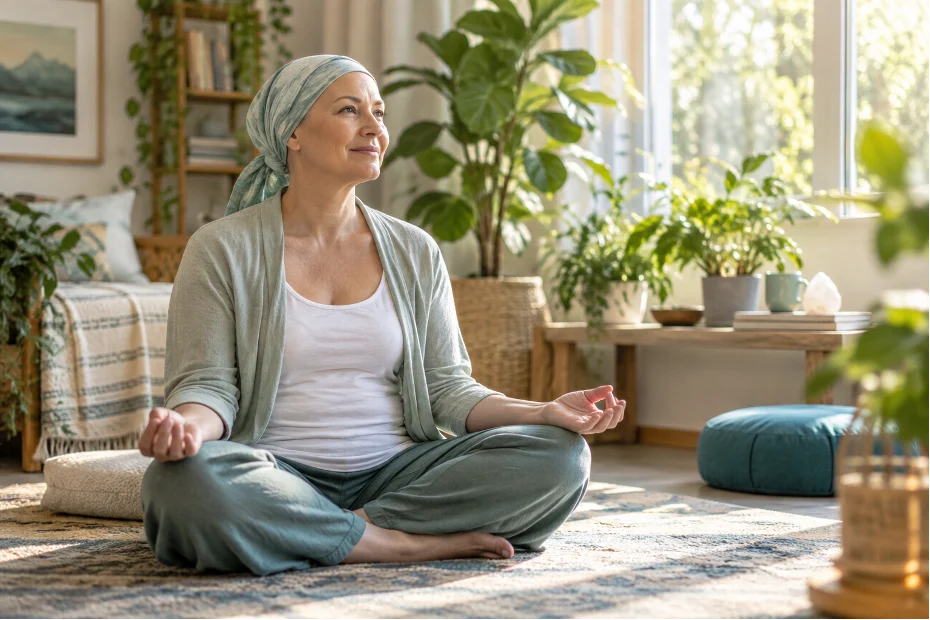
Cancer can bring fear, uncertainty, physical discomfort, practical demands, and changes in identity or relationships. Meditation cannot make cancer disappear, but it can offer a small, repeatable way to meet difficult moments with more attention and kindness. For some people, a few quiet minutes of breathing, guided imagery, or mindful awareness can become a useful part of supportive care.
The key message is simple: meditation is not cancer treatment. Used alongside evidence-based medical care, it may help some people manage stress, anxiety, sleep disruption, and the emotional strain of diagnosis or treatment. The practice should be flexible, optional, and adapted to the person rather than treated as another task to perform perfectly.
Medical Disclaimer
This article is for education and general wellbeing only. Meditation is a complementary practice and is not a cure for cancer or a replacement for oncology treatment, psychotherapy, psychiatric care, or medicine. Discuss new wellbeing practices with your healthcare team, particularly if you have severe distress, trauma symptoms, depression, anxiety, or difficulty sleeping.
What Is Meditation, and What Is It Not?
Meditation is a mind-body practice in which attention is intentionally placed on an anchor such as the breath, a word, an image, sound, or sensations in the body. Mindfulness meditation adds a nonjudgmental awareness of the present moment. When the mind wanders, the practice is simply to notice and gently return.

Meditation does not require a blank mind, a particular belief system, a special posture, or long periods of silence. It can be practised sitting in a chair, lying down, walking slowly, listening to a recording, or taking three calm breaths before an appointment. It does not guarantee calmness; sadness, anger, fear, and distraction are normal human responses during cancer care.
Can Meditation Cure Cancer?
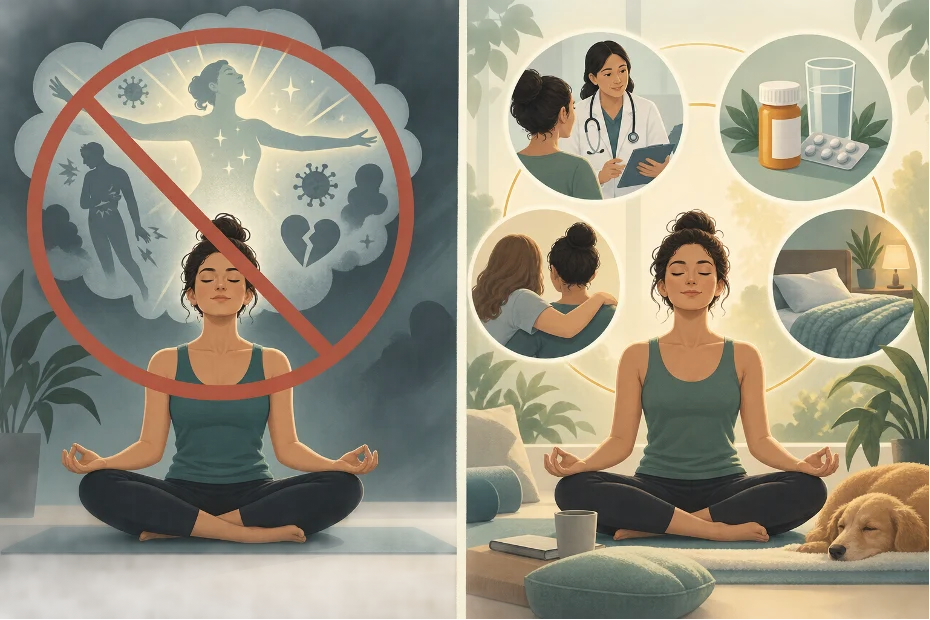
No. There is no reliable scientific evidence that meditation cures cancer, shrinks tumours, or replaces chemotherapy, radiation therapy, surgery, immunotherapy, or any other oncology treatment. Claims that it does can cause harm by encouraging people to delay or stop effective care. Meditation is valuable as supportive wellbeing, not as a cure.
What Does the Scientific Evidence Suggest?
Research in integrative oncology has evaluated mindfulness-based interventions, relaxation practices, guided imagery, and related approaches. Clinical guidance from the Society for Integrative Oncology and the American Society of Clinical Oncology supports mindfulness-based interventions as options for symptoms of anxiety and depression in adults with cancer, alongside usual care. Results vary because programmes, participant groups, and outcome measures differ.
The most helpful conclusion is modest and practical: meditation may improve distress, anxiety, mood, sleep, and health-related quality of life for some people. It is not a substitute for clinical mental health care when symptoms are severe, persistent, or affect safety and daily functioning.
How Does a Cancer Diagnosis Affect Emotional Wellbeing?
A diagnosis can create shock, fear, sadness, anger, uncertainty, grief, and worry about family, work, finances, body changes, and recurrence. There is no correct emotional response. Support from loved ones, the cancer care team, a social worker, counsellor, spiritual care provider, or peer group can be just as important as an individual practice.
How May Meditation Support Stress and Anxiety?
Stress often pulls attention toward what may happen next. Mindfulness invites attention back to one present experience: breathing, contact with a chair, sounds in the room, or a guided voice. This does not solve every problem, but it may create a brief pause before the mind becomes overwhelmed.
Mindful breathing
Place one hand on the chest and one on the abdomen if that feels comfortable. Breathe naturally. Notice the rise and fall without trying to force a deep breath. When thoughts appear, acknowledge them and return to the next breath. Even one or two minutes can be enough on a difficult day. If you would like to explore breathing practice more fully, our guide to pranayama breathing techniques covers the foundations gently.
Guided imagery
Guided imagery uses words or recordings to invite a peaceful scene, a comforting memory, or a sense of safety. It can be particularly accessible before a procedure, during a waiting period, or when silent meditation feels difficult.

Can Meditation Help With Sleep and Fatigue?
Sleep disruption is common during cancer treatment. Worry, pain, medication effects, changes in routine, and hospital schedules can all contribute. A brief evening practice may help create a calmer transition to rest. The aim is not to force sleep; it is to lower stimulation and give the mind a gentler place to rest. Our guide to evening routines for better rest offers further gentle options.
A body scan is one useful option. Beginning at the feet and moving upward, gently notice sensations in each area of the body. There is no need to change anything. If a part of the body feels uncomfortable, direct attention to a neutral area, the breath, or the support of the bed or chair.

Which Meditation Practices Suit Beginners?
| Practice | How to begin | Why it may be accessible |
|---|---|---|
| Mindful breathing | Notice 5 to 10 natural breaths. | Can be done almost anywhere. |
| Body scan | Move attention slowly through the body. | Can be adapted while sitting or lying down. |
| Guided meditation | Follow a trusted short recording. | Helpful when solo practice feels difficult. |
| Loving kindness | Offer simple wishes of care to yourself and others. | May support self-compassion and connection. |
| Walking meditation | Notice feet, pace, sights and sounds while walking slowly. | Useful for people who prefer movement. |

If you are new to sitting practice, these simple meditation techniques can be shortened and adapted to whatever energy you have on a given day.
What Does a Simple Ten-Minute Practice Look Like?
- Minute 1. Choose a comfortable position and notice the support beneath you.
- Minutes 2 to 4. Notice natural breathing without changing it.
- Minutes 5 to 7. Gently notice body sensations, sounds, or a calming image.
- Minutes 8 to 9. Repeat a kind phrase such as May I meet this moment with care.
- Minute 10. Open the eyes, move slowly, and notice one thing that feels supportive.
If ten minutes feels like too much, try one minute. Compassion is more important than streaks, effort, or perfection.

How Can Meditation Fit Around Chemotherapy and Radiation?
During chemotherapy
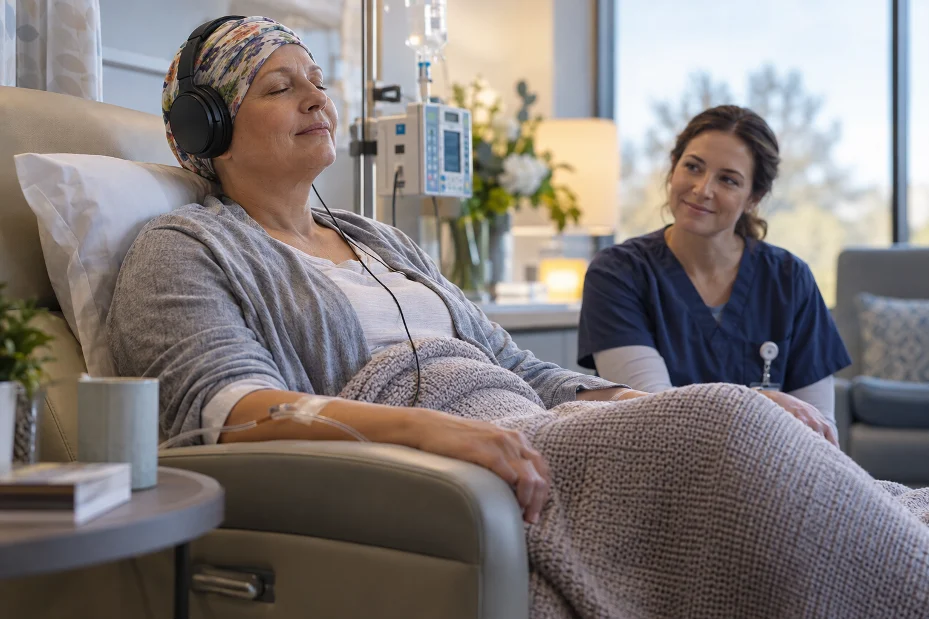
Energy, concentration, and nausea can vary from day to day. Short guided audio, simple breathing, or calming music may be easier than silent sitting. Stop if the practice makes you feel worse, dizzy, more distressed, or disconnected from your surroundings.
During radiation therapy
Waiting and repeated appointments can be stressful. A short recording, imagery, or a few slow breaths may provide structure before or after treatment. The care team can advise whether headphones or recordings are practical in a particular setting.
After treatment
Meditation may be useful during recovery, survivorship, or fear of recurrence, but it is not a replacement for follow-up care, counselling, or treatment of anxiety or depression.

Is Meditation Always Safe, and When Should You Seek More Support?
Meditation is generally low risk, but it is not neutral for everyone. Stillness or attention to the body can occasionally intensify anxiety, grief, trauma memories, dissociation, or difficult sensations. Choose a shorter, more external practice such as walking, guided imagery, or listening to music if inward attention feels overwhelming. Gentle movement-based practices for stress relief may suit some people better than sitting still.
- Tell the oncology team about severe anxiety, low mood, panic, persistent insomnia, or distress that interferes with care.
- Seek urgent local help or emergency support if there are thoughts of self-harm, suicide, or an inability to stay safe.
- Work with a licensed mental health professional or qualified mindfulness teacher when trauma, severe depression, or intense anxiety is present.
- Use reputable programmes from cancer centres, hospitals, universities, or established health organisations.
What About Caregivers, Spirituality and Connection?
Caregivers often carry their own worry, fatigue, and practical responsibilities. A shared two-minute breathing pause, a guided practice, or a quiet walk can create a small moment of connection without requiring anyone to feel positive. Meditation can also sit alongside prayer, spiritual traditions, or conversations with a faith leader or hospital chaplain when those are meaningful to the individual.
The right practice is personal. Some people prefer secular mindfulness, others prefer a spiritual form, and some do not connect with meditation at all. All of these choices are valid. Supportive care should honour the person’s culture, beliefs, and preferences. The teaching traditions described by India’s leading mindfulness teachers offer one starting point among many.
Common Myths About Meditation and Cancer
| Myth | Evidence-aware perspective |
|---|---|
| Meditation can cure cancer. | Meditation may support wellbeing but does not cure cancer or replace medical treatment. |
| A good practice means never feeling upset. | Difficult emotions are normal. The practice is noticing with kindness, not eliminating feelings. |
| You need a perfectly quiet mind. | Mind wandering is expected. Gently returning attention is the practice. |
| Meditation is only for people with a spiritual belief. | Meditation can be secular, spiritual, guided, silent, seated, walking, or adapted to preference. |

Conclusion
Meditation is not a cure for cancer, and it should never replace evidence-based treatment or mental health care. Its value is more human and immediate: it may help people pause, breathe, rest, and meet an uncertain time with a little more steadiness and self-compassion.
For people who find it helpful, meditation can be one part of an integrative support plan that also includes medical care, symptom management, counselling, movement, nutrition, rest, relationships, and spiritual care. The best approach is the one that feels safe, respectful, and realistically sustainable.
Frequently Asked Questions
-
Can meditation replace treatment for anxiety or depression?
No. Meditation may be a helpful complement, but clinical assessment, psychotherapy, and medication may be needed for significant symptoms.
-
How long should I meditate during cancer treatment?
Start with one to five minutes if needed. Short, comfortable practices can be more useful than forcing a longer session.
-
Is meditation safe during chemotherapy?
For many people it can be safe, especially when adapted to energy and symptoms. Discuss concerns with the oncology team and stop if it worsens discomfort or distress.
-
What if I cannot focus?
That is normal. Try a guided recording, mindful walking, music, or simply notice a few breaths. There is no performance standard.
-
Can caregivers meditate too?
Yes. Caregivers may use short practices to manage their own stress and create moments of calm and connection.
-
Does meditation cure cancer?
No. There is no reliable scientific evidence that meditation cures cancer or replaces chemotherapy, radiation, surgery, or immunotherapy. It is supportive care, not treatment.