
The Gayatri Mantra is a Vedic prayer from the Rigveda (3.62.10), attributed to the sage Vishvamitra and addressed to Savitr, the Vedic deity of the sun. It is among the most widely recited prayers in Hinduism, chanted daily by millions as a prayer for clarity of mind.
Whether you are a beginner or already on a spiritual path, understanding the mantra’s origin, meaning and traditional practice helps you recite it with attention rather than by rote.
What Are the Gayatri Mantra Lyrics?
Om Bhur Bhuvah Swaha
Tat Savitur Varenyam
Bhargo Devasya Dheemahi
Dhiyo Yo Nah Prachodayat
Where Does the Gayatri Mantra Come From?
The verse appears in the third mandala of the Rigveda as hymn 62, verse 10, and is traditionally attributed to the sage Vishvamitra. It is composed in the gayatri metre — 24 syllables in three lines of eight — which gives the mantra its name. It is also known as the Savitri Mantra, after the deity it addresses.
The opening words, Om Bhur Bhuvah Swaha, are not part of the Rigvedic verse itself. They form a separate invocation called the vyahriti, traditionally recited before it, naming the earth, the atmosphere and the heavens.
What Is the Meaning of the Gayatri Mantra?
A common translation of the Gayatri Mantra is: “We meditate on the adorable radiance of the divine Savitr; may it inspire our intellect.” Word by word:
- Om – The universal sound, representing the ultimate reality
- Bhur – The physical world (earth)
- Bhuvah – The intermediate world (atmosphere)
- Swaha – The celestial world (heaven)
- Tat – That (the divine reality)
- Savitur – Of Savitr, the sun as source of light and life
- Varenyam – Worthy of worship
- Bhargo – Radiance, the divine light that removes ignorance
- Devasya – Of the divine
- Dheemahi – We meditate upon
- Dhiyo – Intellect, understanding
- Yo – Who
- Nah – Our
- Prachodayat – May inspire, may guide
In simple words, the Gayatri Mantra is a prayer to the divine light to illuminate the mind. Notably, it asks for understanding rather than for wealth, success or protection.
What Is the Significance of the Gayatri Mantra?
The Gayatri Mantra holds a central place in Hindu practice. Tradition regards it as the essence of the Vedas, and it is often called the “mother of the Vedas” (Veda Mata).
1. A prayer for understanding
Its single request is that the intellect be inspired, which is why devotees associate it with clarity of thought and good judgement.
2. Addressed to the sun
It is dedicated to Savitr, the sun, which in Vedic thought symbolises light, life and the dispelling of darkness.
3. A daily ritual
It is recited in sandhyavandanam, the traditional prayer performed at the junctions of the day: dawn, noon and dusk.
4. A meditation practice
Its fixed 24-syllable rhythm gives the mind a steady point of focus, which is why many practitioners use it as a meditation anchor.
5. Widely chanted today
Today the Gayatri Mantra is chanted by people of many backgrounds, at home and in public gatherings, though some traditions keep older customs about who recites it.

Why Do Devotees Chant the Gayatri Mantra?
Devotees describe a range of benefits from regular chanting. These come from tradition and personal experience rather than clinical research, and chanting is a spiritual practice, not a substitute for medical care.
1. Mental clarity
Many practitioners find that focused repetition supports concentration and attention.
2. Calm
Slow, rhythmic chanting naturally paces the breath, which many people find calming.
3. Spiritual discipline
A fixed daily recitation builds a steady habit of reflection and devotion.
4. A positive start to the day
Chanted at sunrise, it gives the day a quiet, intentional beginning.
5. A sense of protection
Tradition holds that the mantra guards the reciter against negativity, a belief central to its devotional role.
How Do You Chant the Gayatri Mantra?
- Sit in a quiet, clean place
- Face east, preferably at sunrise
- Close your eyes and settle your breath
- Chant slowly and clearly, attending to pronunciation
- Repeat 3, 11, 21 or 108 times, counting on a 108-bead japa mala if you have one
Consistency and attention matter more than the number of repetitions. Silent, mental repetition — manasika japa — is traditionally considered the deepest form of practice.
When Is the Best Time to Chant the Gayatri Mantra?
Tradition names three times, the sandhyas or junctions of the day:
- Dawn — including Brahma Muhurta, the pre-dawn period considered ideal for spiritual practice and meditation. Sunrise is especially fitting, since the mantra is addressed to the sun.
- Noon — the midday sandhya.
- Dusk — at sunset, a way to settle the mind after the day.
Conclusion
The Gayatri Mantra is a 24-syllable Rigvedic prayer that asks for one thing: an inspired, clear mind. Knowing its origin in the Rigveda, its meaning and its traditional practice turns recitation into reflection.
Make it part of your daily routine, at sunrise or whenever you can give it your full attention.
Listen to the Gayatri Mantra
Frequently Asked Questions About the Gayatri Mantra
What is the Gayatri Mantra?
The Gayatri Mantra is a Vedic prayer from the Rigveda (Mandala 3, hymn 62, verse 10), attributed to the sage Vishvamitra and addressed to Savitr, the Vedic deity of the sun. Also called the Savitri Mantra, it is among the most widely recited prayers in Hinduism.
What does the Gayatri Mantra mean?
The Gayatri Mantra asks the divine light of Savitr to inspire the mind. A common translation is: ‘We meditate on the adorable radiance of the divine Savitr; may it inspire our intellect.’ Its central request is for clear understanding rather than material reward.
Who wrote the Gayatri Mantra?
The Gayatri Mantra is traditionally attributed to the sage Vishvamitra, the seer associated with the third mandala of the Rigveda, where the verse appears as hymn 3.62.10. Like other Vedic hymns, it was preserved orally for centuries before being written down.
Why is it called the Gayatri Mantra?
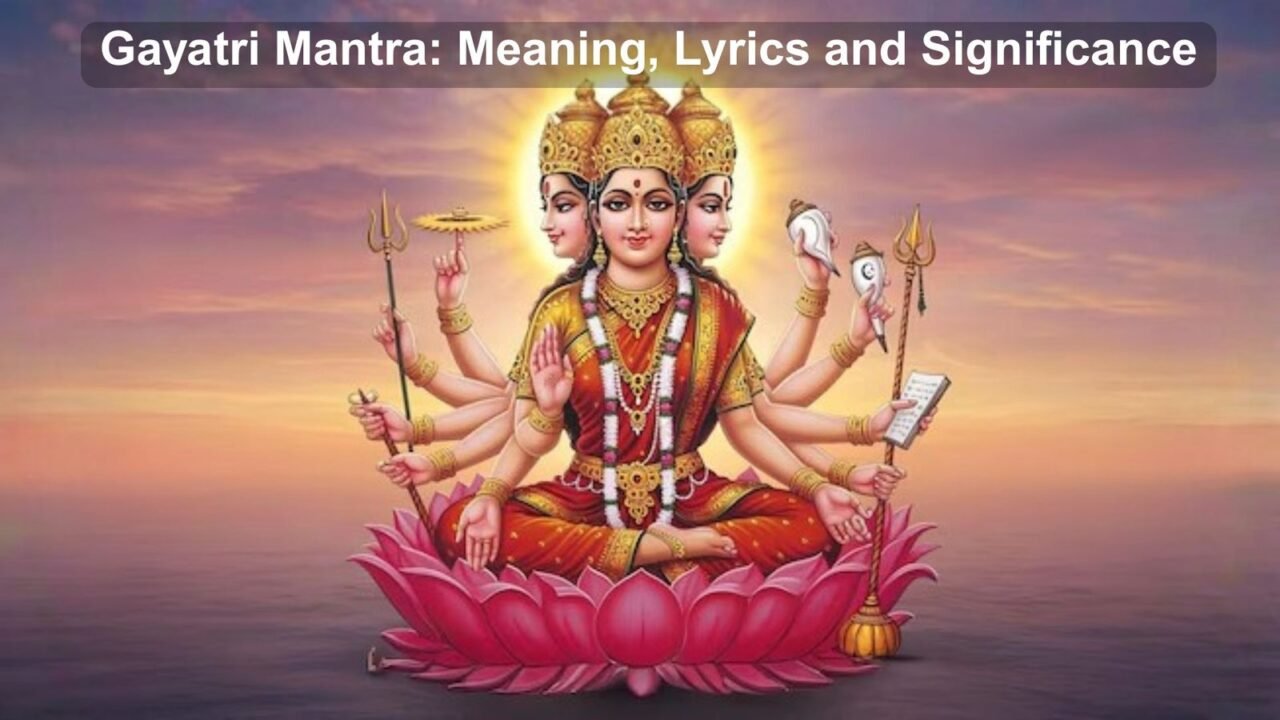
The Gayatri Mantra takes its name from the gayatri metre in which it is composed: 24 syllables arranged in three lines of eight. The mantra was later personified as the goddess Gayatri, revered as Veda Mata, the mother of the Vedas.
Is Om Bhur Bhuvah Swaha part of the original Gayatri Mantra?
No. Om Bhur Bhuvah Swaha is a separate invocation called the vyahriti, traditionally recited before the Gayatri Mantra. The Rigvedic verse itself begins with Tat Savitur Varenyam. The three words of the vyahriti name the earth, the atmosphere and the heavens.
How many times should the Gayatri Mantra be chanted?
Devotees traditionally chant the Gayatri Mantra 108 times, counted on a japa mala of 108 beads, though 3, 11 or 21 repetitions are common for daily practice. Tradition gives more weight to attention and correct pronunciation than to the number of repetitions.
What is the best time to chant the Gayatri Mantra?
The Gayatri Mantra is traditionally chanted at the three sandhyas, or junctions of the day: dawn, noon and dusk, as part of the daily sandhyavandanam ritual. Sunrise is considered especially fitting because the mantra is addressed to Savitr, the sun.
What are the benefits of chanting the Gayatri Mantra?
Devotees traditionally chant the Gayatri Mantra for mental clarity, focus and spiritual discipline, and its slow rhythm paces the breath in a way many find calming. These benefits come from tradition and personal experience rather than clinical research.
Can anyone chant the Gayatri Mantra?
Today the Gayatri Mantra is widely chanted by people of all backgrounds, at home and in public gatherings. Historically, some traditions reserved it for those initiated through the upanayana ceremony, and some families still follow that custom, so practice varies between communities.
Does the Gayatri Mantra help with meditation?
Many practitioners use the Gayatri Mantra as a meditation anchor, because its fixed 24-syllable rhythm gives the mind a steady point of focus, much like counting breaths. Silent mental repetition, called manasika japa, is traditionally considered its deepest form.