
What meditation is, where it comes from, the main types, what research shows, and practical techniques — breath, posture, visualisation and loving-kindness — for bringing it into daily life.
Meditation is the practice of training attention and awareness. Practised regularly, it helps many people calm the mind, respond to stress more steadily, and develop a deeper connection between mind and body. This guide explains its origins, its main forms, what the evidence shows, and how to begin. New to the practice? Start with our beginner’s guide to starting a meditation practice.
Key Takeaways
- Meditation has roots in the Indian yoga tradition and in Buddhism, and today takes many forms.
- Research best supports its benefits for stress, anxiety and attention.
- Ten to fifteen minutes a day, practised consistently, is enough to begin.
What Is Meditation?
Meditation is a set of practices for training the mind to rest in calm, focused awareness. Most forms involve directing attention — to the breath, a mantra, the body or the present moment — and gently returning it whenever the mind wanders.
Where Does Meditation Come From?
Meditation has ancient roots in India. In the yoga tradition, Patanjali’s Yoga Sutras describe dhyana, meditation, as the seventh of the eight limbs of yoga, following concentration (dharana) and leading to samadhi. The Upanishads and the Bhagavad Gita, whose sixth chapter describes the practice of meditation, are also foundational. Buddhism developed its own traditions, including mindfulness (sati) and insight meditation (vipassana), which later spread through Asia as Zen and Tibetan practices.
Discover how India’s leading mindfulness teachers, such as Gaur Gopal Das and BK Shivani, bring these traditions into everyday life.
What Are the Main Types of Meditation?

- Mindfulness meditation: staying present and aware of thoughts, feelings and sensations without judgement. See our step-by-step mindfulness guide.
- Focused-attention meditation: concentrating on a single object, such as the breath or a sound.
- Mantra meditation (japa): repeating a sacred word or phrase, such as Om, often counted on a mala.
- Loving-kindness meditation (metta): cultivating goodwill towards oneself and others.
- Zen meditation (zazen): sitting in stillness with attention to posture and breath.
- Visualisation practices: used especially in Tibetan Buddhism, often with mantra recitation.
What Does Research Say About Meditation?
The best-studied programme is Mindfulness-Based Stress Reduction (MBSR), developed by Jon Kabat-Zinn at the University of Massachusetts Medical School in 1979. A 2014 review in JAMA Internal Medicine (Goyal and colleagues) found moderate evidence that meditation programmes improve anxiety, depression and pain. Mindfulness-Based Cognitive Therapy (MBCT) is recommended in the UK by NICE to help prevent relapse in people who have had recurrent depression.
Brain-imaging studies have found differences in long-term meditators, such as greater grey-matter density in some regions linked to attention and emotional regulation, though these studies show association rather than proven cause. For a fuller summary, see our 10 benefits of daily meditation, and for thinking and work, how meditation enhances creativity and productivity.
How Does Meditation Affect Body and Mind?
Physical Effects
- Stress: slow breathing and focused attention encourage the body’s relaxation response.
- Blood pressure: some studies show modest reductions, and the American Heart Association has said meditation may be considered as an addition to standard care.
- Sleep: many people find a bedtime practice helps them fall asleep more easily.
Mental and Emotional Effects
- Self-awareness: noticing thoughts and feelings as they arise, rather than being carried away by them.
- Calm: a steadier response to difficult situations.
- Resilience: recovering more quickly from setbacks.
Meditation supports wellbeing but is not a substitute for treatment. If you are living with anxiety, depression, trauma or another condition, please speak to a qualified professional; some people find intensive meditation brings up difficult experiences and are best guided by a teacher or clinician.
How Do You Cultivate Inner Stillness?
Quieting the Mind
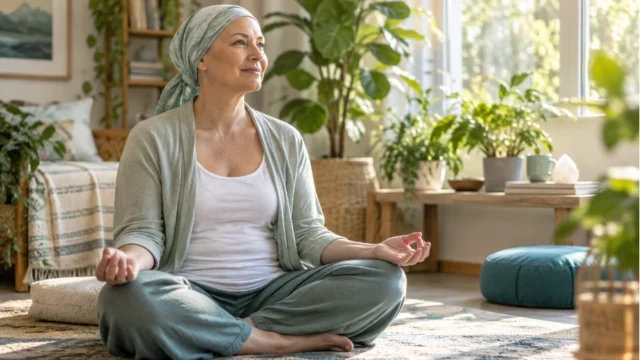
Sit comfortably and bring your attention to the present moment. Let thoughts pass like clouds in the sky, without following or fighting them. When the mind wanders — as it will — gently return to the breath. Some people find a mantra helps: its steady rhythm gives the mind a place to rest.
Breath and Posture
Sit upright with the shoulders relaxed and the chest open. Breathe in slowly through the nose, letting the abdomen expand, and breathe out slowly, releasing tension. A popular pattern is the 4-7-8 breath, popularised by physician Andrew Weil: breathe in for four counts, hold for seven and breathe out for eight. Our pranayama guide covers traditional yogic breathing methods.
Try it yourself — a guided meditation for inner peace:
Which Practices Support Personal Growth?
Visualisation and Affirmation
- Find a quiet place and close your eyes.
- Breathe slowly to settle the mind.
- Picture a specific goal in detail — its sights, sounds and feelings.
- Repeat a positive statement that matches it, such as “I am calm and capable.”
Loving-Kindness
- Sit comfortably and focus on your breath.
- Silently repeat: “May I be happy. May I be healthy. May I be safe. May I live with ease.”
- Extend the same wishes to family, friends, and even people you find difficult.
How Can Meditation Help With Stress and Anxiety?
Meditation teaches you to observe anxious thoughts without being swept away by them, and slow breathing activates the body’s relaxation response. Many studies of mindfulness programmes report reduced stress. Journaling alongside meditation can deepen understanding, and a body scan — moving attention slowly through each part of the body — helps many people feel grounded.
What Are Deeper Practices?

For many, meditation becomes a spiritual path. Practices such as vipassana (insight meditation), taught in intensive ten-day retreats in the tradition of S. N. Goenka, and the yogic practice of dhyana aim at deeper self-knowledge and a sense of connection with all life. Traditions differ in their goals — liberation, union with the divine, or insight into the nature of mind — but share the discipline of attention.
How Do You Bring Meditation Into Daily Life?
- Set a time: 10–15 minutes at the same time each day builds the habit.
- Create a space: a quiet, uncluttered corner helps the mind settle.
- Practise informally: mindful eating, walking and listening bring awareness into ordinary activities. See our 10 simple meditation techniques for short practices.
- In relationships: listen fully, pause before responding, and notice your own reactions.
- In nature: a walk in a park or time by water invites effortless presence.

My Sleep Game-Changer: Kyore Nutrition Melatonin Sleep Gummies
I’ve been through 6 months of tossing & turning … until I tried Kyore Nutrition Melatonin Sleep Gummies. Now I fall asleep in just 15–20 minutes. No more staring at the ceiling, no more restless nights.
What’s Inside & Why It Helps
- Restfull Sleep: Each gummy is packed with 7mg of Melatonin, a hormone that regulates your sleep-wake cycle, helping you fall asleep faster and stay asleep longer.
- Enhanced Sleep Quality: L-Theanine, a natural amino acid, promotes relaxation without causing drowsiness, ensuring a peaceful night’s rest without any grogginess upon waking.
- 3. Wake Up Fresh: With all natural ingredients, Kyore Nutritions Melatonin Gummies enhances your sleep quality and helps to control your sleep wake cycle.


4. Stress Relief: an adaptogenic herb, works wonders in reducing stress and anxiety, allowing your body and mind to relax before bedtime.
5. Best Price: 30 gummies at just Rs. 399/-

6. 4.5 Star Ratings by more than 550 people
🚀 Try It Yourself
If you’re in the same boat — tired, stressed, unable to sleep — this might be the helping hand you need.
Disclaimer:
This review is purely based on my personal experience with the product. I am not making any medical claims, and results may vary for different individuals. Please consult a qualified healthcare professional before starting any new supplement.
Frequently Asked Questions
-
What is meditation?
Meditation is a set of practices for training attention and awareness, usually by focusing on the breath, a mantra, the body or the present moment and gently returning whenever the mind wanders. It has ancient roots in India, where Patanjali’s Yoga Sutras describe meditation, dhyana, as the seventh of the eight limbs of yoga.
-
How does meditation help emotional wellbeing?
Meditation helps emotional wellbeing by training you to notice feelings as they arise rather than being carried away by them, which many people find makes them calmer and more resilient. A 2014 review in JAMA Internal Medicine found moderate evidence that meditation programmes improve anxiety and depression.
-
What are the physical benefits of meditation?
The physical benefits of meditation come mainly through stress reduction: slow breathing encourages the body’s relaxation response, some studies show modest reductions in blood pressure, and many people sleep better. The American Heart Association has said meditation may be considered as an addition to standard cardiovascular care, not a replacement.
-
Can meditation reduce stress and anxiety?
Yes, for many people. Mindfulness-Based Stress Reduction, developed by Jon Kabat-Zinn in 1979, is the best-studied programme, and many trials report reduced stress and anxiety. Meditation can support, but not replace, treatment for anxiety disorders.
-
Can meditation improve concentration?
Yes. Focused-attention meditation is a form of attention training: each time the mind wanders and is brought back, the skill of sustained focus is practised. Several studies have found improvements on attention tasks after meditation training.
-
What are the main types of meditation?
The main types of meditation include mindfulness meditation, focused-attention meditation on the breath or a sound, mantra meditation or japa, loving-kindness meditation or metta, Zen sitting meditation, and visualisation practices used especially in Tibetan Buddhism. Each suits different people and goals.
-
How long should a beginner meditate?
A beginner can start with five to ten minutes a day and build up to fifteen or twenty, and consistency matters more than length. Many people feel calmer after a single session, while research programmes such as MBSR measure benefits after several weeks of daily practice.
-
Is meditation safe for everyone?
Meditation is safe for most people, but some, particularly those with a history of trauma, psychosis or severe depression, may find intensive practice brings up distressing experiences. They should start with short guided sessions, stop if they feel worse, and practise with guidance from a qualified teacher or clinician.